Last updated October 31, 2026
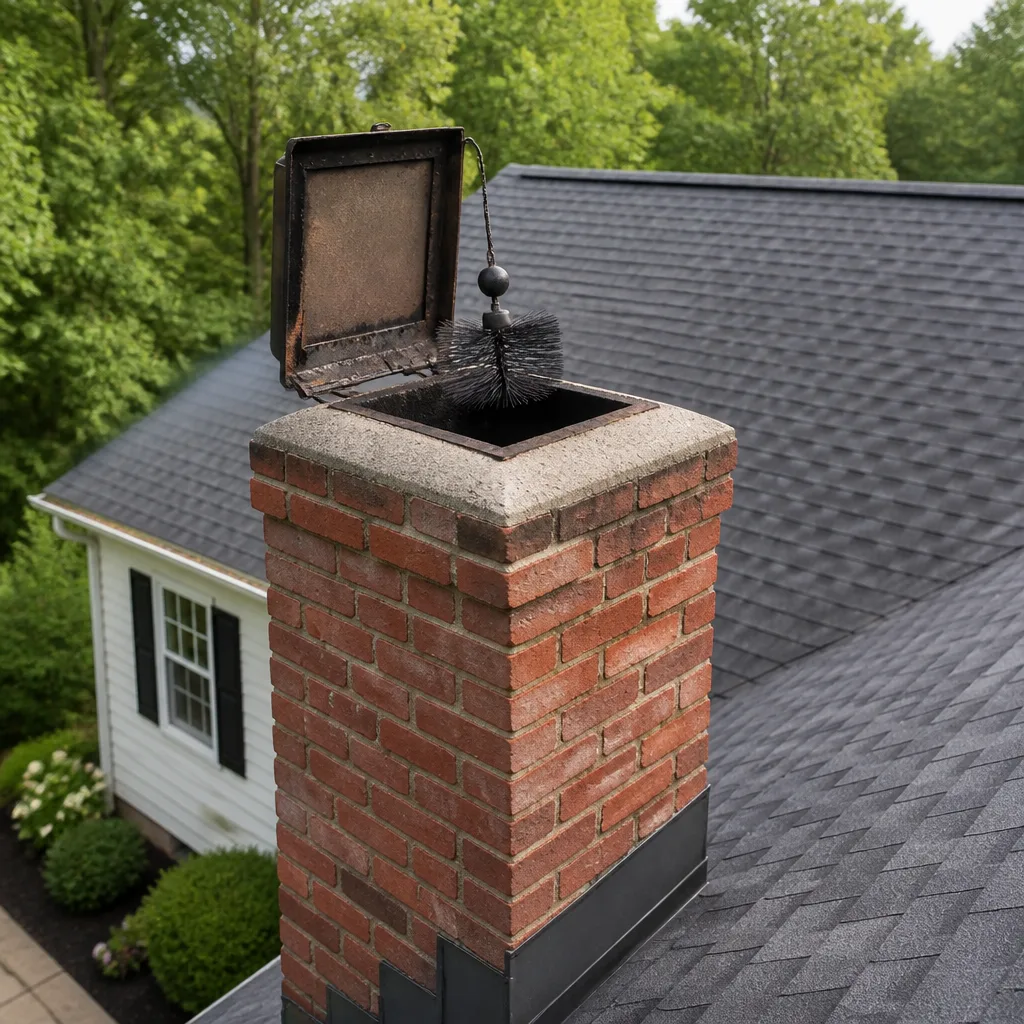 Sweep & inspection
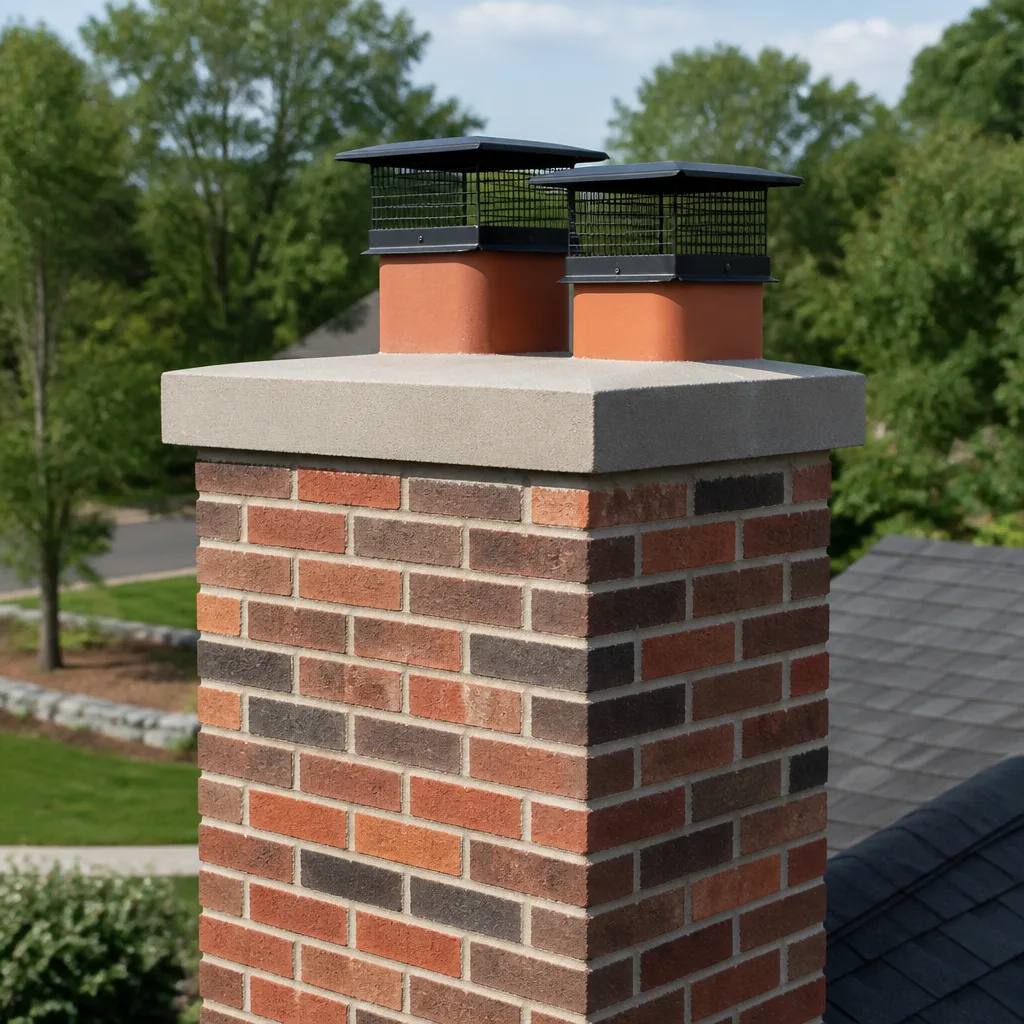 Caps & crowns
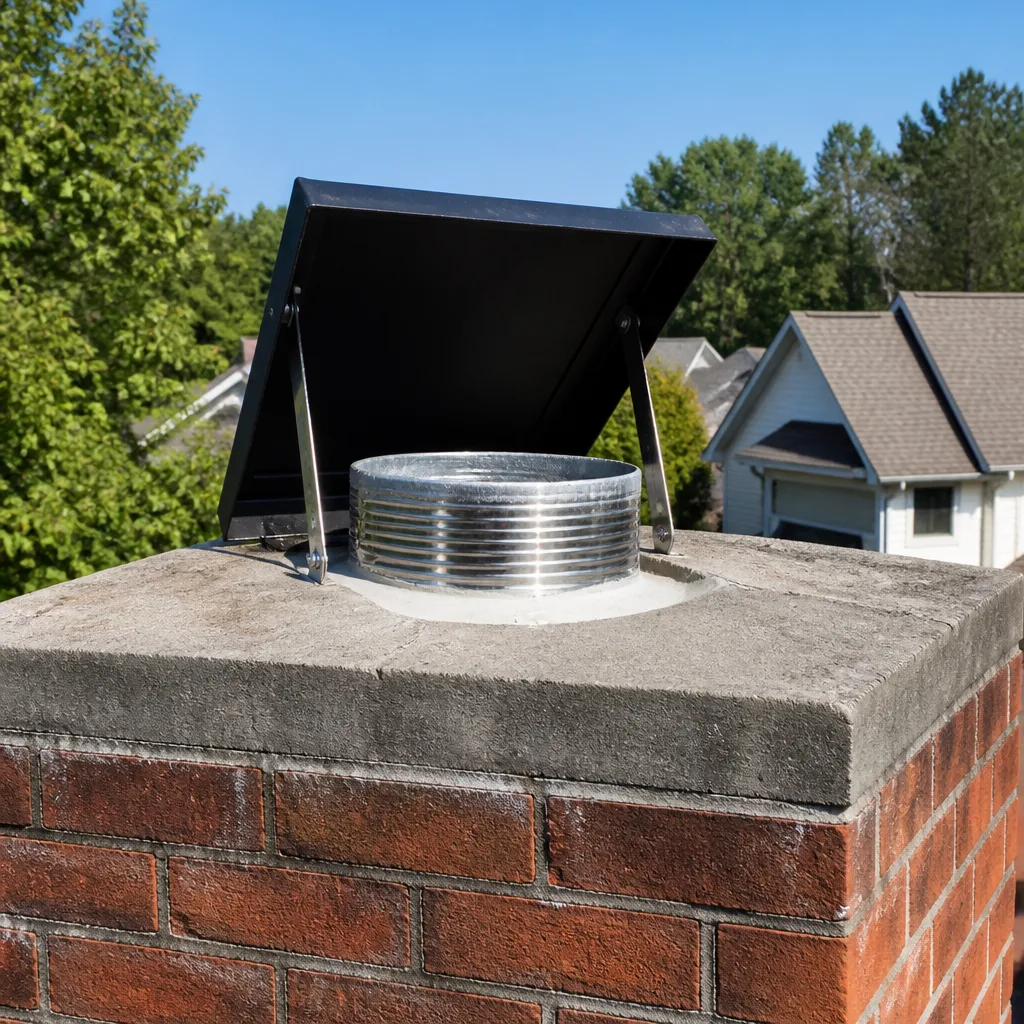 Flue relining
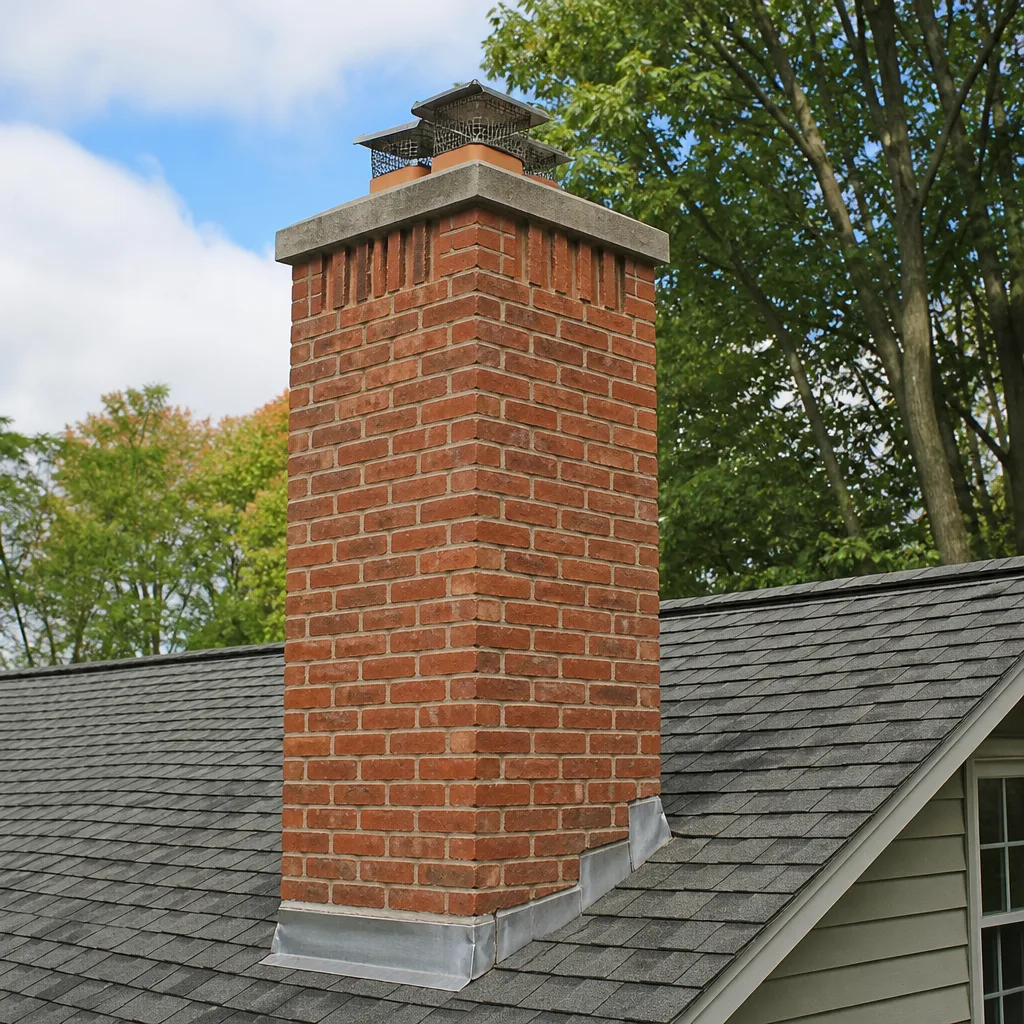 Masonry repair
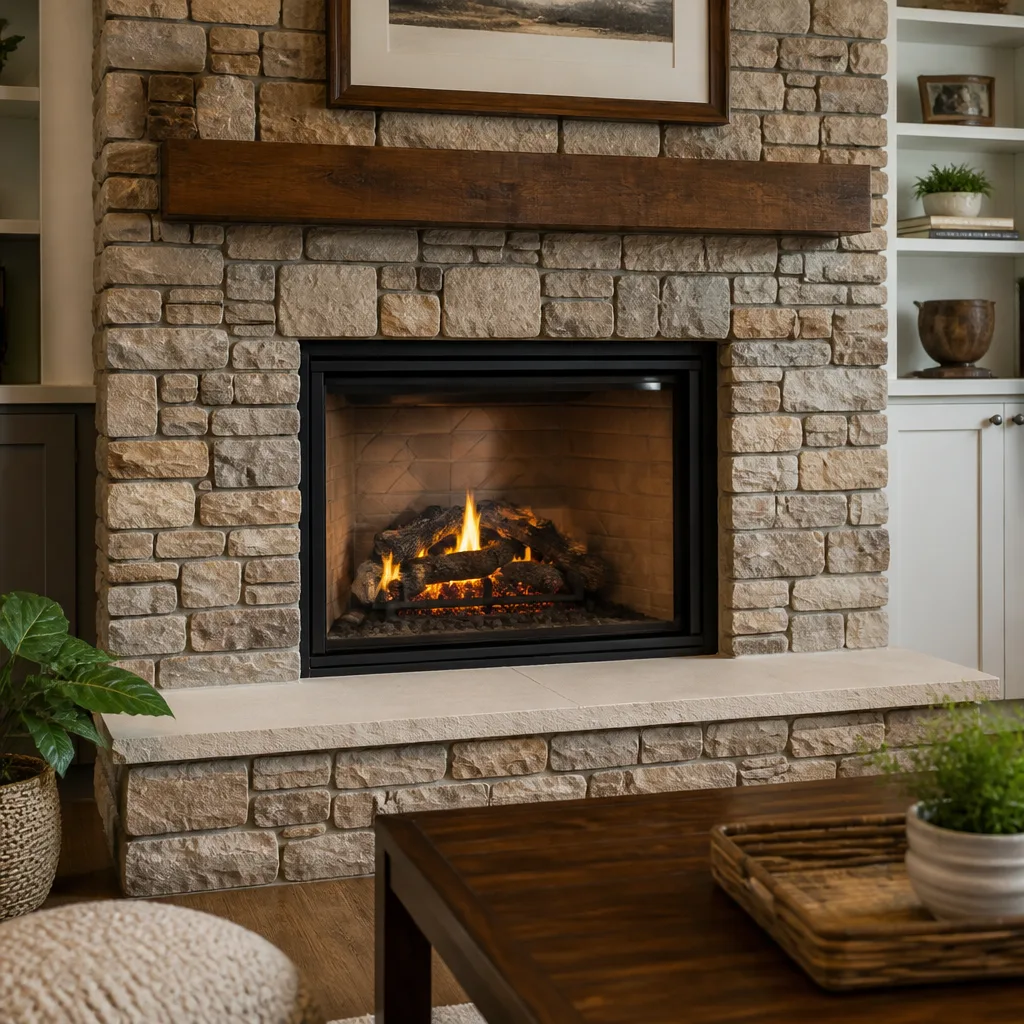 Gas fireplace service
Level 1 sweep and inspection to the NFPA 211 annual standard - flue, crown, cap, and flashing checked and photographed
Chimney sweep logs do not sweep chimneys. They loosen some creosote - which then falls where a brush and vacuum still have to collect it.
Chimney Cleaning Cost Breakdown: The Round Rock Homeowner’s Reference for 2026
A $99 chimney cleaning coupon in Round Rock almost always means one thing: a technician is coming to your house to sell you something that costs significantly more. Sometimes that something is legitimate. Often it’s not. Understanding the real cost structure of chimney service is the only way to evaluate whether an upsell is warranted. This guide breaks down what Round Rock homeowners should actually pay for chimney cleaning and inspection in 2026, what drives price differences between contractors quoting the same job, and how to tell a genuine safety recommendation from margin-padding. For related reading, see our Chimney Cleaning Warning Signs: A Round Rock Homeowner’s Reference Guide.
Quick Answer
A standard chimney sweep and inspection in Round Rock runs $189 to $329 for a single flue in 2026. Level 2 inspections, which most Round Rock homeowners need when buying or selling a home or after weather events, add $150 to $300. If someone quotes below $150 for a cleaning, the cleaning is a loss leader for an inspection-driven sales call, not the actual price of the service.
Styles & brands we work with
Table of Contents
- Itemized Chimney Cleaning Costs in Round Rock for 2026
- Understanding Level 1, Level 2, and Level 3 Inspections
- What Actually Drives Price Variation (And What Doesn’t)
- How to Read a Chimney Repair Estimate Without Getting Taken
- The Real Cost of Deferring a Cleaning
- HeatShield Resurfacing vs. Full Stainless Liner Replacement
- Add-On Services: Which Ones Are Legitimate and Which Are Padding
- Round Rock Seasonal Factors That Affect Chimney Costs
Itemized Chimney Cleaning Costs in Round Rock for 2026
The price you pay depends on what the sweep actually does while they’re there. Here’s the market reality in Round Rock right now:
- Basic sweep, single flue, no inspection paperwork: $189 to $249. This is a brush through the flue and a visual check from the top and bottom. Most Round Rock companies reserve this price for repeat customers with clean-burning systems.
- Standard sweep with Level 1 inspection: $229 to $329. This is what most Round Rock homeowners should expect to pay for an annual service call. It includes debris removal, a full visual inspection of accessible areas, and written documentation.
- Heavy creosote removal (Stage 2 or Stage 3): $329 to $475. Glazed creosote doesn’t brush off. It requires rotary drill heads, chemical treatments, or both. This takes time, and time is the dominant cost driver.
- Multi-flue homes: Add $79 to $149 per additional flue. Some Round Rock two-story homes built in the 1980s and 1990s have a wood-burning fireplace on the first floor and a second flue for a gas furnace or water heater.
- Level 2 inspection as part of a cleaning visit: Add $150 to $300. This includes camera inspection of the full flue length, verification of clearances in accessible areas, and attic and crawl space checks where feasible.
- Dryer vent cleaning bundled with a sweep: $89 to $149 when scheduled together. Standalone dryer vent cleaning in Round Rock runs $129 to $199.
These numbers come from what we see quoted across Round Rock and Central Texas. We’ve seen the full range of estimates in this market, from the $99 coupon book to the $600 invoice on a supposedly simple annual service. The difference usually isn’t the quality of the brush work. It’s whether the company treats the visit as a service or as a sales appointment.
The single best way to understand your price: ask the company what the quoted number includes before they arrive. If they can’t tell you over the phone, that’s information you just got for free.
Understanding Level 1, Level 2, and Level 3 Inspections
The National Fire Protection Association defines three inspection levels. Round Rock home inspectors and real estate agents reference these constantly, but homeowners rarely know what the terms actually mean until they’re staring at a recommendation in a report. If you’re navigating permits or code requirements, our Chimney Cleaning Permits, Codes & Inspections in TX: What You Need to Know covers the regulatory side.
Level 1 inspection: This is the visual inspection included with most standard sweeps. The technician looks at readily accessible portions of the chimney interior and exterior, checks the flue for obstructions and combustible creosote deposits, and verifies that the appliance is connected properly. A Level 1 is appropriate for a chimney that’s been serviced routinely and hasn’t changed since the last inspection.
Level 2 inspection: This goes further. It includes everything in Level 1 plus a camera scan of the flue interior, inspection of accessible attic and crawl space areas, and verification of clearances from combustibles. You need a Level 2 under these circumstances:
- When buying or selling a home in Round Rock
- After any chimney fire, earthquake, lightning strike, or severe weather event
- When the chimney has been unused for 12 months or longer
- When the fuel type changes, such as converting from wood to gas
- After any relining or major repair work
Level 3 inspection: This is the invasive one. A Level 3 inspection involves removing components of the chimney or building structure to access concealed areas. A Level 3 is only warranted when a Level 2 reveals a condition that demands deeper investigation, like suspected structural damage inside a wall cavity or an improperly connected flue that isn’t visible without opening something up. Level 3 inspections are rare in Round Rock, but when they happen, they cost $1,000 to $5,000 depending on how much access work is required.
Here’s what you should know as a consumer: any company that includes camera inspection as a free add-on is usually doing a limited scan, not a full NFPA 211-compliant Level 2. The camera work has real value, but it doesn’t replace the documentation burden of a true Level 2. If a real estate transaction in Round Rock requires a Level 2, make sure the invoice says “Level 2 inspection per NFPA 211” and not just “camera inspection included.”
What Actually Drives Price Variation (And What Doesn’t)
Two Round Rock companies can quote the same chimney and come in $200 apart without either one trying to rip you off. Here’s what genuinely moves the price:
Legitimate price drivers:
- Flue height and roof pitch. A steep-pitch roof in a Round Rock neighborhood like Teravista or Stone Oak makes access slower and more expensive than a shallow ranch roof in Windermere or Greenhill. Three-story construction adds equipment setup time.
- Creosote stage. Stage 1 creosote is fluffy and brushes off in minutes. Stage 2 is granular and baked-on. Stage 3 is a hard glaze that requires rotary tools and chemical treatment. The difference between Stage 1 and Stage 3 can double the labor time.
- Liner material. Clay tile liners clean up differently than stainless steel. Older Round Rock homes from the 1970s and earlier often have cracked clay tile liners that trap creosote in the gaps. This isn’t just more work to clean; it’s a repair finding.
- Accessibility. Chimneys that sit near power lines, require special ladder rigging, or have locked roof access panels all add time. Round Rock summers make roof work taxing at 100-plus degrees, and careful crews work slower in extreme heat.
- Insect or animal obstructions. Squirrels, birds, and raccoons set up nests in unused flues. Removal and sanitation is a separate line item, not part of a standard sweep.
What should NOT drive price:
- The company’s “exclusive” inspection technology. Camera equipment is standard across the industry. If a video inspection costs more than $100 as an add-on, you’re paying for sales presentation, not technology.
- Your neighborhood. Round Rock has some affluent ZIP codes in Williamson County, and some companies play pricing games based on property values. A chimney in Sonoma doesn’t cost more to sweep than an identical chimney in Mesa Ridge.
- The technician’s title. “Fireplace specialist” isn’t a protected credential. Certifications from the Chimney Safety Institute of America or National Fireplace Institute mean something. Other titles often don’t.
- The season. Some companies charge peak pricing in September and October when everyone remembers their chimney exists. Others charge the same rate year-round. Pre-season service in August is usually cheaper and easier to schedule.
How to Read a Chimney Repair Estimate Without Getting Taken
This is the section that separates informed homeowners from easy targets. When a Round Rock chimney sweep finishes a cleaning and starts writing up a repair estimate, here’s how to evaluate every line item:
Step 1: Separate code-required items from discretionary recommendations. If your inspection reveals a cracked flue tile, a missing chimney cap, or clearance-to-combustible violations, those are fire-safety issues. They’re not optional. But “we recommend a waterproofing treatment every two years” is a maintenance product that may help or may just be margin. Ask the technician to label each item: required for safe operation, recommended for performance, or cosmetic.
Step 2: Ask for photo or video evidence of every finding. This is the single most important discipline in the Round Rock market. Any legitimate repair finding can be shown to you on screen. Cracked flue tiles show up clearly on camera. Stage 2 creosote is visually obvious. Missing mortar joints are photographable. If a technician says you need a $2,400 repair but can’t show you the problem, get a second opinion. Boardwalk Chimney Sweep provides camera documentation with every inspection because nothing is recommended without evidence you can see for yourself.
Step 3: Understand which line items are standard parts on every repair. A chimney crown repair estimate should include crown material, flashing, and sealant as separate lines. A flashing repair should specify the gauge and type of metal. Vague line items like “miscellaneous materials” or “roof work as needed” are red flags. Manufacturer-recognized components from brands like Olympia Chimney and Copperfield cost more than generic hardware store substitutes, and the estimate should name the materials being used.
Step 4: Compare the cost of deferral in real numbers. A $400 crown repair deferred for two years often becomes a $2,800 crown removal and pour because water intrusion has degraded the mortar below. A $200 chimney cap installed today prevents a $600 animal removal and sanitation job later. The prudent Round Rock homeowner weighs repair costs against the cost of not repairing, not against the cost of the original cleaning.
Step 5: Check whether the company does the work or brokers it. Some chimney inspection companies in the Round Rock market are really lead-generation operations for masonry subcontractors. The inspection company writes the estimate and takes a percentage; the actual repair work is done by someone else under their own license and insurance. There’s nothing illegal about this, but it adds a middleman’s margin. Boardwalk Chimney Sweep handles the full cycle from inspection to repair without subcontracting, which means the estimate reflects the actual cost of the work, not a commission structure.
The Real Cost of Deferring a Cleaning
Let’s talk about what actually happens when a Round Rock homeowner skips chimney service for three or four seasons. The numbers are less abstract than the “safety first” language you see on most chimney websites.
A wood-burning fireplace produces creosote on every burn. In Round Rock’s relatively humid climate, creosote absorbs moisture from the air even during the off-season, which accelerates its degradation from a nuisance coating into an acidic, corrosive compound. Here’s the timeline:
Year 1 skipped: Creosote builds from Stage 1 to Stage 2 in a frequently used fireplace. The cleaning cost moves from $229 to $329. Not a big deal yet.
Year 2 skipped: Stage 3 glazed creosote forms in hard-to-brush corners. The cleaning now requires rotary equipment and chemical treatment, running $375 to $475. The creosote has also started attacking the mortar joints between flue tiles. A standard sweep won’t fix that.
Year 3 skipped: The chimney is now a structure with compromised mortar and heavy creosote loading. A chimney fire is genuinely possible, not theoretically possible. Repair costs at this stage:
- Chemical creosote treatment plus rotary cleaning: $425 to $525
- Mortar joint repair and partial repointing: $800 to $1,800 depending on flue height and access
- Chimney cap installation if animal intrusion has occurred: $175 to $425
At this point, the deferred maintenance has cost the Round Rock homeowner somewhere between $1,400 and $2,750. The three years of skipped $229 cleanings would have totaled $687.
After a chimney fire: This is the scenario no one budgets for. A chimney fire subjects the flue to temperatures far beyond anything the liner was designed to handle. Clay tile liners crack. Mortar joints fail. The structure can be compromised. Post-fire repair in Round Rock typically runs:
- Full stainless steel liner installation: $2,800 to $6,500
- Structural repair if the masonry itself is damaged: $3,000 to $10,000 plus
- Complete chimney rebuild in severe cases: $15,000 to $30,000
Here’s the comparison that matters: catching a cracked flue tile during a $229 annual cleaning costs you a $2,800 liner job. Missing it for three years until a chimney fire occurs can cost you $15,000 or more in structural work, plus whatever the fire does to the surrounding framing. The economics favor maintenance every single time.
HeatShield Resurfacing vs. Full Stainless Liner Replacement
This is the decision point where Round Rock homeowners face the biggest cost spread in chimney repair. Understanding the difference between these two approaches can save you thousands of dollars or save you from spending money on the wrong fix.
The core question is simple: is your existing liner structurally intact but showing cracks and gaps, or is it deteriorated beyond repair? HeatShield works on the first scenario. Full replacement is for the second.
HeatShield resurfacing: This is a cementitious coating applied to the interior of an existing clay tile flue. The product fills cracks, seals gaps between tiles, and creates a smooth, insulated surface. It’s appropriate when the clay tile structure is largely intact but has visible cracking, minor spalling, or missing mortar joints. HeatShield restoration in the Round Rock market typically runs $1,800 to $3,800 depending on flue height and number of flues being treated. The big advantages: it’s faster than a full liner replacement, it doesn’t require removing any structure, and it preserves your existing flue dimensions. HeatShield is a legitimate material solution, not a cheap substitute, which is why Boardwalk Chimney Sweep offers it alongside full liner work rather than pushing one approach universally.
DuraFlex stainless liner installation: When the existing clay tile liner is collapsed, severely offset, or missing entirely, a flexible stainless steel liner is the correct fix. DuraFlex specifically matters in Round Rock because many of our two-story homes from the 1980s and 1990s have offset flue configurations that rigid liners simply cannot navigate. The flexible system bends through the turns that would require demolition with a rigid pipe. Full stainless relining with DuraFlex in Round Rock runs $2,800 to $6,500, with the variance driven by flue height, access difficulty, and whether the installation requires removing a damper assembly or modifying the firebox opening.
How to decide: If your inspection reveals cracks of 1/8 inch or less and the flue tiles are still in their original positions, HeatShield is usually the cost-effective fix and will last 15 to 20 years. If tiles are loose, missing, or the flue has shifted, no coating product will save it. In our experience across Round Rock inspections, we see both conditions regularly. The key is getting camera documentation of the condition before accepting anyone’s recommendation. A legitimate company will show you exactly what the camera found and explain why one approach fits your specific flue better than the other.
Add-On Services: Which Ones Are Legitimate and Which Are Padding
Chimney companies in Round Rock make their highest margins on add-ons. Some of these are genuinely important. Others are margin-building dressed up as maintenance. Here’s the honest breakdown:
Legitimate add-ons worth considering:
- Chimney cap installation ($175 to $425): This is one of the most cost-effective protective measures available. A properly sized cap keeps out rain, animals, leaves, and airborne debris. Round Rock sees enough squirrel and raccoon activity that most chimneys without caps will eventually have an animal issue.
- Waterproofing treatment ($350 to $800): Brick is porous, and Round Rock’s humidity plus occasional hard storms means water repellant treatments genuinely extend masonry life. But understand this is a maintenance item with a 5 to 7 year lifespan, not a permanent fix.
- Top-sealing damper ($350 to $750 installed): The cast iron damper built into your firebox is an energy leak. A top-mounted damper seals the flue at the top, which cuts down on conditioned air loss. In Round Rock summers, this is a real energy savings.
- Dryer vent cleaning ($129 to $199 standalone): This is the single most underrated fire-prevention service in American homes. The NFPA identifies dryer lint as a leading cause of appliance fires. Bundling dryer vent cleaning with your chimney sweep is a logical pairing, not an upsell.
Padding masquerading as maintenance:
- “Glog removal” or “creosote conversion” treatments ($400 to $900): This is often no more than spraying the same chemical product you can buy in concentrate for $45. If heavy creosote exists, it needs mechanical removal, not a spray product.
- “Chimney scan certification” without a documented Level 2 inspection: Some companies sell a “video scan” certificate that has no NFPA standing. A real Level 2 inspection comes with documentation that meets the standard. Ask what standard the scan complies with.
- Masonry “pointing” quotes for pre-weathered but intact mortar: Some Round Rock chimneys have cosmetic mortar wear that doesn’t require immediate attention. If the mortar joints are still structurally sound, repointing can wait. Get a second opinion before authorizing $1,500 of mortar work on a chimney that isn’t failing.
- Duct cleaning as a chimney add-on: If a chimney company is suddenly offering HVAC duct cleaning, ask what equipment and training they have for that service. It’s a different trade with different standards.
The filter for every add-on: does the recommendation come with documentation, and is the need actually tied to something that will worsen without action? A broken crown will worsen. Stage 2 creosote will worsen. A clean but weathered chimney probably won’t deteriorate meaningfully in the next 12 months.
Round Rock Seasonal Factors That Affect Chimney Costs
Round Rock’s climate creates a distinct chimney service calendar that affects both pricing and availability. Understanding this rhythm helps you schedule at the right time and at the right price.
August through October: The shoulder season. Every Round Rock homeowner remembers the fireplace at the same time, right around the first cool front. This is peak demand, which means peak pricing and extended wait times. September bookings often run two to three weeks out. If you can schedule in August, you’ll usually get better pricing and faster service while the roof work is still miserably hot but the schedule is open.
November through February: Burning season. This is when chimney fires actually happen in Round Rock. The risk peaks when families are running fires daily through Thanksgiving and Christmas. Emergency service during this window commands premium pricing, and legitimately so. If you haven’t had a cleaning by November, don’t burn until you do. A $229 inspection is cheaper than the alternative, and that math works even at premium-season rates.
March through July: The off-season. This is the best time for repair work in Round Rock. Masonry and crown work benefits from moderate temperatures, crews aren’t racing between emergency calls, and materials are easier to schedule. If you have a repair recommendation from a previous inspection, scheduling it in April or May is the smart play. You’ll beat the fall pricing pressure and have the work complete before the next burn season.
Climate-specific concerns in Round Rock: Our humidity accelerates creosote degradation even when you’re not burning. An unused chimney sitting through a Round Rock summer will degrade faster than the same chimney sitting through a dry Denver summer. This makes annual inspection more important here than in drier climates, even if you burn only occasionally. The moisture cycle is also hard on chimney crowns, which is why we see so many cracked crowns in Round Rock neighborhoods built in the 1990s and 2000s.
Common Mistakes to Avoid
- Hiring the $99 coupon company without reading the fine print. The coupon covers a “basic sweep” that usually takes 30 minutes, and the real purpose is getting a technician into your living room with a tablet full of repair options. You’ll almost always get a quote for work you may or may not need.
- Deferring a documented repair because the fireplace worked fine last winter. Cracks and gaps don’t fix themselves. A chimney that worked fine last season can fail catastrophically this season if the damage has been progressing silently.
- Accepting a repair quote without camera evidence. In the 2026 market, there is no excuse for not showing the customer exactly what’s wrong. If they can’t show you, don’t sign.
- Skipping the chimney cap purchase to save $200. This is the costliest $200 you’ll ever save. Raccoons, squirrels, and birds all find open flues in Round Rock, and animal removal plus sanitation routinely exceeds $600.
- Treating chimney cleaning and dryer vent cleaning as unrelated chores. Both are combustion-safety maintenance items. If you’re maintaining a home in Round Rock, tackling both in one visit is more efficient than two service calls at two different times.
- Waiting until the first freeze to schedule service. By then, every chimney company in Williamson County is booked solid and the prices have moved up with demand. Schedule in August and you’ll have your pick of time slots at standard rates.
- Assuming a stainless liner lasts forever. Stainless liners are durable, but they still need inspection. The connections can fail, the liner can develop pinhole leaks, and the crown around it still needs maintenance. A new liner doesn’t eliminate the need for annual service.
See the difference
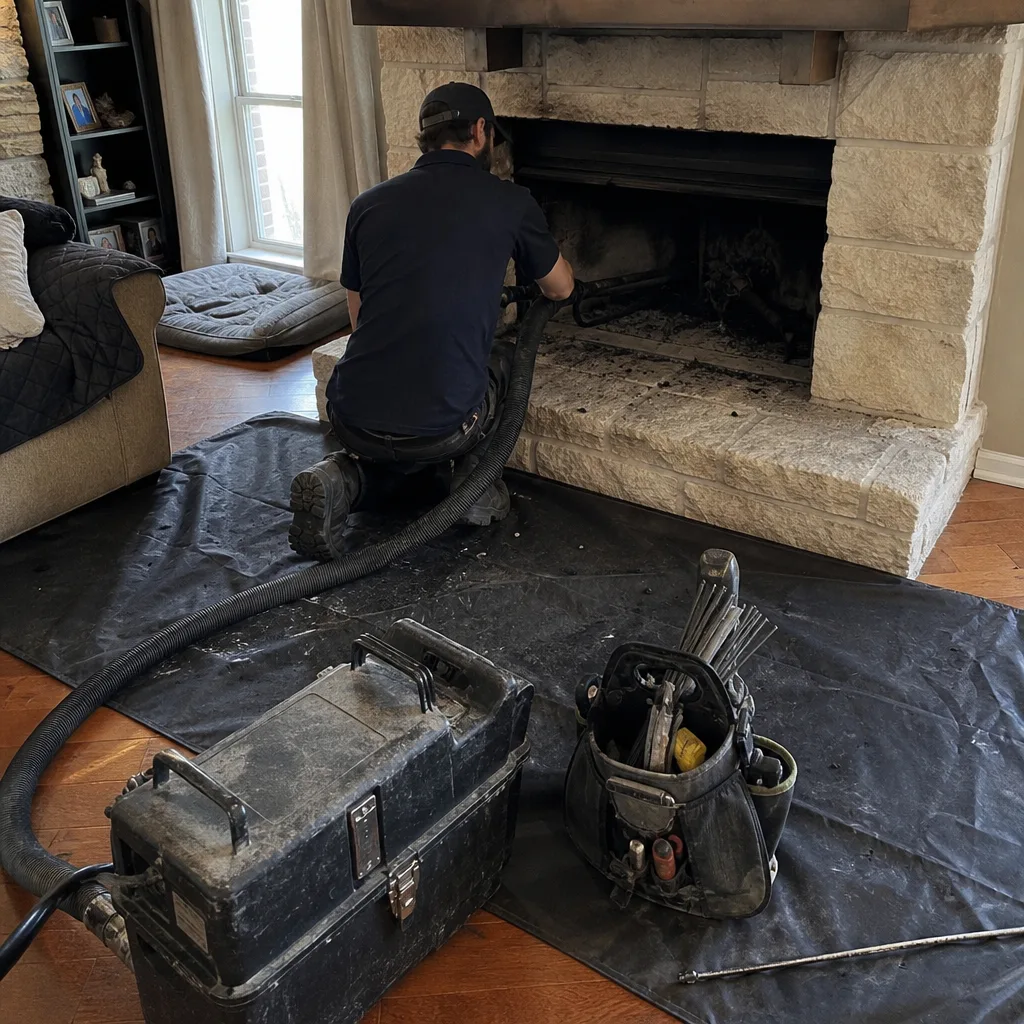 Before
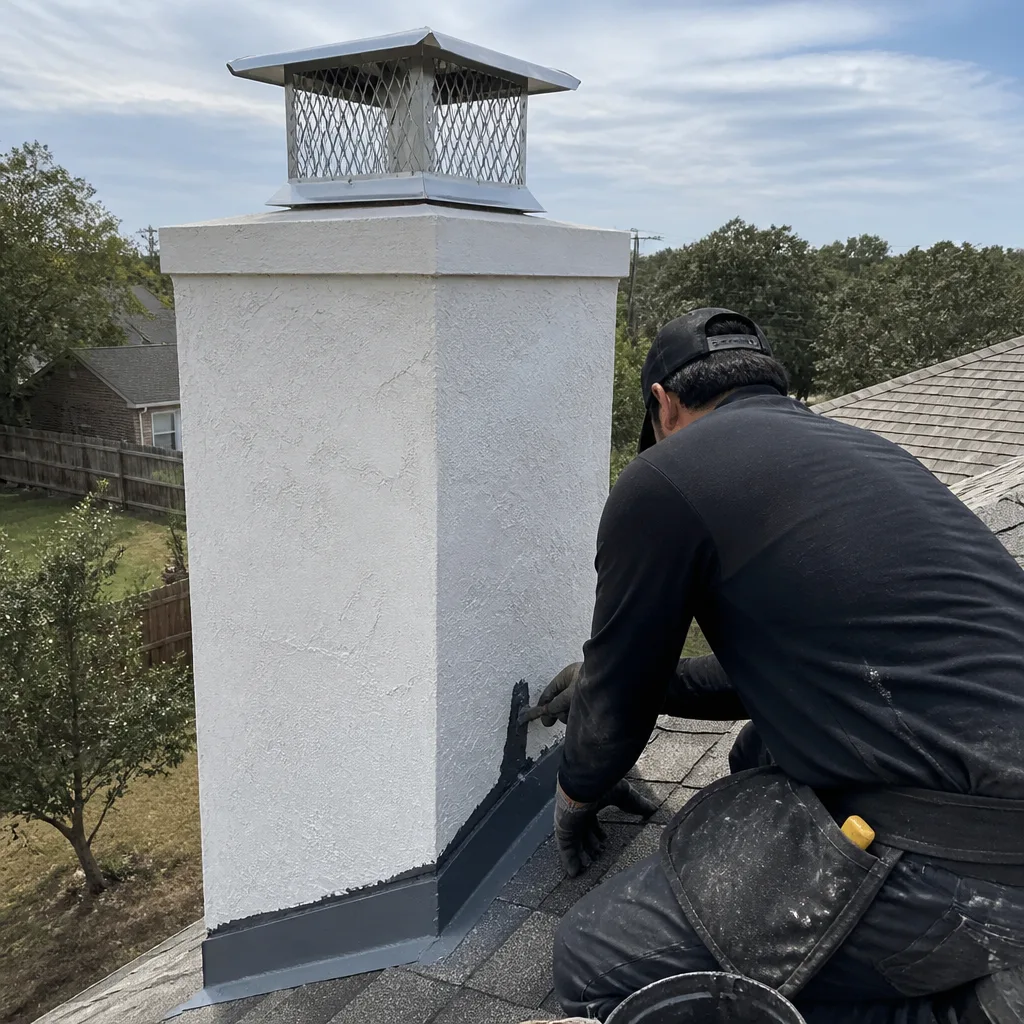 After
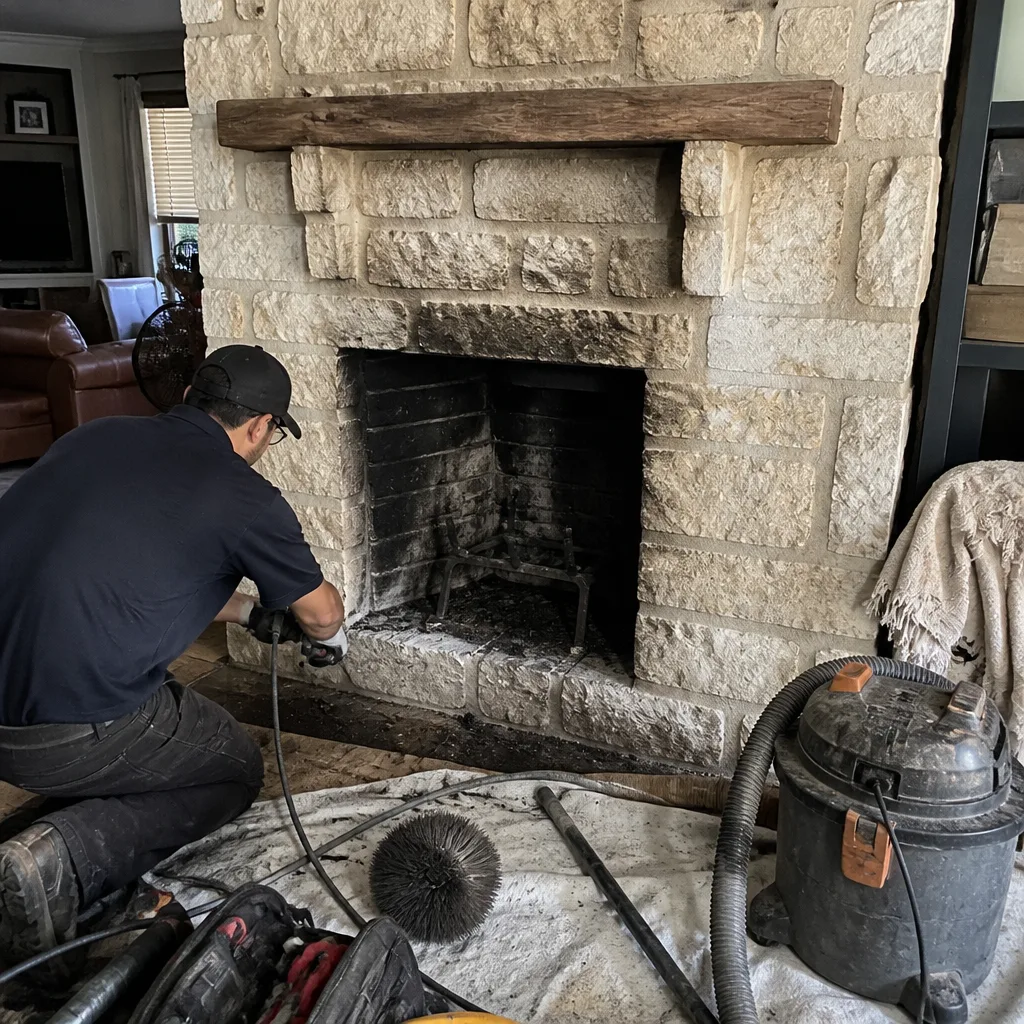 Before
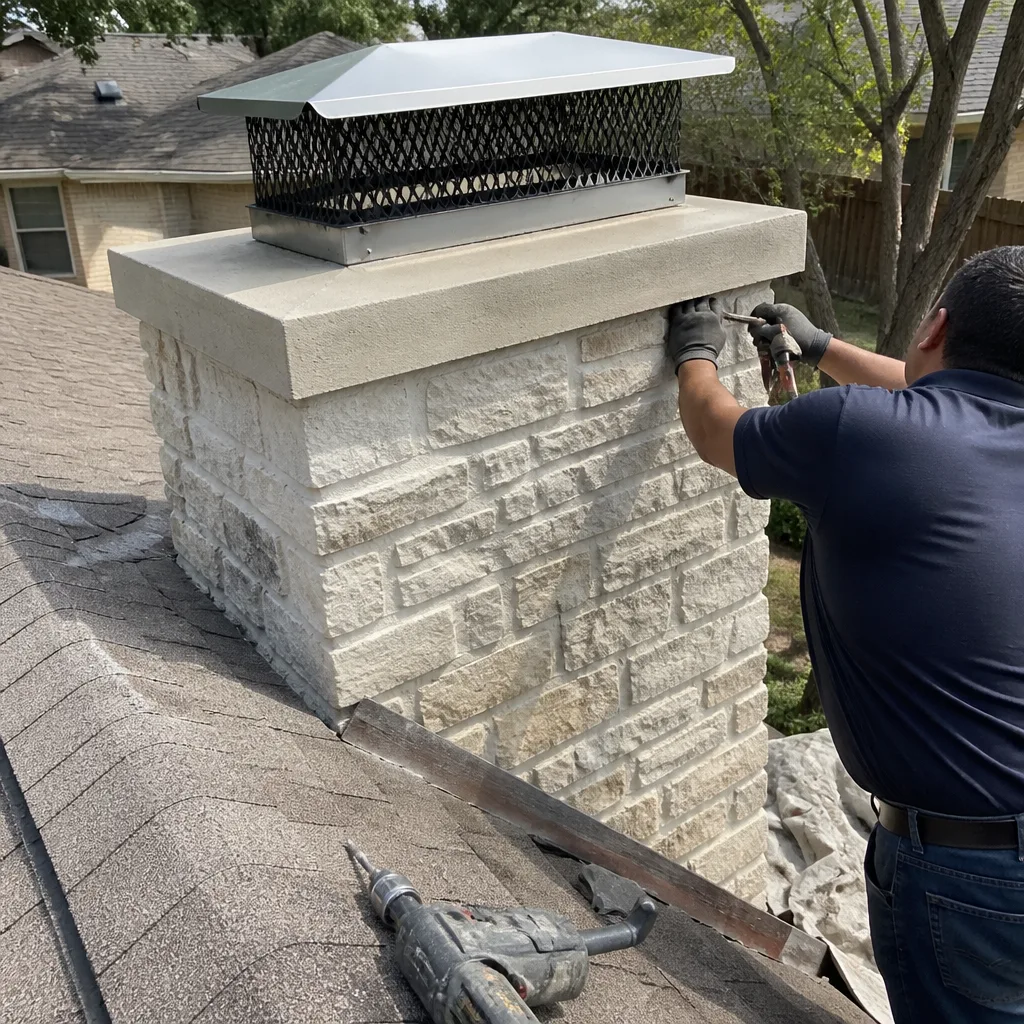 After
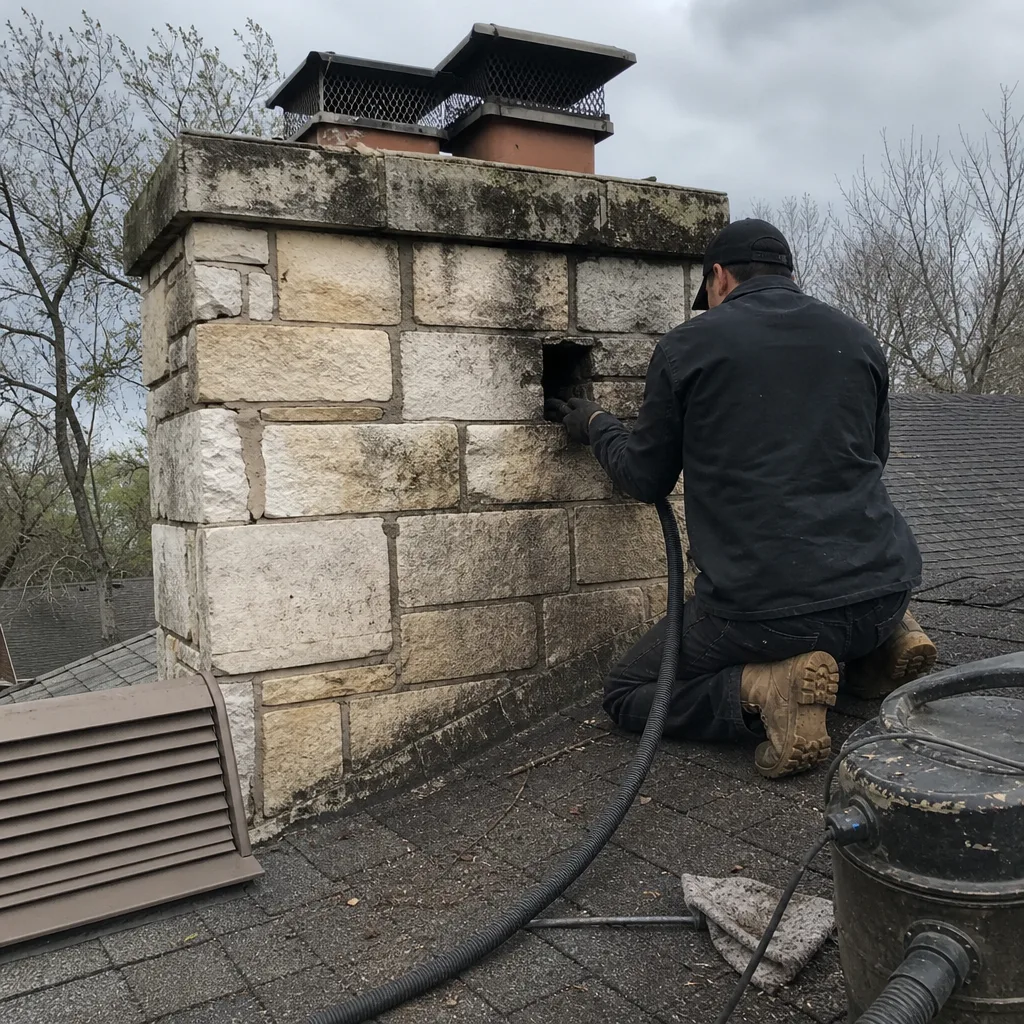 Before
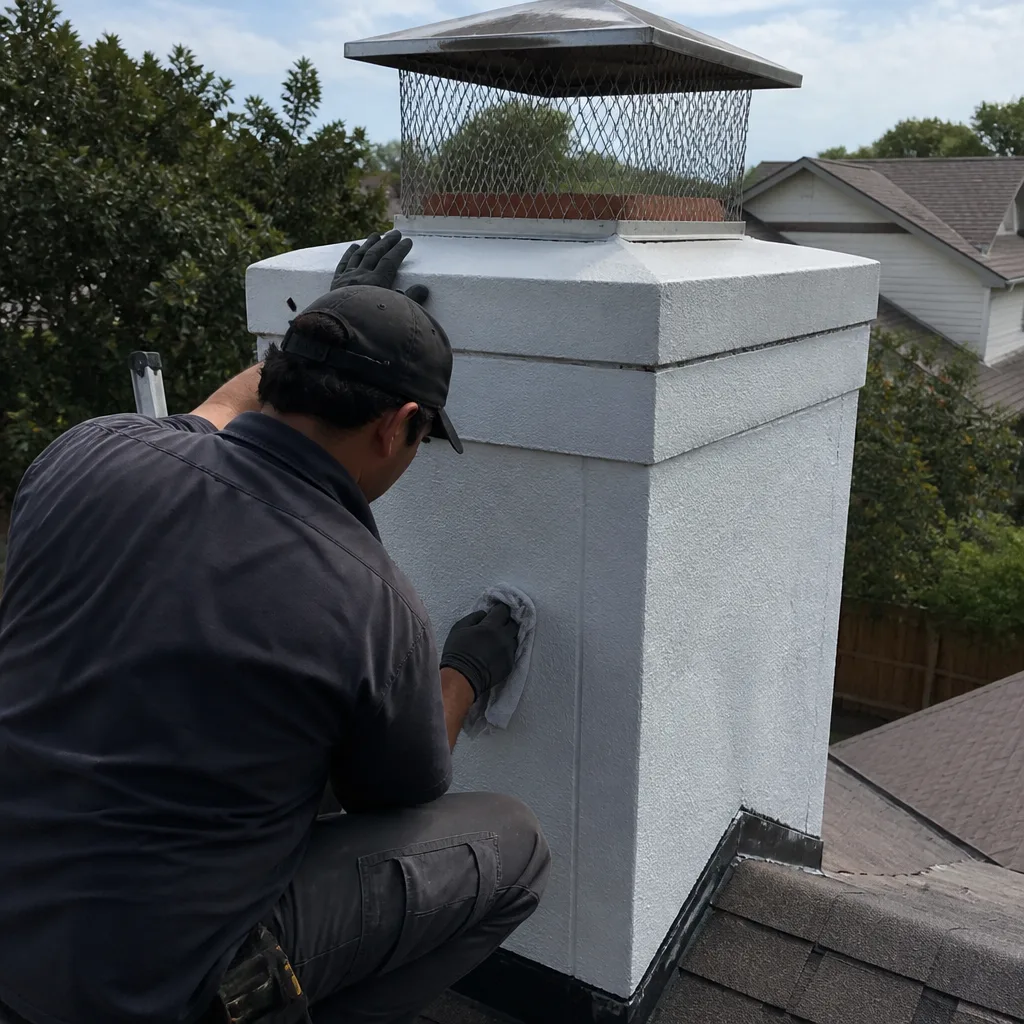 After
When to Call a Professional
There are moments when guessing is dangerous. If you smell smoke in the house when the fireplace is working, call immediately. That’s not a scheduling question, it’s a fire hazard. The same goes for visible soot stains appearing on interior walls around the fireplace, which can indicate a hidden flue leak. If you hear animals in the chimney, don’t try to smoke them out. If your carbon monoxide detector alerts near the fireplace, exit the house and call from outside. For non-emergency work like annual cleanings, inspections, and repair estimates, early scheduling beats emergency pricing every time. Explore more guides & resources on keeping your chimney safe year-round. Boardwalk Chimney Sweep offers free estimates in Round Rock, call (877) 274-1247 to get on the calendar before burning season arrives.
Frequently Asked Questions
A standard chimney sweep with Level 1 inspection in Round Rock costs $229 to $329 for a single flue in 2026. Heavy creosote removal, multi-flue homes, and Level 2 inspection add-ons push the total higher. Call Chimney Sweep in Round Rock to get an exact quote for your specific chimney.
A Level 1 inspection is a visual check of accessible chimney components during a routine cleaning. A Level 2 inspection adds camera scanning of the full flue, attic and crawl space verification, and documentation that meets NFPA 211 standards for real estate transactions or post-weather-event assessments. A Level 2 costs $150 to $300 more than a Level 1.
Once per year for wood-burning fireplaces used regularly during Round Rock’s November through February burn season. Even light-use chimneys should be inspected annually because our humidity accelerates creosote degradation during the off-season. Gas fireplaces need annual inspection too, though they require cleaning less frequently.
It depends on the extent of the damage. Minor cracking and gaps between tiles can often be addressed with HeatShield resurfacing at $1,800 to $3,800. Structural deterioration, collapsed tiles, or offset flue configurations usually call for a full DuraFlex stainless liner at $2,800 to $6,500. The decision should be based on camera evidence from a Level 2 inspection. Boardwalk Chimney Sweep shows you the footage before making a recommendation. Learn more about Chimney Repair in Round Rock options.
Creosote builds through three progressive stages, each more expensive and dangerous to remove. Skipped cleanings compound in cost until you’re facing a four-figure repair bill or a chimney fire. The three-year cost of skipped maintenance in Round Rock typically ranges from $1,400 to $2,750 versus roughly $687 for proper annual cleaning over the same period.
Yes, and it’s the smart way to handle both services. Dryer lint fires and chimney fires are two of the most common preventable household fire causes in Round Rock. Bundling Dryer Vent Cleaning in Round Rock with your annual chimney service typically saves $40 to $60 versus scheduling separately and takes one visit instead of two.
The Bottom Line
A chimney cleaning in Round Rock costs $229 to $329 for a standard single-flue service with Level 1 inspection in 2026. Prices below $150 signal a sales appointment, not a service call. Prices above $400 for a basic cleaning signal markup unless heavy creosote or multi-flue work is involved. The real financial risk isn’t overpaying for a cleaning, it’s deferring maintenance until a small repair becomes a structural one. Get camera documentation of every finding, understand the difference between required repairs and discretionary add-ons, and schedule in the off-season when Round Rock’s chimney market is less crowded and prices are at baseline. Visit the Boardwalk Chimney Sweep home page to learn more about how we approach chimney service differently.
Written by the team at Boardwalk Chimney Sweep, serving Round Rock since 2011.