
Last updated October 31, 2026
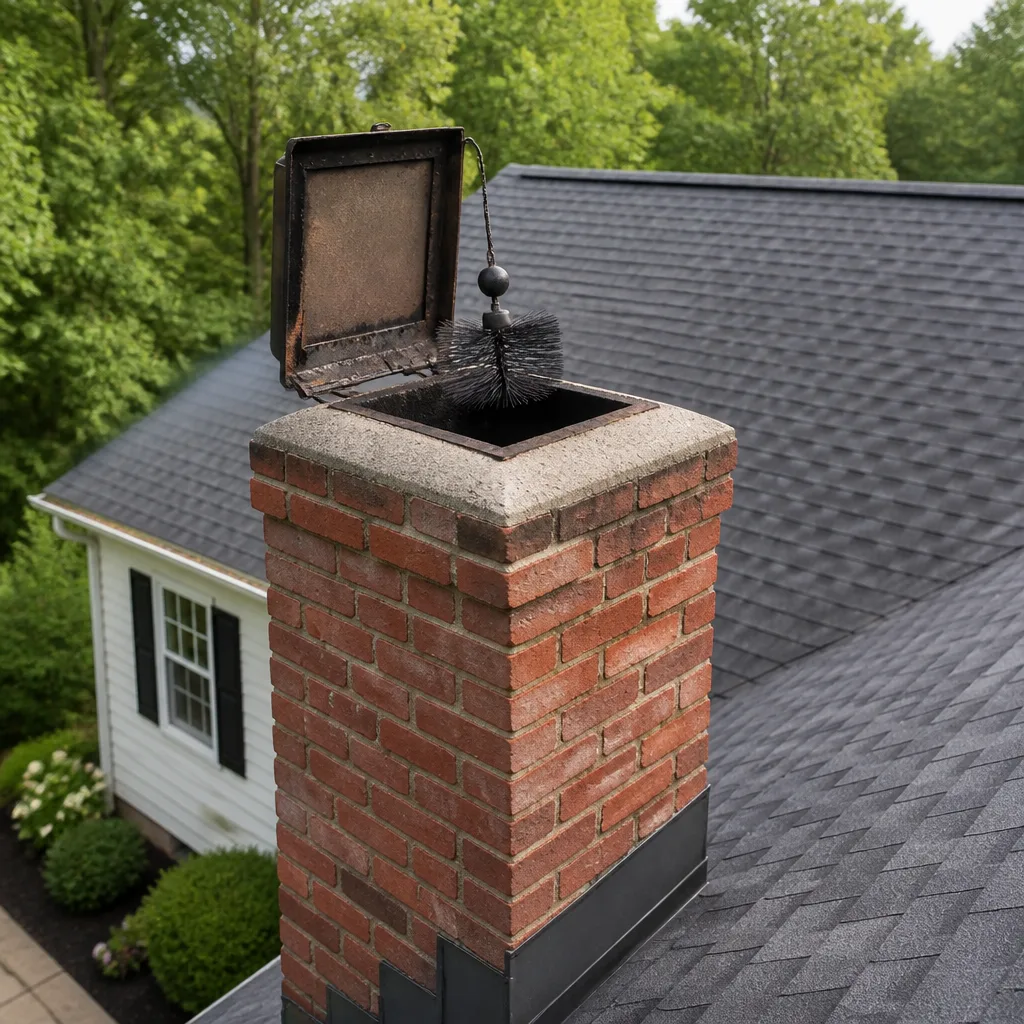 Sweep & inspection
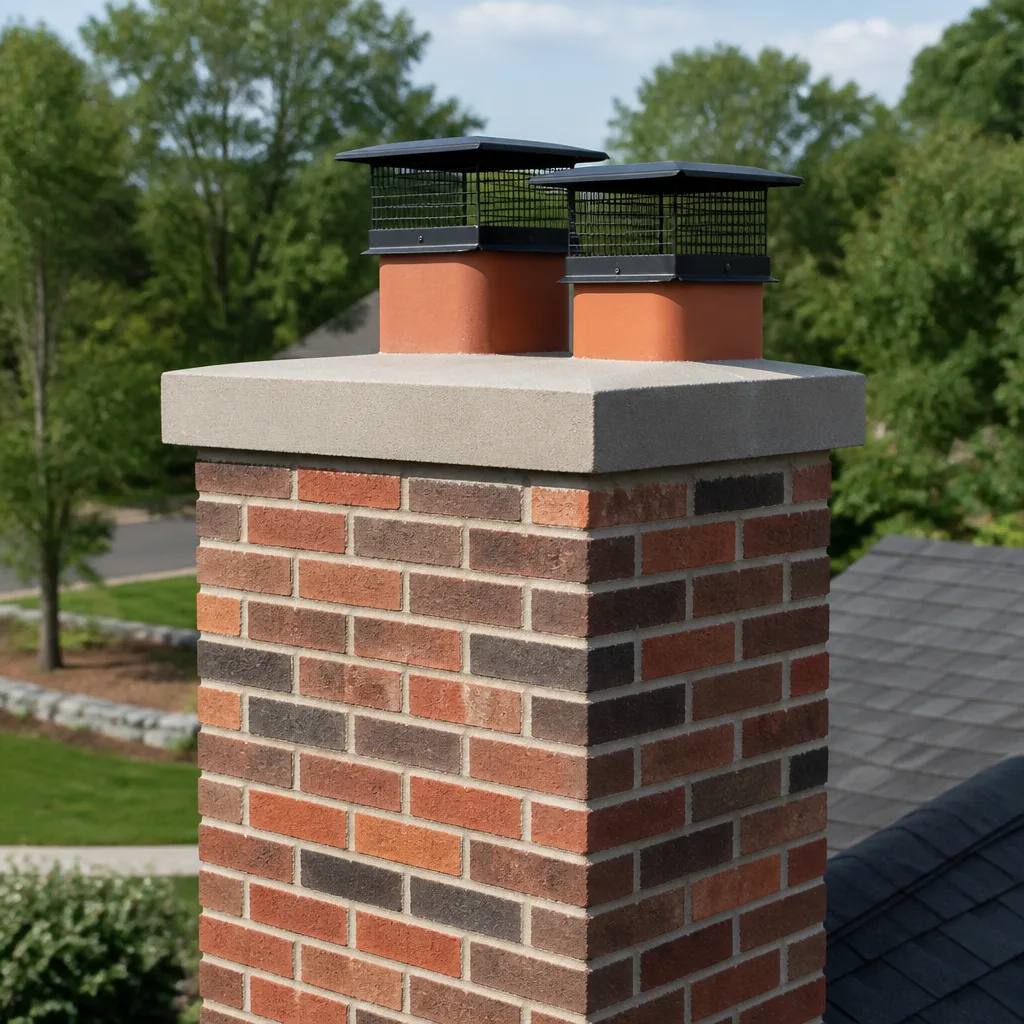 Caps & crowns
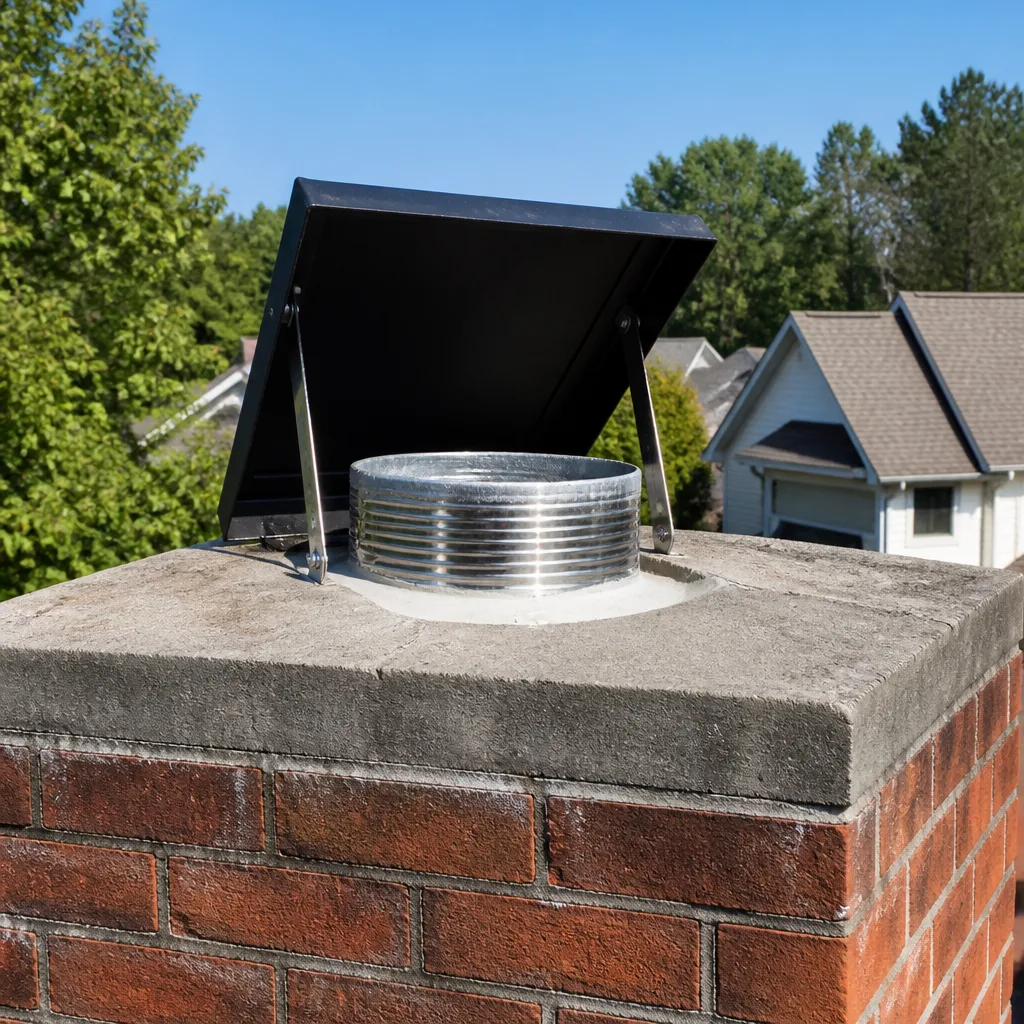 Flue relining
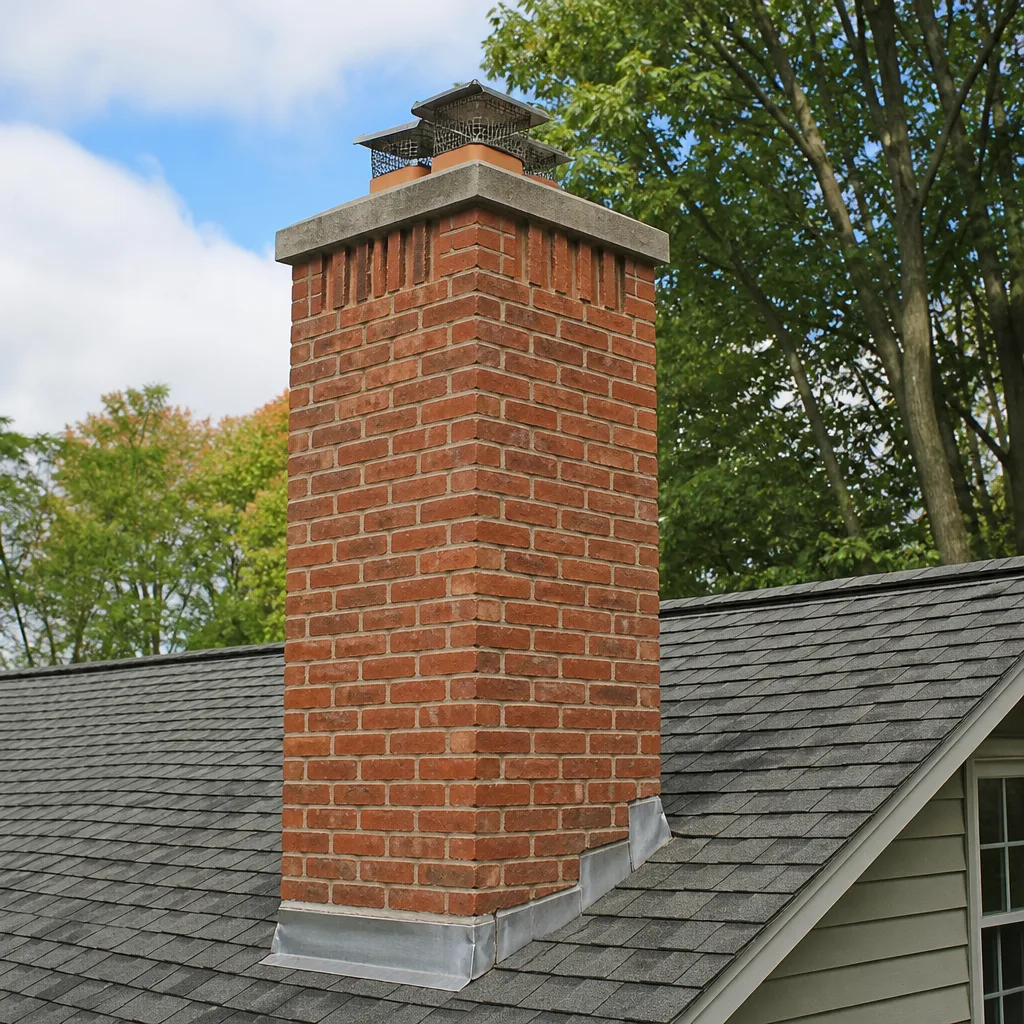 Masonry repair
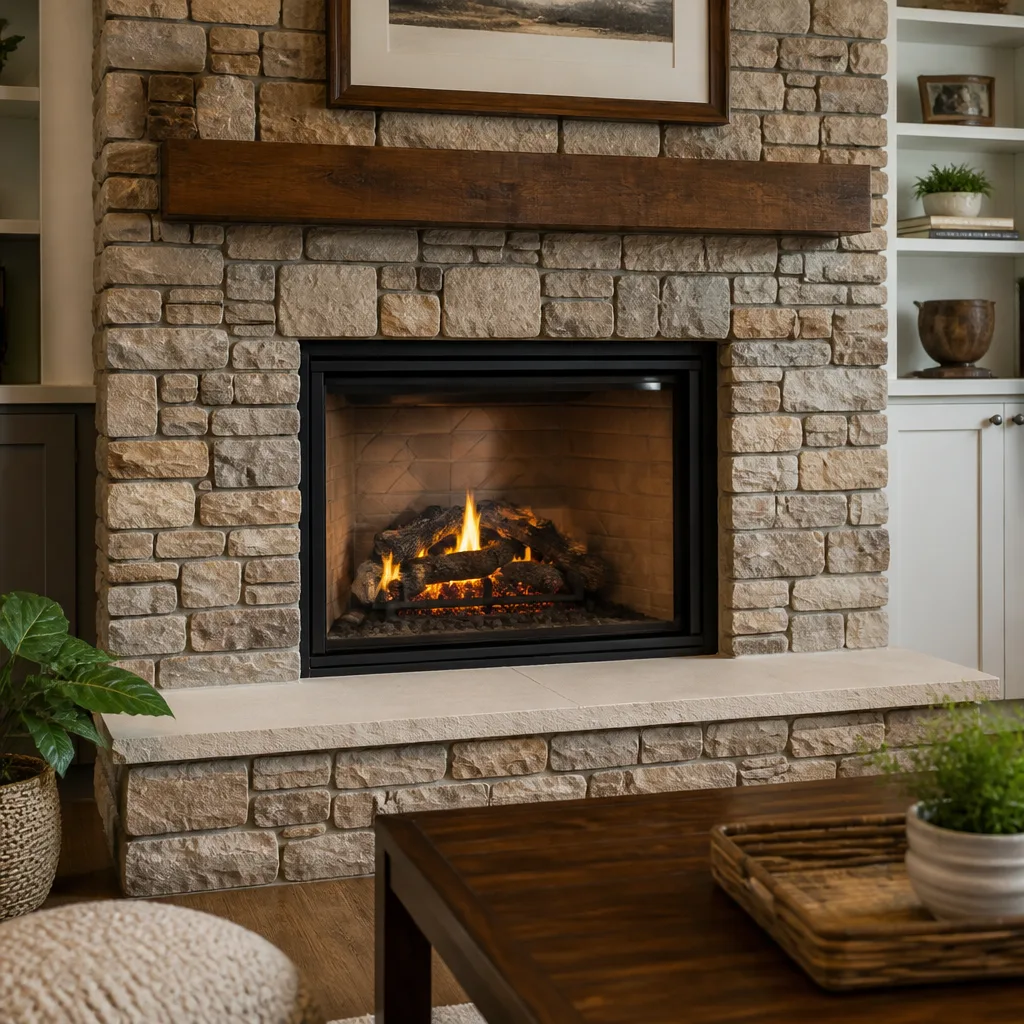 Gas fireplace service
Level 1 sweep and inspection to the NFPA 211 annual standard - flue, crown, cap, and flashing checked and photographed
Chimney sweep logs do not sweep chimneys. They loosen some creosote - which then falls where a brush and vacuum still have to collect it.
Chimney Cleaning Warning Signs: A Round Rock Homeowner’s Reference Guide
A white powdery stain running down your brick chimney exterior isn’t cosmetic. It’s efflorescence, and it means water is moving through your masonry in a pattern that will eventually crack your liner from the outside in. Most chimney guides tell you to look for smoke or visible cracks. This one goes further. Written for Round Rock homeowners specifically, it explains the early signals that Central Texas climate and construction make more common here than almost anywhere else, so you catch problems while they’re still cheap to fix.
Styles & brands we work with
Quick Answer
The earliest chimney cleaning warning signs in Round Rock are a creosote smell on warm days with no fire burning, white efflorescence staining on exterior brick, and draft problems that get worse when your HVAC runs. For a complete breakdown, see our Chimney Sweep Maintenance Checklist for Round Rock Homeowners. Any of these means your chimney is working harder than it should, and the fix is usually a professional inspection and sweep before the problem reaches your liner or firebox.
Table of Contents
- Efflorescence: The White Stain That Predicts Liner Failure
- The Creosote Smell on a Warm Day (With No Fire Burning)
- Draft and Damper Problems in Open Floor Plans
- Animal Sounds, Droppings, and Debris in the Firebox
- Spalling Brick: Foundation Movement vs. Weather Exposure
- The “Smoke Puffs Back” Test and What It Actually Tells You
- Gas Fireplace Warning Signs Most Guides Skip
- Common Mistakes to Avoid
- When to Call a Professional
- Frequently Asked Questions
- The Bottom Line
Efflorescence: The White Stain That Predicts Liner Failure
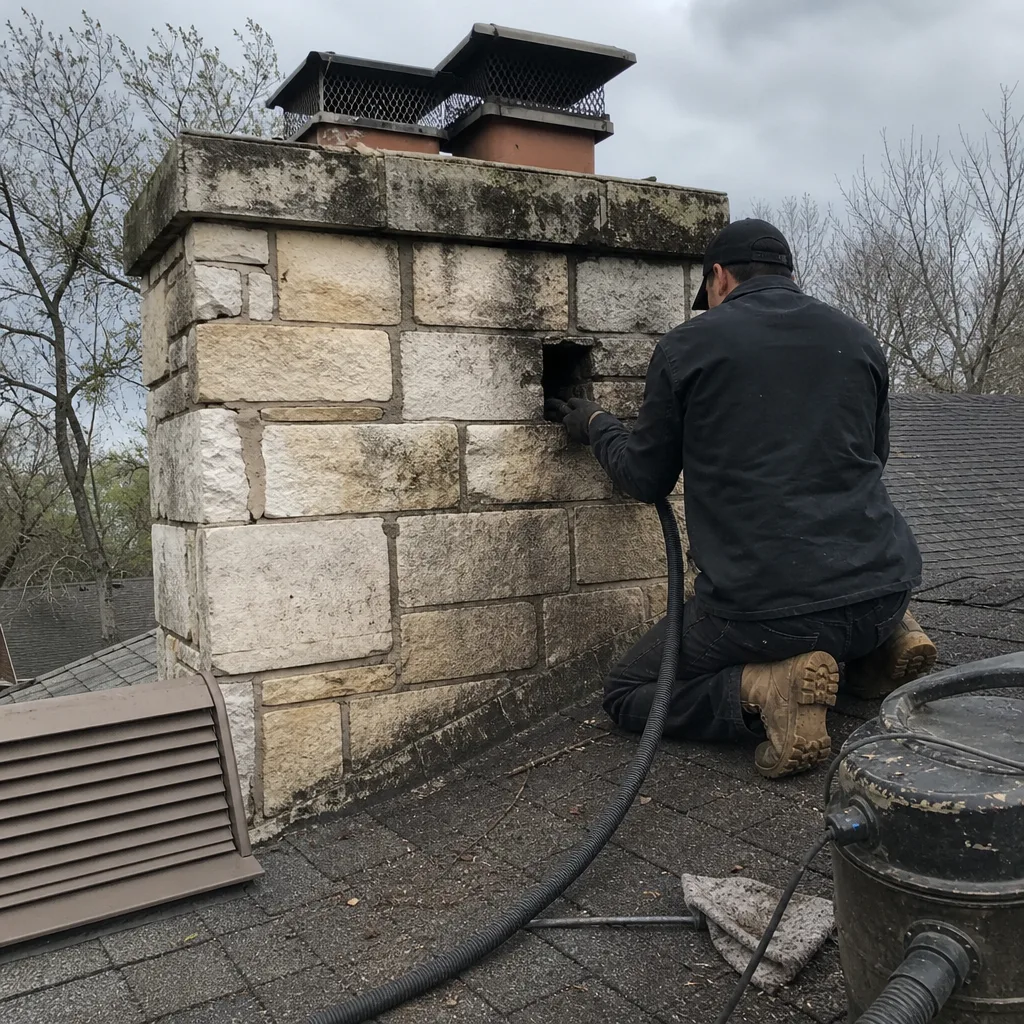
Efflorescence is a crystalline salt deposit left behind when water migrates through masonry and evaporates on the surface. It looks like chalk dust, a white haze, or streaky mineral stains running down brick. It’s not mold, and brushing it off doesn’t solve anything. The water that carried those minerals to the surface is still inside your chimney system, and it’s doing damage you can’t see from the ground.
In Round Rock, efflorescence shows up most often on north-facing chimney sides and under the crown overhang. That’s because our winter rains come from the north, and the portion of the chimney that stays shaded longest holds moisture the longest. When we inspect a chimney in Round Rock with efflorescence, we typically find one of three things:
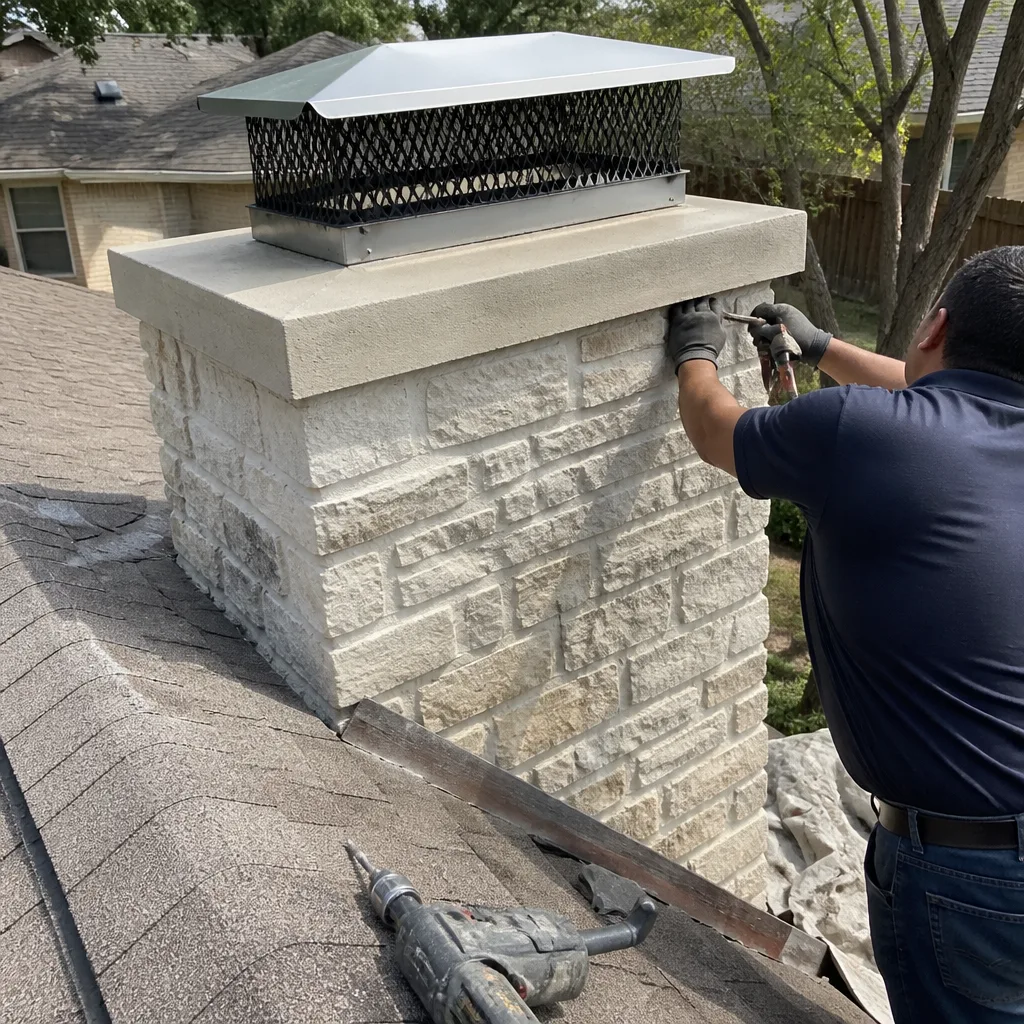
- Crown failure: The concrete cap on top of the chimney has hairline cracks or has pulled away from the flue tile, letting water seep straight down the outside of the liner.
- Flashing compromise: The metal where chimney meets roofline has lifted, rusted, or was never properly counter-flashed. This is common on Round Rock homes built during the 2000s construction boom, when flashing details sometimes got rushed.
- Masonry absorption: The brick itself is soaking up water because the original mortar joint has weathered to the point where it acts like a sponge instead of a barrier.
Here’s why efflorescence matters more than people think. Water-saturated brick in Central Texas goes through freeze-thaw cycles in winter. Even our occasional hard freezes, like February 2021, are enough to expand trapped water and fracture the brick from the inside. That fracturing eventually reaches the clay flue liner, and once the liner is compromised, you’ve moved from a chimney sweep conversation to a Chimney Repair in Round Rock conversation. Catching efflorescence early means repointing mortar joints and sealing the crown, not replacing a liner.
What to do: If you see white staining, don’t scrub it and call it fixed. Take a photo, note which side of the chimney it’s on, and get someone on the roof to look at the crown and flashing. The location of the stain tells you where the breach is. Stains near the top point to the crown. Stains near the roofline point to flashing. Stains spread across the middle suggest general masonry absorption.
The Creosote Smell on a Warm Day (With No Fire Burning)
Creosote smells like a cross between asphalt and old barbecue smoke. It’s acrid, slightly sweet, and lingering. If you notice it on an August afternoon in Round Rock with the fireplace cold and unused for months, that’s not normal. It’s a signal that the creosote layer inside your flue has built up to a point where heat and humidity are volatilizing it back into the air.
Central Texas summers make this symptom show up more dramatically than in a drier climate. Our humidity levels, especially during those weeks when the dew point sits above 70 degrees, essentially steam the creosote deposits inside the chimney. The moisture content in the air gets absorbed by the creosote glaze, and as the chimney heats up in the afternoon sun, the compounds release into your living space. Homeowners in Round Rock often describe it as “the fireplace smells like a campfire even though we haven’t used it since March.”
Here’s what that smell tells us about concentration. Creosote forms in three stages. Stage one is flaky soot, easy to brush out. Stage two is a sticky, granular deposit that clings to flue walls. Stage three is a hardened glaze that can only be removed with professional rotary equipment. If you’re smelling creosote with no fire burning, you’re almost certainly past stage one. The volatile organic compounds in stage two and three creosote become airborne with enough heat and humidity, which is exactly what our Round Rock summers provide.
The fire risk difference between these stages is substantial. Stage three creosote ignites at around 2,000 degrees Fahrenheit and burns hot enough to crack flue tiles within minutes. A standard chimney fire in a stage three glazed flue can reach 2,500 degrees, which is why so many chimney fires in Central Texas result in structural damage rather than just a scare. The National Fire Protection Association recommends sweeping when creosote reaches 1/8 inch of buildup. You can’t measure that from the ground, but you can trust your nose.
What to do: If you smell creosote on a warm day, don’t light a fire to test it. Call a professional sweep. The smell means the buildup is already significant, and burning on top of it is how chimney fires start. A sweep is significantly less expensive than liner repair or a roof fire.
Draft and Damper Problems in Open Floor Plans
Round Rock has grown fast, and a lot of our housing stock was built since 2005. That matters for chimney performance. Homes built in the last two decades tend to have open floor plans, high ceilings, powerful HVAC systems, and aggressively designed kitchen exhaust. All of these compete with your chimney for air.
Here’s the mechanics. A wood-burning fireplace needs a consistent supply of combustion air and a clear path for exhaust to exit. In an older, tighter house with an 8-foot ceiling, that’s straightforward. In a Round Rock new-construction home with a vaulted great room, the chimney becomes one part of a complex pressure system. Your furnace blower, your return air ducts, your bathroom fans, and your kitchen hood all depressurize the house slightly when they run. That negative pressure pulls air down the chimney instead of letting exhaust rise up it.
Symptoms of a draft problem that homeowners often misattribute:
- Smoke rolls into the room slowly when a fire is lit, then clears once the flue heats up. This means the draft is weak at startup, and your HVAC return is likely competing with the chimney for makeup air.
- The fireplace smokes more when the kitchen stove hood is running. The hood fan is pulling air out of the house faster than the chimney can supply it. This is extremely common in Round Rock homes with large commercial-style kitchen hoods.
- A cold draft comes down the chimney even with the damper closed. The damper isn’t sealing, or the house’s negative pressure is pulling outside air through the chimney gap. This gets worse in summer when the AC runs constantly.
- You smell last year’s chimney odor for days after a rain. The damp flue is off-gassing, and your AC return is drawing that air through the house.
Often the fix is not a chimney rebuild, but a damper replacement, a top-sealing damper installation, or in some cases, a combustion air intake added to the firebox. When we inspect draft problems in Round Rock homes, we measure not just the flue dimensions, but the house’s pressure dynamics with the HVAC running. A chimney that works fine with the AC off can smoke like a campfire when the returns kick on.
Animal Sounds, Droppings, and Debris in the Firebox
Central Texas is home to chimney swifts, squirrels, raccoons, and the occasional ringtail. Every one of them sees your chimney as prime real estate. The sounds and debris they leave behind are not just a nuisance. They’re diagnostic information about what’s happening above.
What you’re hearing, and what it tells you:
- Cheeping or chittering from the flue in spring and summer. This is almost certainly chimney swifts, a federally protected species. You can’t remove them, and destroying a nest carries fines. The presence of swifts tells you two things: your damper was left open, and your chimney cap is either missing or has gaps large enough for birds to enter. Once the swifts migrate out in fall, that entry point needs addressing before next season.
- Scrabbling and heavy movement at night. Raccoons. They’re strong enough to tear off a lightweight cap and will nest on the smoke shelf. Their droppings are a biohazard, and their nest material is combustible. The cap failure that let them in also lets rain in, which means you likely have water damage brewing along with the animal problem.
- Debris in the firebox: twigs, leaves, grass, matted nesting material. Anything dropping into the firebox means the flue is not properly capped. If nesting material is present, an animal has established itself at the flue opening. That material is extremely flammable and sits directly on top of your smoke shelf, right where embers concentrate.
- A dead animal smell that comes and goes. Something has died in the flue or on the smoke shelf. It needs removal, and the entry point needs sealing, or it will happen again.
Animals in the chimney also concentrates creosote in the flue in ways a normal brush sweep won’t fully address. The nest materials and compressed debris create hot spots. When we encounter a chimney in Round Rock with animal activity, the process is always the same: remove the animal humanely or document the protected species, remove all nest material with a thorough sweeping, then assess the cap and damper. The cap is typically the root cause, and a proper cap with small mesh screening solves most animal problems permanently.
Spalling Brick: Foundation Movement vs. Weather Exposure
Spalling looks like the face of the brick has popped off, leaving a rough, exposed interior, often with brick fragments on the ground below. It’s a signal that moisture has gotten inside the brick, frozen or expanded, and blown out the surface. But not all spalling means the same thing, and in Round Rock specifically, the distinction between causes matters a lot.
Weather-driven spalling appears as random, scattered bricks with popped faces, typically concentrated in areas where water pools or runs: below the crown, at the roofline, on the prevailing weather side. This is the classic freeze-thaw moisture damage. Once the brick face is gone, the soft interior clay absorbs water faster, and the damage accelerates. The fix is usually localized: replace the damaged bricks, repoint surrounding mortar, and address the water entry point.
Foundation-driven spalling presents differently. The cracking runs in stair-step patterns through the mortar joints. The spalled bricks concentrate around corners and above door or window openings. There may be a visible vertical crack running through the chimney stack that aligns with a crack in the home’s slab or brick veneer. In parts of Round Rock east of I-35, where soils have more clay and more movement, this pattern is common. The chimney is moving with the foundation, and the resulting stress is cracking bricks from shear force, not just water expansion.
This distinction matters because the fix sequence is different. If you drill out and replace spalled bricks on a chimney that’s actively moving, you’re doing cosmetic work on a structural problem, and it’ll fail within a couple of years. The foundation movement needs to be evaluated first. In some cases, minor movement has stabilized and chimney repair is appropriate. In others, the house needs foundation attention before the chimney makes sense.
What to do: Photograph the spalling pattern. Look for whether the mortar cracks run in straight lines (weather) or stair-steps (movement). Walk around the house and note whether there’s a slab crack that lines up with the chimney location. That information, shared with a chimney professional, changes the entire repair strategy.
The “Smoke Puffs Back” Test and What It Actually Tells You
There’s a simple observation you can make that most guides never mention. Open the damper fully on a mild day, when the temperature outside is close to the temperature inside. Light a small, smoky source near the damper opening, like a half-sheet of rolled newspaper. Hold it in the firebox and watch.
- Smoke rises easily and draws up the flue. Basic draft is functional. This doesn’t rule out creosote buildup, but the pathway is clear and the damper opens.
- Smoke wavers, stalls, or puffs back into the room. Something is restricting the flue. It could be an animal nest, a heavy creosote restriction, a closed or damaged damper, or inadequate flue sizing for the firebox. The fix starts with an inspection and a Chimney Sweep in Round Rock to clear and assess.
- Smoke draws fine, but you hear a whistling or see dust moving near the damper. The chimney is drafting, but the house is pulling air from somewhere else. This is the open-floor-plan pressure issue described earlier, and it usually needs a damper or makeup air solution rather than just a sweep.
The test takes 30 seconds and tells you whether the problem is in the flue or in the house’s air pressure dynamics. When a Round Rock homeowner calls us with “fireplace smoke problem” but can’t tell us whether the smoke draws or stalls, the first thing we do on site is run this exact check. It separates flue restrictions from HVAC competition, and those are two entirely different fixes.
Gas Fireplace Warning Signs Most Guides Skip
Gas fireplaces have a different set of warning signs, and guides that lump gas and wood together miss half of them. Round Rock has a high proportion of homes with gas log sets and direct-vent gas fireplaces, especially in neighborhoods built since 2000.
The signs that matter for gas:
- Soot buildup on the logs or glass, especially the top logs. Gas burns clean when the air-to-fuel mixture is right. Soot means incomplete combustion, which usually traces back to improper log placement, clogged burner ports, or a ventilation problem. It’s not just ugly. It’s carbon monoxide production, which is particularly concerning in a room where people sit.
- The flame dances or “floats” instead of burning steady blue at the base. A healthy gas flame is steady. A dancing flame, particularly one that moves when the HVAC kicks on, indicates a draft or venting interaction problem.
- Condensation on the glass or firebox walls that doesn’t clear after 20 minutes. This can indicate that the venting is not moving moisture out properly. In Round Rock’s humid climate, a properly vented gas fireplace should clear its glass quickly once warm.
- A smell like a pilot light or unburned gas near the fireplace when it’s off. Never ignore it. Turn off the gas supply at the shutoff valve and call a professional. This is outside the scope of routine chimney cleaning and needs immediate attention from a gas-qualified technician.
Gas fireplaces still get chimney buildup, just not creosote. What they get is fine soot from incomplete combustion, dust that settles during the off-season, and in some cases, mineral deposits from moisture in the flue. A gas chimney should still be swept and inspected annually, something a lot of Round Rock homeowners skip because “it’s just gas.” When we sweep gas flues, we use different brushes and a gentler process than wood flues, because the deposits are different and the liner materials require it.
Common Mistakes to Avoid
- Ignoring efflorescence because it “washes off.” The stain returning after rain is the message. Water is infiltrating. Efflorescence is not a cosmetic issue that can be brushed away; it’s a diagnostic marker for an ongoing moisture problem.
- Thinking a chimney that hasn’t been used doesn’t need inspection. Unused chimneys develop problems from water, animals, and structural movement. In Round Rock, an unused chimney is where we find the worst animal damage, because there’s no fire smoke to deter anything from nesting.
- Burning green or freshly cut wood to save money. Green wood produces dramatically more creosote per fire than seasoned wood. In Central Texas, where oak is plentiful, freshly cut oak holds enough moisture to smoke badly in a fireplace. Season it at least 12 months.
- Assuming a new-construction home has a properly built chimney. The Round Rock building boom produced a lot of chimneys that passed code inspection but have long-term performance issues. Flashing details, cap design, and flue sizing are all places where production builders cut corners, and the problems show up years later.
- Hiring a handyman to cap the chimney or patch flashing. The cap and flashing are waterproofing systems integrated with the flue. A handyman patch will fail because it doesn’t account for how the entire system drains. You’ll pay twice: once for the patch, once for the proper fix.
- Using the fireplace during a burn ban or Red Flag Warning. Williamson County issues burn bans regularly during dry periods, and lighting a wood fire in an open hearth under those conditions is both illegal and dangerous. Embers from an unscreened chimney are an ignition source for grass fires.
When to Call a Professional
Call a professional sweep if you notice creosote odor without a fire burning, efflorescence staining you can’t explain, smoke that puffs into the room when the AC runs, or any sign of animal activity in the firebox. These are not conditions that resolve themselves. Call immediately if you smell gas near a gas fireplace, or if you hear the loud crackling pop of a chimney fire. Boardwalk Chimney Sweep offers free estimates in Round Rock, and we handle the full cycle from sweeping and inspection through liner work and repair, using materials from manufacturers like Gelco, Olympia Chimney, and Famco. Not sure who to trust? Read our guide on Choosing the Right Chimney Cleaning Brand: A Buyer’s Guide for Round Rock. Reach us at (877) 274-1247.
Frequently Asked Questions
The National Fire Protection Association recommends annual inspection and sweeping as needed, regardless of how often you burn. In Round Rock, where our season runs roughly November through March, annual sweeping before the first fire of the season is the right cadence. Homes that burn weekly through the winter, or burn green wood, may need mid-season attention too.
Chimney sweeping in Round Rock typically runs between $150 and $350 for a standard open-hearth fireplace, depending on the level of creosote buildup, flue height, and whether animal debris or glazed creosote requires rotary cleaning. If the sweep identifies damage requiring repair, that’s quoted separately after inspection. Every chimney we work on gets inspected before any work is done, so you know what you’re paying for before the brush goes in.
Creosote builds up in layers, and the inner layers harden into a glaze that’s significantly harder to remove and much more flammable. At the same time, moisture that would have been caught by a yearly inspection keeps working on your liner and masonry. A chimney that goes 5 years without service is typically a chimney that needs liner or mortar work, not just a sweep. The cost difference is meaningful.
Yes. A proper inspection includes a camera scan of the flue interior, which shows cracks, gaps, and deterioration that aren’t visible from the top or bottom. If liner damage is found, the options range from resurfacing with a product like HeatShield to full relining with a system like DuraFlex. The camera evidence is what allows us to show you exactly what we’re recommending and why.
They do, though for different reasons than wood fireplaces. Gas flues accumulate fine soot, dust, and sometimes mineral deposits from condensation. The annual sweep for gas is lighter than for wood, but still important because soot buildup in a gas flue can contribute to carbon monoxide issues, especially in tightly sealed homes.
They’re both combustion exhaust systems, and both fail in the same way: restricted airflow leads to heat buildup, which leads to fire. The NFPA identifies dryer vents as a leading cause of home fires, and chimneys have the same mechanism. That’s why we bundle Dryer Vent Cleaning in Round Rock with chimney service, so both systems get addressed in a single appointment. It’s two fire hazards handled with one call.
The Bottom Line
Chimney warning signs in Round Rock are subtle and often misread. Efflorescence is a moisture warning, not a stain. A creosote smell on a warm day is a buildup warning, not a nuisance. Draft problems are frequently HVAC pressure problems, not chimney blockages. And spalling brick has to be diagnosed before it’s repaired, because foundation movement and weather damage demand different responses. The chimney is a system, and every symptom is one component telegraphing stress in another. Staying ahead of it means annual inspection, prompt response to any of the signs above, and a professional who can repair what they inspect. For more guides & resources on keeping your chimney safe, explore our blog. We’ve been doing exactly that since 2011.
Written by the team at Boardwalk Chimney Sweep, serving Round Rock since 2011.
See the difference
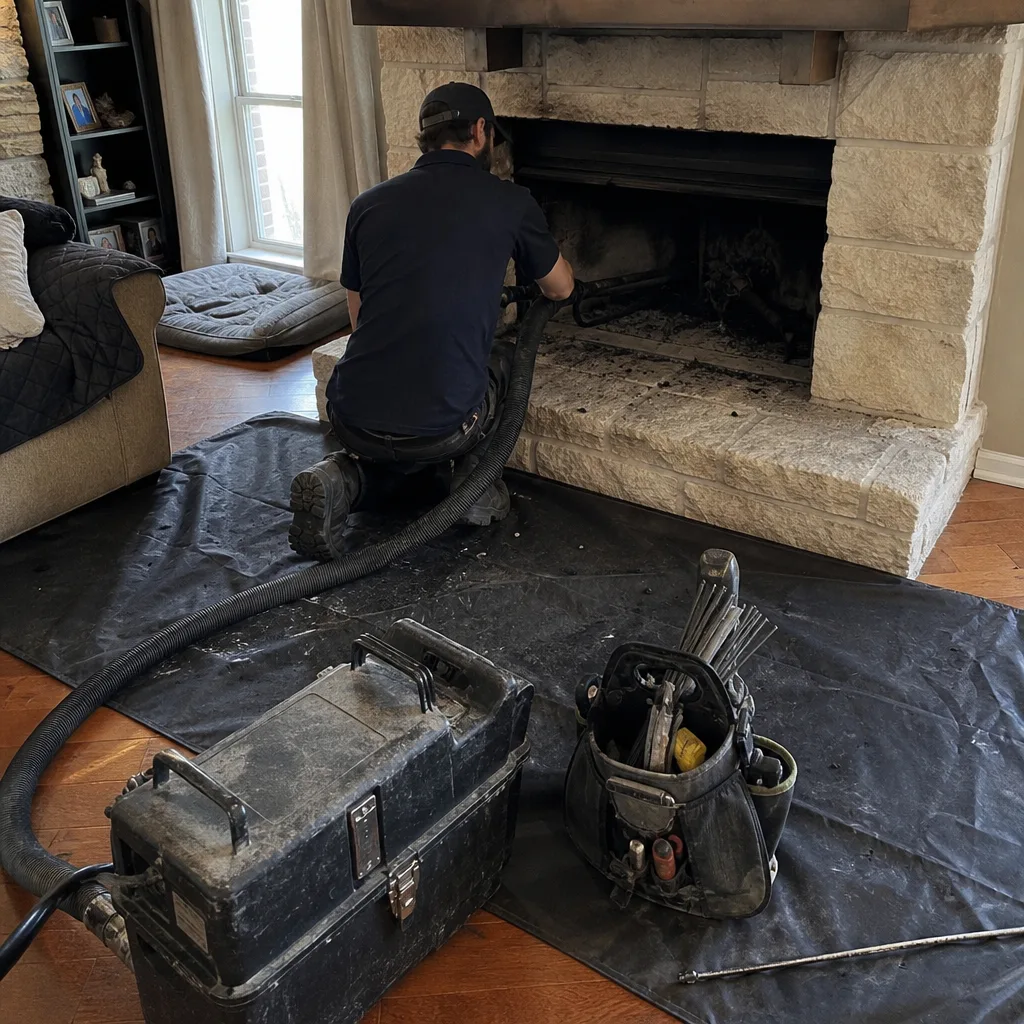 Before
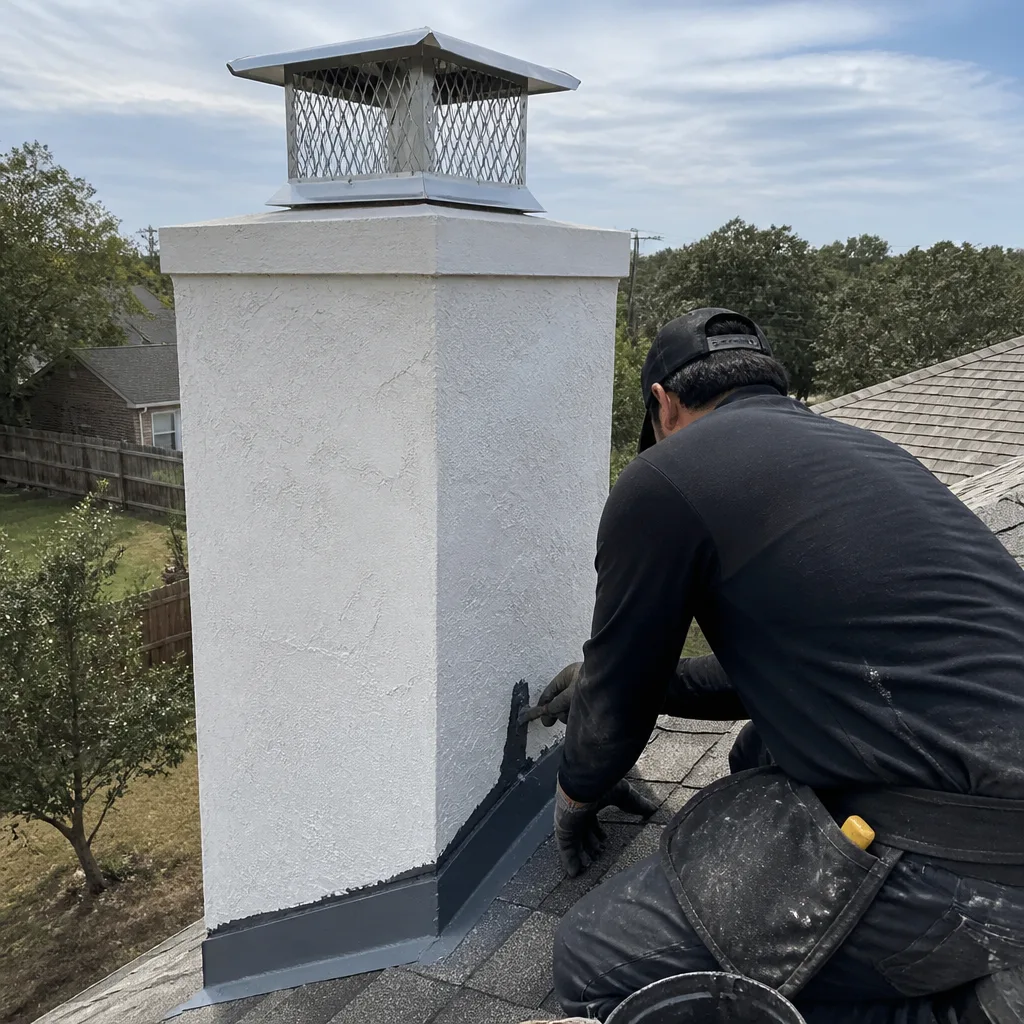 After
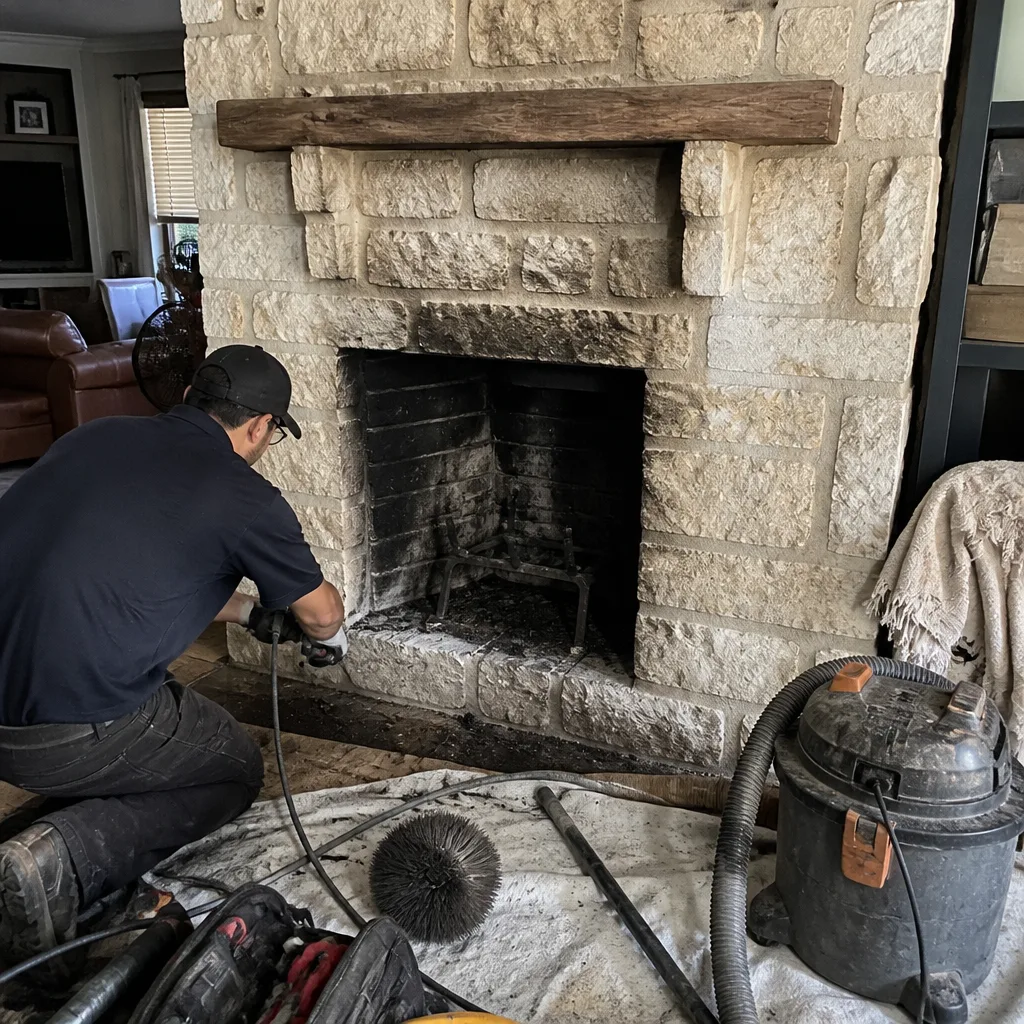 Before
 After
 Before
 After