
Last updated October 31, 2026
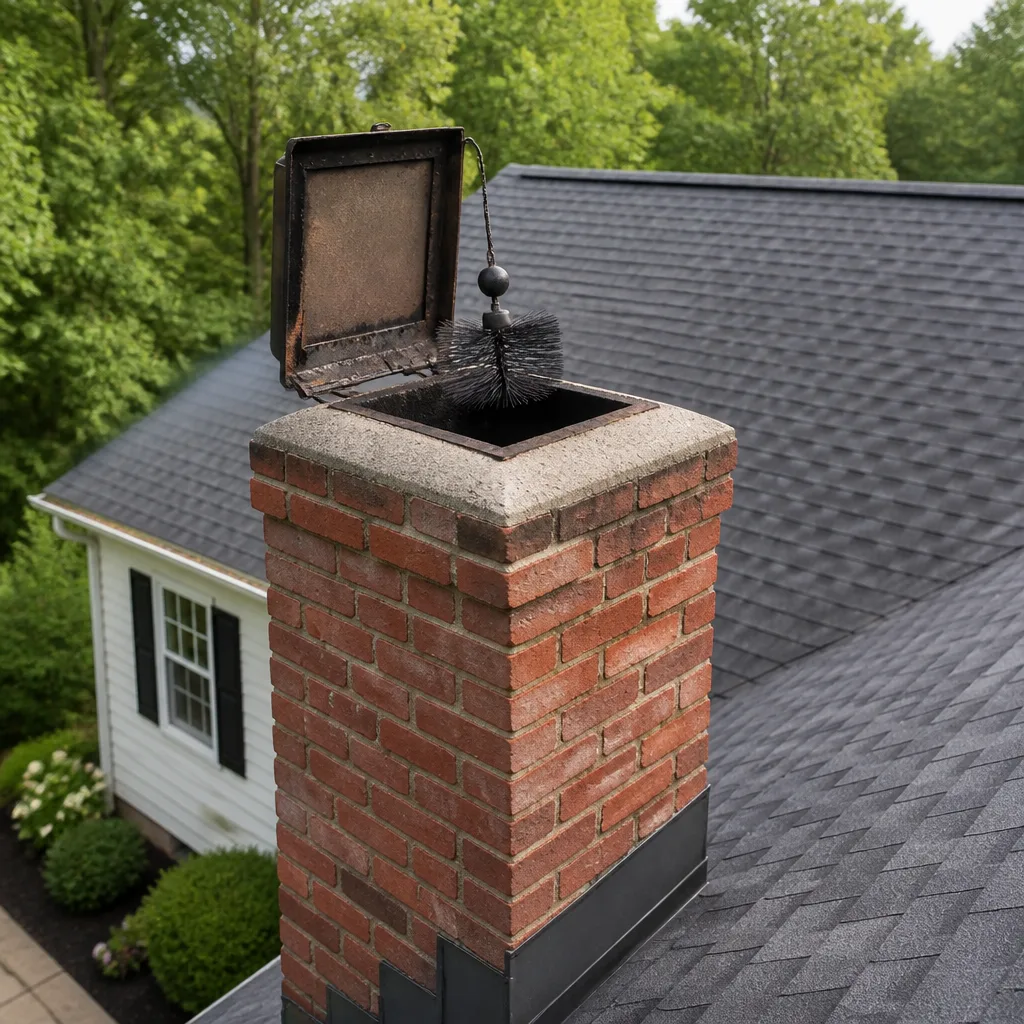 Sweep & inspection
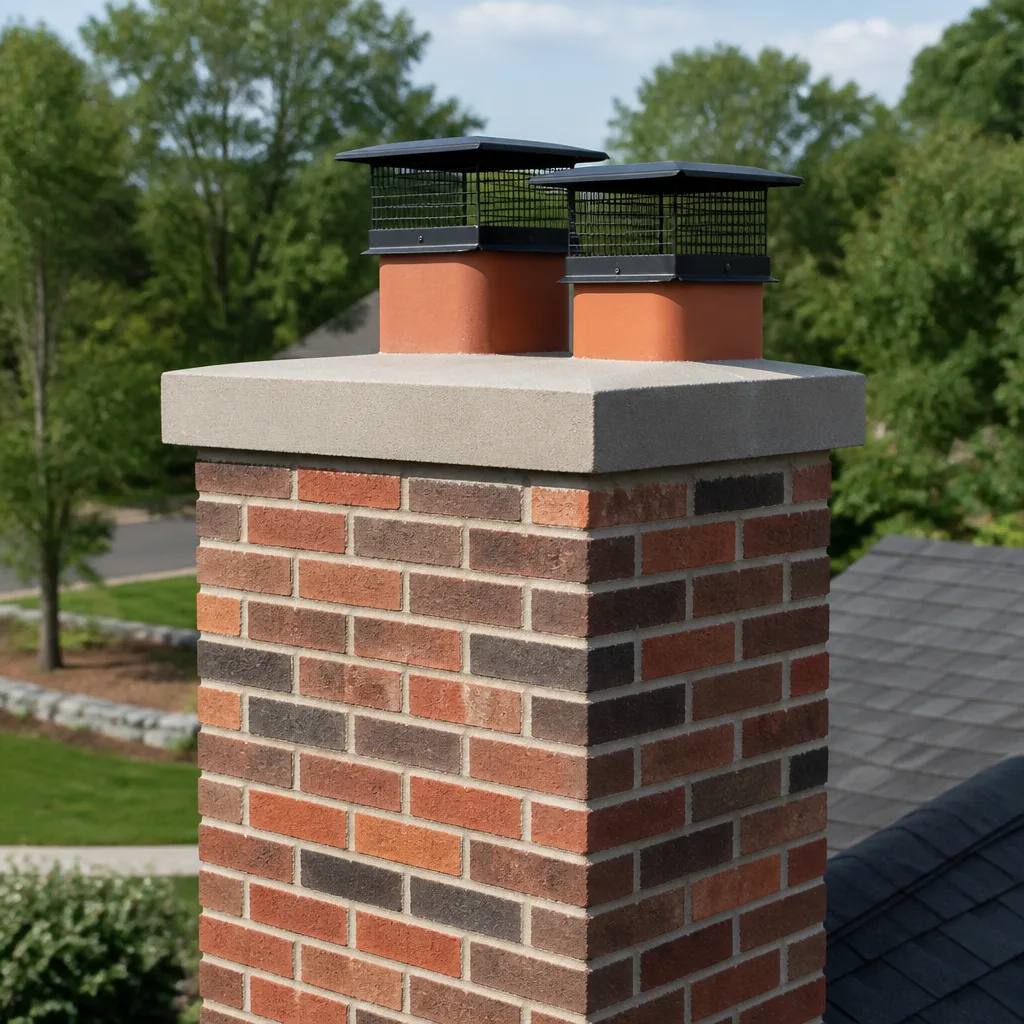 Caps & crowns
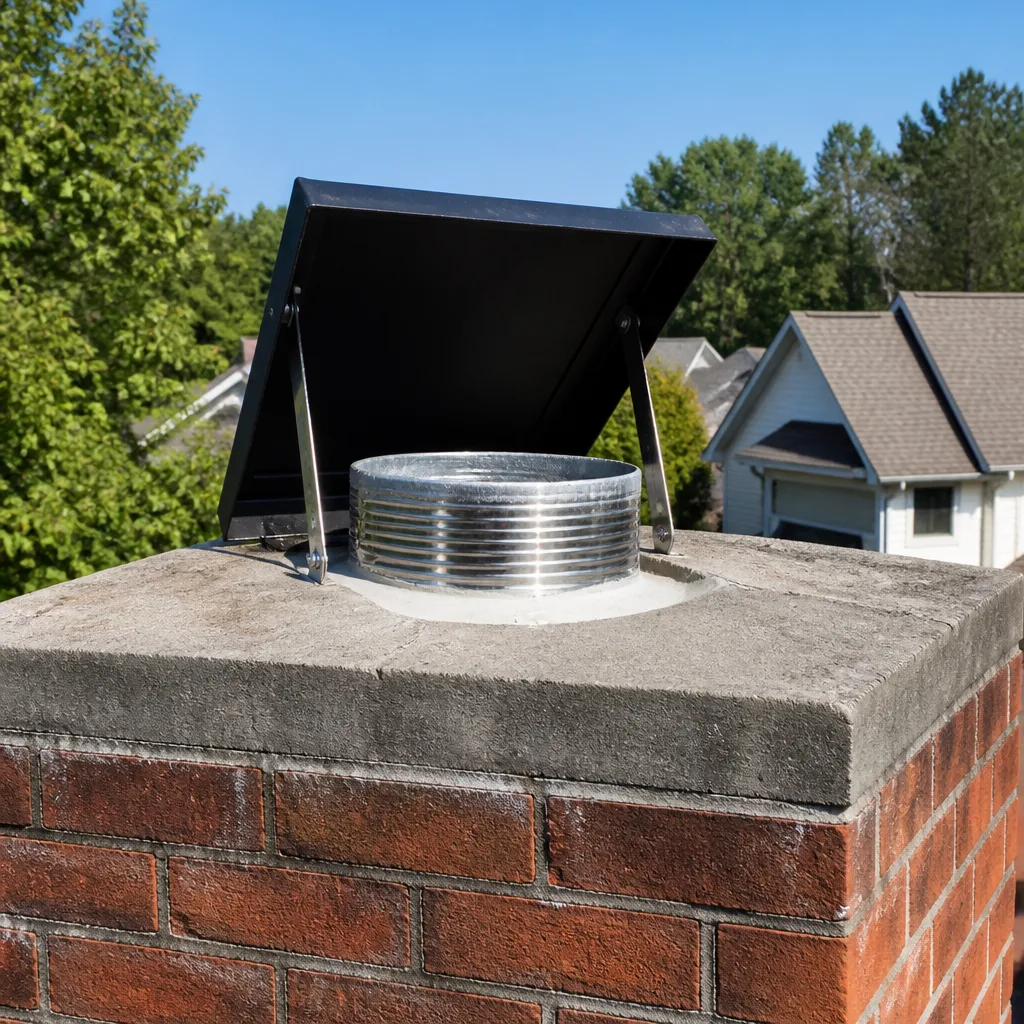 Flue relining
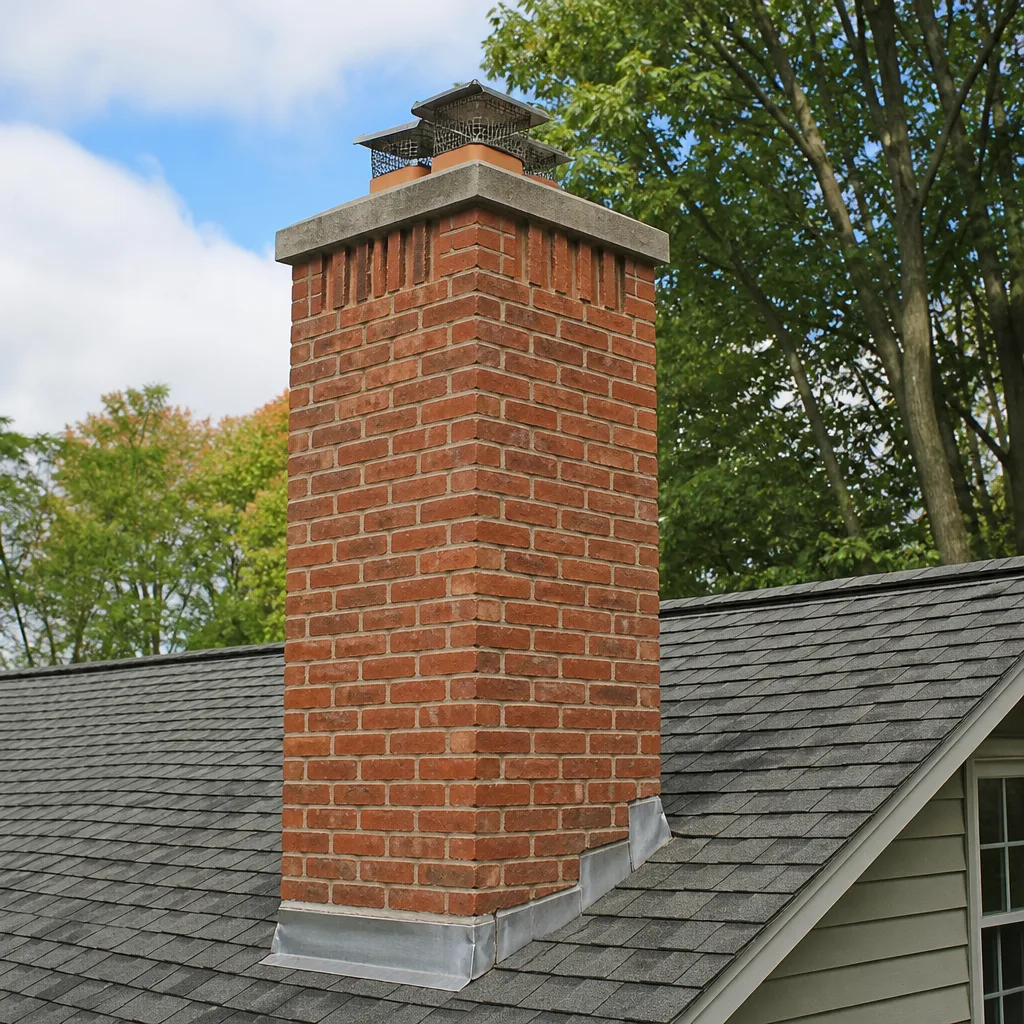 Masonry repair
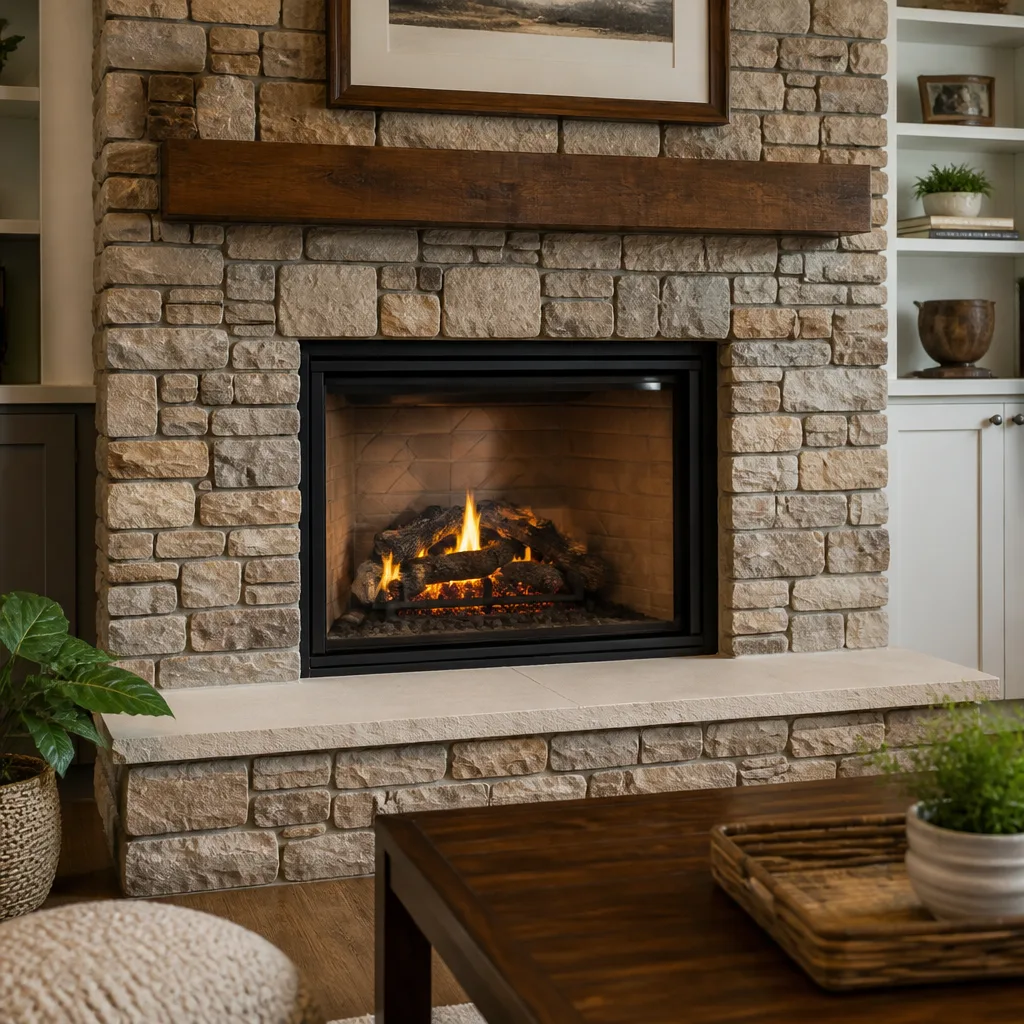 Gas fireplace service
Level 1 sweep and inspection to the NFPA 211 annual standard - flue, crown, cap, and flashing checked and photographed
Chimney sweep logs do not sweep chimneys. They loosen some creosote - which then falls where a brush and vacuum still have to collect it.
Chimney Cleaning Permits, Codes & Inspections in TX: What You Need to Know
If a contractor replaces your chimney liner without pulling a permit and you have a fire six months later, your insurance carrier has grounds to deny the claim. That outcome is more common than most homeowners ever hear about, and it’s rarely discussed until after the adjuster has already made their decision. Texas has no statewide chimney licensing law, which means the rules that actually govern your chimney in Round Rock are buried in a patchwork of local amendments, county requirements, and national fire codes that most homeowners have never read. This guide explains which chimney work in Williamson County genuinely requires a permit, what NFPA 211 demands that local code may not spell out, and how to protect yourself before you write a check to any contractor.
Quick Answer
Routine chimney sweeping and Level 1 inspections do not require a permit anywhere in Texas, including Round Rock. However, structural repairs, liner replacement, and any work that alters the firebox, flue, or chimney chase typically requires a permit through the City of Round Rock building department, and all chimney work regardless of scope should meet NFPA 211 standards even where Texas code stays silent.
Styles & brands we work with
Table of Contents
- The Texas Chimney Licensing Gap Nobody Talks About
- Which Chimney Jobs Actually Require a Permit in Round Rock
- NFPA 211 vs. Texas Code: Where They Diverge
- What a Code-Compliant Level 2 Inspection Must Contain
- The City of Round Rock Building Department’s Role
- How Homebuyers Can Verify Prior Chimney Work
- The Insurance Claim Risk You Accept by Skipping Permits
The Texas Chimney Licensing Gap Nobody Talks About
Texas is one of a shrinking number of states that does not require chimney sweeps or chimney repair contractors to hold a state-issued license. There’s no Texas chimney contractor exam. There’s no state board that disciplines bad chimney work. What exists instead is a system where general contractor registration rules, local permit requirements, and the voluntary standards published by the Chimney Safety Institute of America (CSIA) and the National Fire Protection Association (NFPA) do the work that a licensing regime would do in other states.
This matters for a practical reason: when anyone can print business cards and call themselves a chimney sweep, the burden of verifying competence falls entirely on you. We’ve seen the results in Round Rock homes where a previous chimney repair was done with hardware-store cement instead of refractory mortar rated for fireplace temperatures—exactly the kind of problem our Chimney Sweep Troubleshooting: Common Problems and How to Fix Them guide warns homeowners about. The homeowner had no way to know the difference because the person who did the work was never required to prove they knew it either.
The regulatory vacuum has real consequences. Insurance carriers know Texas has no chimney licensing law, so when a chimney fire occurs, their adjusters often scrutinize the work history more aggressively than they would in a state with a licensing board. The absence of a permit becomes a convenient denial path. You can read more about local chimney service standards on our Boardwalk Chimney Sweep home page, but the short version is this: in Texas, the paper trail you create is often your only real protection.
Which Chimney Jobs Actually Require a Permit in Round Rock
Round Rock operates under the City of Round Rock building department, which enforces its own amendments to the International Residential Code (IRC). That code defines what’s a repair versus what’s an alteration, and the distinction determines whether you need a permit.
Here’s the breakdown as it applies to chimney work in Round Rock and Williamson County:
- Chimney sweeping (routine cleaning): No permit required. This is classified as maintenance, same as cleaning gutters. It’s explicitly excluded from permit requirements under the IRC’s maintenance exemption. No paperwork, no inspection, no city involvement.
- Level 1 chimney inspection: No permit required. It’s a visual evaluation using a flashlight and basic tools. Nothing is altered, so nothing triggers a permit.
- Level 2 chimney inspection: No permit required, but the inspection report becomes critical documentation if you’re selling a home, filing an insurance claim, or verifying prior work. More on this below.
- Chimney cap replacement: No permit required. This is considered an accessory replacement, not structural work. However, failing to replace a missing cap is a code violation under NFPA 211’s requirement for spark arrestors and rain protection.
- Chimney crown repair (minor resurfacing): Generally no permit if the work is cosmetic and does not alter the flue opening or structural dimensions. This is a gray area, and Round Rock has been tightening its interpretation in recent years.
- Flue liner replacement (full or partial): Permit required. This is structural work that changes the combustion pathway. Round Rock treats liner replacement as an alteration because it affects the appliance’s draft, clearance, and fire safety profile.
- Firebox rebuild or repair exceeding minor patching: Permit required. Once you’re replacing firebrick beyond surface cracks or rebuilding the firebox floor, the city considers this structural masonry work.
- Chimney chase repair or replacement: Permit required. The chase is the framed enclosure around a factory-built chimney, and altering it touches on structural framing, clearance-to-combustibles, and weatherproofing requirements.
- Damper replacement with a different type or size: Permit often required if the replacement changes the flue opening or requires structural modification. A like-for-like swap typically does not trigger a permit.
The practical threshold to remember: if the work changes how your chimney draws air, contains fire, or sheds water, Round Rock wants a permit. If the work only removes buildup or evaluates condition, it doesn’t.
NFPA 211 vs. Texas Code: Where They Diverge
NFPA 211 is the national standard for chimneys, fireplaces, vents, and solid fuel-burning appliances. It’s not a law by itself, but it becomes enforceable when a local code adopts it by reference or when an insurance policy requires compliance with “applicable industry standards.” Texas building code does adopt portions of NFPA 211, but with gaps.
Here’s what NFPA 211 requires that Texas code does not explicitly restate:
- Annual inspection requirement: NFPA 211 says every chimney, fireplace, and vent should be inspected at least once per year. Texas building code stays silent on inspection frequency for existing homes. That silence leads many Round Rock homeowners to skip inspections for years, believing no regulation requires them.
- Level 2 inspection after system changes: NFPA 211 mandates a Level 2 inspection whenever a property is sold, when the fuel type changes (e.g., wood to gas), or after a chimney fire. Texas has no statute requiring any inspection at the point of sale. Some Round Rock home inspectors do glance at chimneys during a general home inspection, but those are not NFPA-compliant chimney inspections.
- Clearance to combustibles verification: NFPA 211 specifies exact minimum clearances between a chimney exterior and adjacent wood framing. Texas code references this in new construction, but existing homes in Round Rock’s older neighborhoods (many built before the 1990s) frequently fail clearance checks without any local enforcement mechanism to catch it.
- Spark arrestor requirement: NFPA 211 requires a spark arrestor on chimneys serving solid fuel appliances. Texas code includes this for new installations, and Round Rock enforces it for new construction. But there’s no retrofit requirement, so thousands of existing Round Rock homes burn wood without spark protection.
The takeaway: NFPA 211 does more to protect you than Texas code does, but you have to voluntarily comply because no inspector is coming to check. That’s where hiring a sweep who works to the national standard, not just the local minimum, matters. We cover this standard on our Chimney Sweep in Round Rock service page, including what we check beyond what any city ordinance requires.
What a Code-Compliant Level 2 Inspection Must Contain
A Level 2 inspection under NFPA 211 is more than a visual check. It’s a documented evaluation of all accessible portions of the chimney, including the exterior, interior flue, and any accessible attic or crawlspace areas where the chimney passes through. Most importantly for insurance purposes, a Level 2 inspection produces a written report that an adjuster or claims examiner can evaluate.
Here’s what a code-compliant Level 2 inspection report in Round Rock should contain, and the sequence a thorough inspector follows:
- Exterior evaluation: The inspector documents the chimney crown condition, mortar joints, brick or stone face, flashing at the roofline, and any visible cracks, spalling, or water staining. These findings should be photographed and noted with measurements.
- Attic and chase inspection: Where accessible, the inspector examines the chimney chase interior for clearance violations, fireblocking presence or absence, and signs of heat transfer to framing. This is a step most general home inspectors skip entirely.
- Flue interior camera scan: Using a video inspection system, the inspector scans the flue liner from top to bottom. The footage should capture liner material type, cracks, gaps between tiles, creosote stage, and any blockages. HeatShield-resurfaced liners and DuraFlex liner installations should be documented with the installation date if that information is available.
- Smoke chamber and damper evaluation: The inspector checks the damper operation and the smoke chamber for corbeled or improperly parged surfaces. In Round Rock homes with older masonry chimneys, smoke chamber problems are common findings because Texas builders decades ago rarely parged them smooth.
- Firebox condition assessment: The firebox floor and walls are checked for missing or cracked firebrick, failing refractory mortar, and any gaps that could allow heat into surrounding framing.
- Clearance verification: The inspector measures and documents clearances to combustibles where accessible, noting any deviations from NFPA 211 minimums. These measurements become evidence if an insurance claim is ever filed.
- Written report with images: Every finding is documented in a report that includes timestamped photos, the inspector’s name, the inspection date, the chimney’s location in the home, and a definitive condition assessment.
Verbal reports do not satisfy insurance documentation requirements. An adjuster cannot evaluate, “The sweep said it looked fine.” They can evaluate a written report with camera images showing the flue interior before and after work. If you’re getting chimney work done in Williamson County, insist on the written report even if the contractor never mentions it. The paper trail is your leverage.
The City of Round Rock Building Department’s Role
The City of Round Rock building department reviews and issues permits for chimney work that exceeds routine maintenance thresholds. Their review process is standard for Central Texas municipalities: an application is submitted, plans are reviewed for code compliance, a permit is issued if approved, and inspections are scheduled at defined stages of the work.
For most chimney repairs, the dollar threshold that triggers permit consideration is lower than homeowners expect. Round Rock requires permits for most alterations regardless of cost, and for repairs the definition of “alteration” has been interpreted broadly in recent years. A liner replacement that changes the flue diameter, for instance, is an alteration even if it costs less than a cosmetic crown repair of equal scope.
What the building department does not do is inspect routine maintenance. Chimney sweeping falls outside their purview entirely. What they also do not do is inspect for NFPA 211 compliance beyond what the adopted code references. This means a permitted repair can pass city inspection while still falling short of the national standard. We’ve seen permitted chimney work in Round Rock that was code-compliant on paper but failed NFPA 211 clearance requirements in practice. The permit tells you the work passed the city’s check, not that it’s correct by the standard a chimney professional would apply.
Our Chimney Repair in Round Rock page explains how we handle the permit process when work requires it, including pulling permits on your behalf rather than leaving that burden to the homeowner.
How Homebuyers Can Verify Prior Chimney Work
When you’re buying a home in Round Rock, the chimney is often the least-documented component of the property. Sellers rarely have chimney service records, and the standard real estate disclosure forms in Texas do not require chimney condition disclosure unless the seller has actual knowledge of a defect. That leaves buyers with three tools for verifying prior chimney work was properly permitted:
- Request open records from the City of Round Rock: The building department maintains permit records by address. A written request (often via the Texas Public Information Act process) can produce permit history for the property, revealing whether any structural chimney work was done with city approval. If the seller claims a new liner was installed in 2019 and no permit exists, that’s a red flag worth negotiating over.
- Hire a Level 2 chimney inspection before closing: This is the single highest-value step a buyer can take. A Level 2 inspection with camera documentation reveals what the home inspector’s ten-minute glance cannot: liner condition, hidden clearance violations, and whether prior repairs were done correctly or merely cosmetically. In Round Rock’s competitive market, inspectors often get waived, and that’s where chimney problems hide longest.
- Ask for material documentation: If the seller claims the liner was replaced, ask for paperwork showing the liner material and manufacturer. A home with a real DuraFlex liner installation will typically have some record of it, even if only a receipt. A home where “a guy” relined the chimney with unspecified materials may have no paper trail at all, and that’s a problem if the liner fails later and insurance asks for proof of professional installation.
The point of verification isn’t to kill a deal. It’s to know what you’re buying. A chimney that needs a $3,000 reline is a negotiable repair credit if you catch it before closing. It becomes a personal expense if you discover it after the property is yours.
The Insurance Claim Risk You Accept by Skipping Permits
Here’s the scenario that drives this entire conversation. You hire someone to replace a cracked flue liner. They do the work without a permit because Round Rock’s enforcement is complaint-driven and nobody complains. Six months later, a chimney fire starts in the area around the new liner. The fire department responds, files a report, and your insurance claim lands on an adjuster’s desk.
The adjuster’s process is methodical. They’ll request documentation proving the chimney was professionally serviced. They’ll ask for the contractor’s name, the scope of work, and the permit number. When no permit number exists, the adjuster typically denies the claim on the grounds that unpermitted work contributed to or caused the loss. Your policy language almost certainly contains a clause requiring compliance with applicable building codes and permit requirements. Unpermitted liner work violates that clause.
This is not a rare outcome. Insurance carriers in Texas have been tightening their scrutiny of unpermitted work claims for years, and chimney fires are among the most commonly denied because the cause is often directly traceable to the quality of prior work. The homeowner’s defense, “But I didn’t know a permit was needed,” has no force against policy language that places the compliance burden on the insured.
Williamson County adds another layer. Homes in unincorporated areas of the county may fall outside Round Rock’s permit jurisdiction altogether, which means some contractors use that geographic boundary as an excuse to skip permits even when the work scope would require one inside city limits. The insurance outcome is the same: a denied claim. If your home is in a Williamson County pocket outside Round Rock proper, you still need documentation proving the work met NFPA 211 and manufacturer specifications, because that’s what your policy will require regardless of municipal jurisdiction.
If you’re overdue on dryer vent cleaning as well, the same documentation logic applies. The NFPA identifies dryer vent fires as a leading cause of household combustion incidents, and claims involving dryer fires face similar scrutiny. You can address both in one appointment through our Dryer Vent Cleaning in Round Rock service, which pairs the two fire hazards in a single visit.
Common Mistakes to Avoid
- Assuming a chimney sweep needs no verification because Texas has no licensing law. The absence of licensing means you must check credentials yourself. Ask about CSIA certification, experience with your chimney type, and whether they carry general liability coverage. A professional who works in Round Rock regularly should have ready answers to all three questions.
- Skipping permits on liner work because “the city will never know.” The city might not know, but your insurance carrier will find out if there’s ever a fire. Unpermitted liner replacement is the single most common denial basis in Texas chimney fire claims we encounter.
- Accepting a verbal inspection report. Insurance documentation requires written reports with images. A verbal “looks good” is worth nothing when an adjuster asks for evidence that the chimney was properly maintained before a fire.
- Confusing a home inspection with a chimney inspection. General home inspectors in Texas are not required to meet NFPA 211 inspection standards for chimneys. Their chimney evaluation is cursory by design. A real chimney inspection takes a trained eye and, ideally, a camera.
- Treating NFPA 211 as optional because Texas code doesn’t emphasize it. Your insurance policy likely requires compliance with national standards even where local code is silent. Treating NFPA 211 as the operative standard is how you stay ahead of a claim denial rather than behind it.
- Replacing a liner with generic materials to save money. Generic or off-brand liners may not carry manufacturer warranties that satisfy insurance documentation requirements. Products like DuraFlex and HeatShield exist because they carry documentation and testing that generic materials lack. When the adjuster asks for proof of professional-grade materials, having a recognized brand on paper matters.
- Believing Round Rock’s permit threshold is higher than it is. Many homeowners assume permits are only for additions or major remodels. Round Rock treats liner replacement, firebox rebuilds, and chase repairs as permit-triggering work regardless of project cost. If you’re unsure, call the building department before the work starts, not after it’s finished.
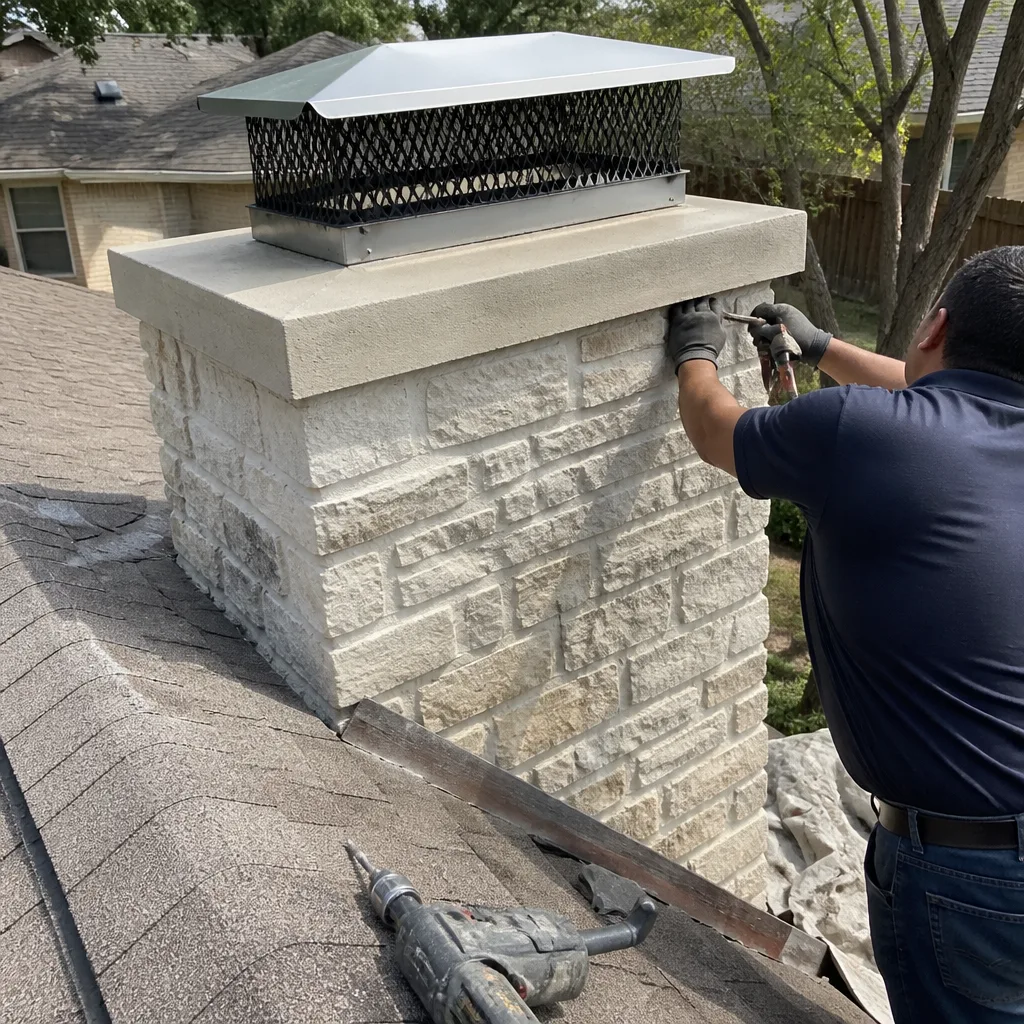
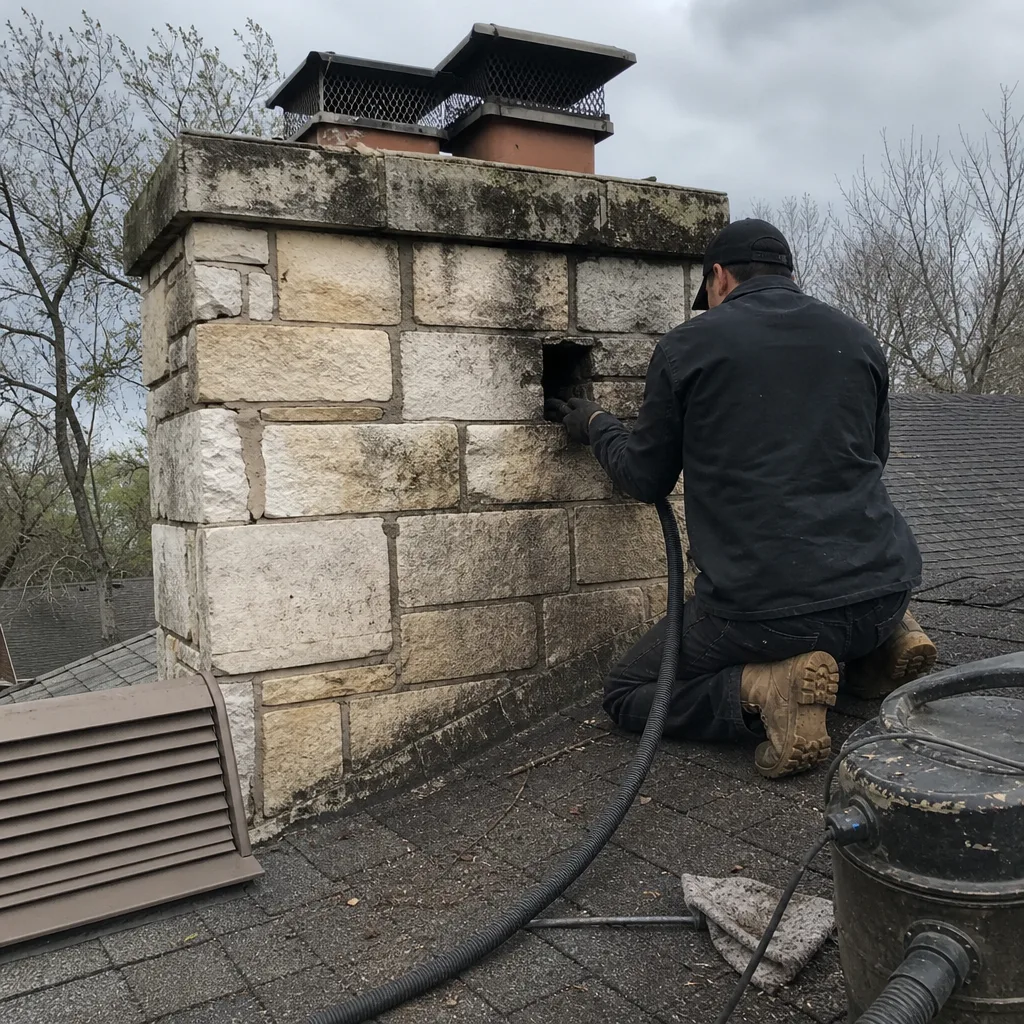
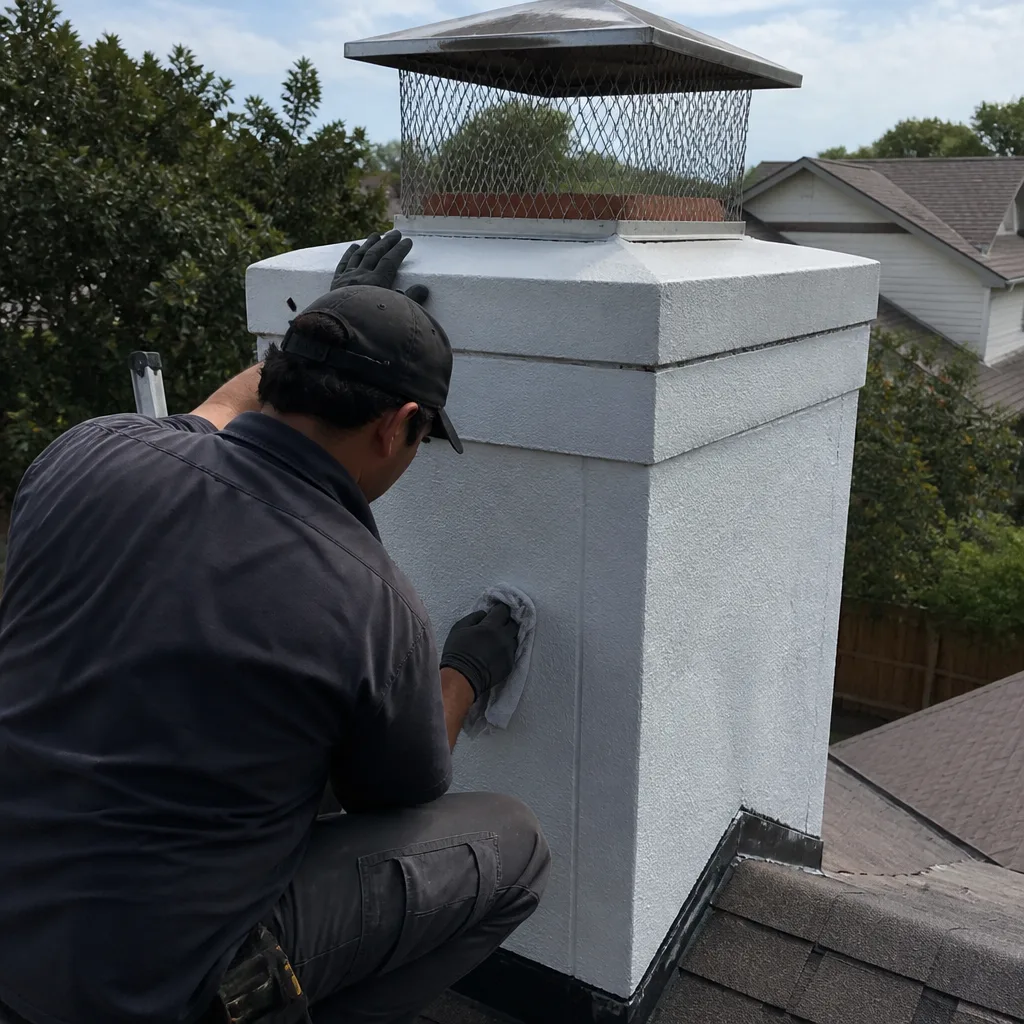
See the difference
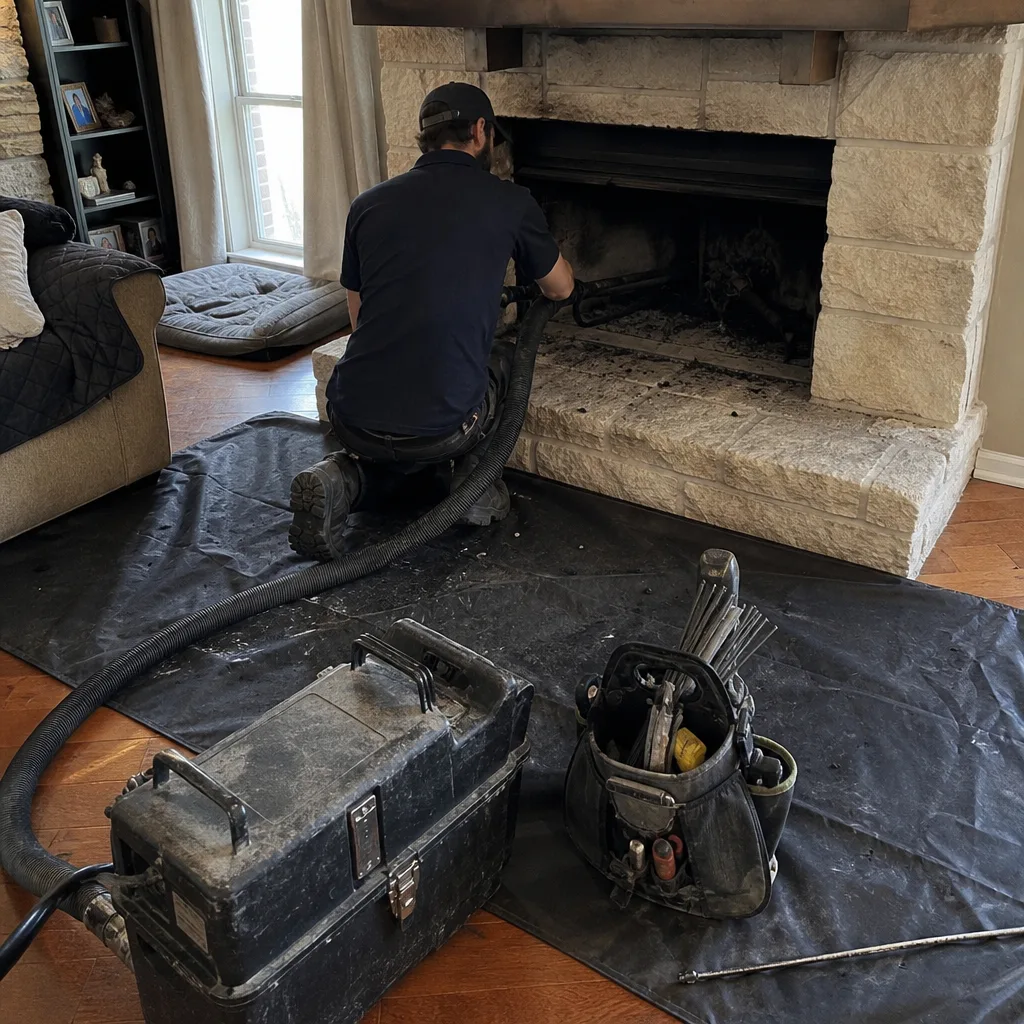 Before
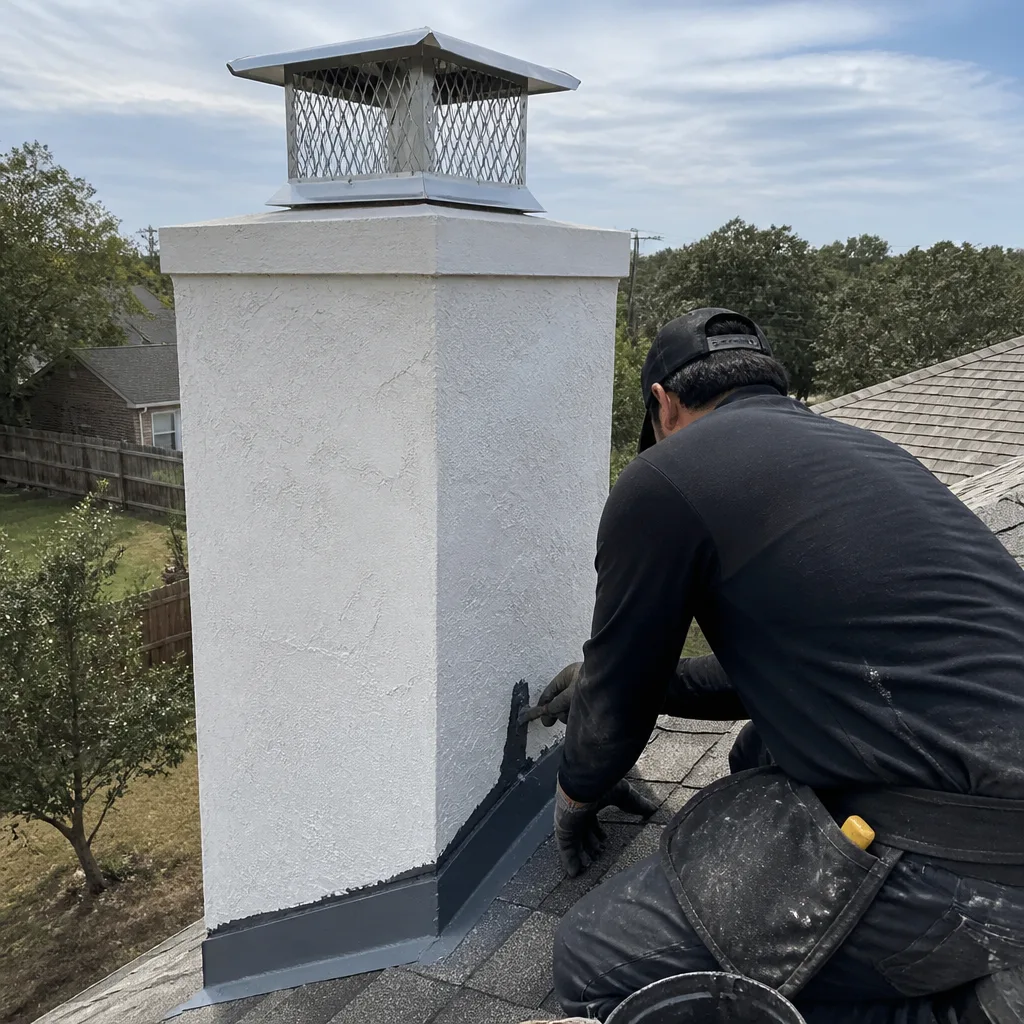 After
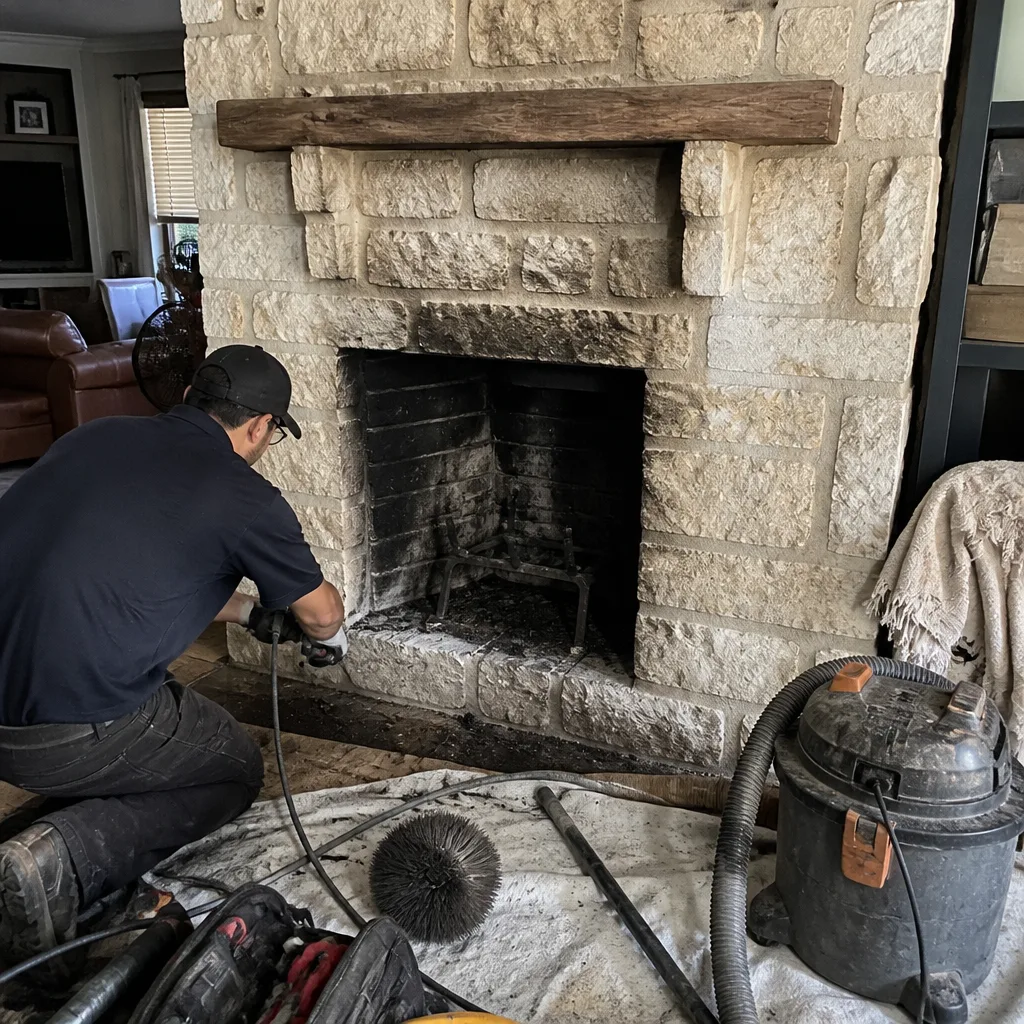 Before
 After
 Before
 After
When to Call a Professional
You should call a chimney professional when you’re preparing for the first burn of the season and haven’t had the chimney inspected in over a year, when you notice any flaking mortar or water staining around the chimney, when you smell smoke after the fire is out, or when you’re buying or selling a home where chimney condition is unknown—check our Chimney Cleaning Warning Signs: A Round Rock Homeowner’s Reference Guide for additional red flags. You should also call if you’ve just moved into a Round Rock home and have no documentation showing when the chimney was last serviced. If prior work was done without permits or with unknown materials, a professional can assess what’s actually there and document it before you’re ever in a position of needing to prove it to an insurance company. Boardwalk Chimney Sweep offers free estimates in Round Rock, call (877) 274-1247.
Frequently Asked Questions
No. Chimney sweeping is classified as routine maintenance under Texas building code and Round Rock municipal code, so no permit is required for cleaning alone. The permit requirement kicks in when work alters the chimney structure, flue, firebox, or chase, regardless of whether cleaning is done at the same time.
Permit costs in Round Rock vary by project scope and valuation, and the city updates its fee schedule periodically. The best approach is to call the City of Round Rock building department with your specific repair scope before work begins. The cost of the permit is almost always trivial compared to the cost of an unpermitted repair that results in a denied insurance claim.
Functionally, nothing happens unless something goes wrong. If the liner fails or a fire occurs, your insurance carrier can deny coverage on the basis of unpermitted work that violated policy compliance requirements. You also may face difficulty selling the home later if a buyer’s inspector or lender discovers unpermitted chimney work during due diligence. The risk is deferred, not avoided.
NFPA 211 recommends annual inspection for chimneys that see regular use, and a Level 2 inspection after any sale, fuel type change, or chimney fire. Round Rock’s climate makes annual inspection practical: burning season runs roughly November through February, so an inspection in September or October catches problems before the first fire. Waiting longer than a year between inspections means creosote buildup, water damage, and liner deterioration get a running start.
A general home inspector will look at the chimney, but their evaluation is not a chimney inspection under NFPA 211 standards. Most home inspectors check for visible exterior damage, damper operation, and obvious hazards, but they rarely run a camera through the flue or verify clearances in the attic. If you’re buying a home in Williamson County with a wood-burning fireplace, a separate Level 2 chimney inspection is worth the cost.
Gas fireplaces still vent through the chimney flue, and the flue still needs to be clear and structurally sound. A blocked or deteriorating flue on a gas fireplace can allow carbon monoxide into the living space. Annual inspection is recommended even for gas fireplaces, though the inspection focuses on venting integrity and carbon monoxide risk rather than creosote accumulation.
The Bottom Line
Texas gives you almost no regulatory protection when it comes to chimney work, which means the protection has to come from you. Pull permits when work is structural. Insist on written inspection reports with camera documentation. Verify prior work before you buy a home. And treat NFPA 211 as the standard that matters even when no local code enforces it. In Round Rock, a homeowner who understands these rules makes better decisions about chimney maintenance, spends money on the right repairs at the right time, and never finds themselves explaining to an insurance adjuster why they accepted unpermitted work. For more guides & resources on protecting your home, explore our blog. The paper trail you build today is the only thing standing between you and a denied claim later.
Written by the team at Boardwalk Chimney Sweep, serving Round Rock since 2011.