
Last updated October 31, 2026
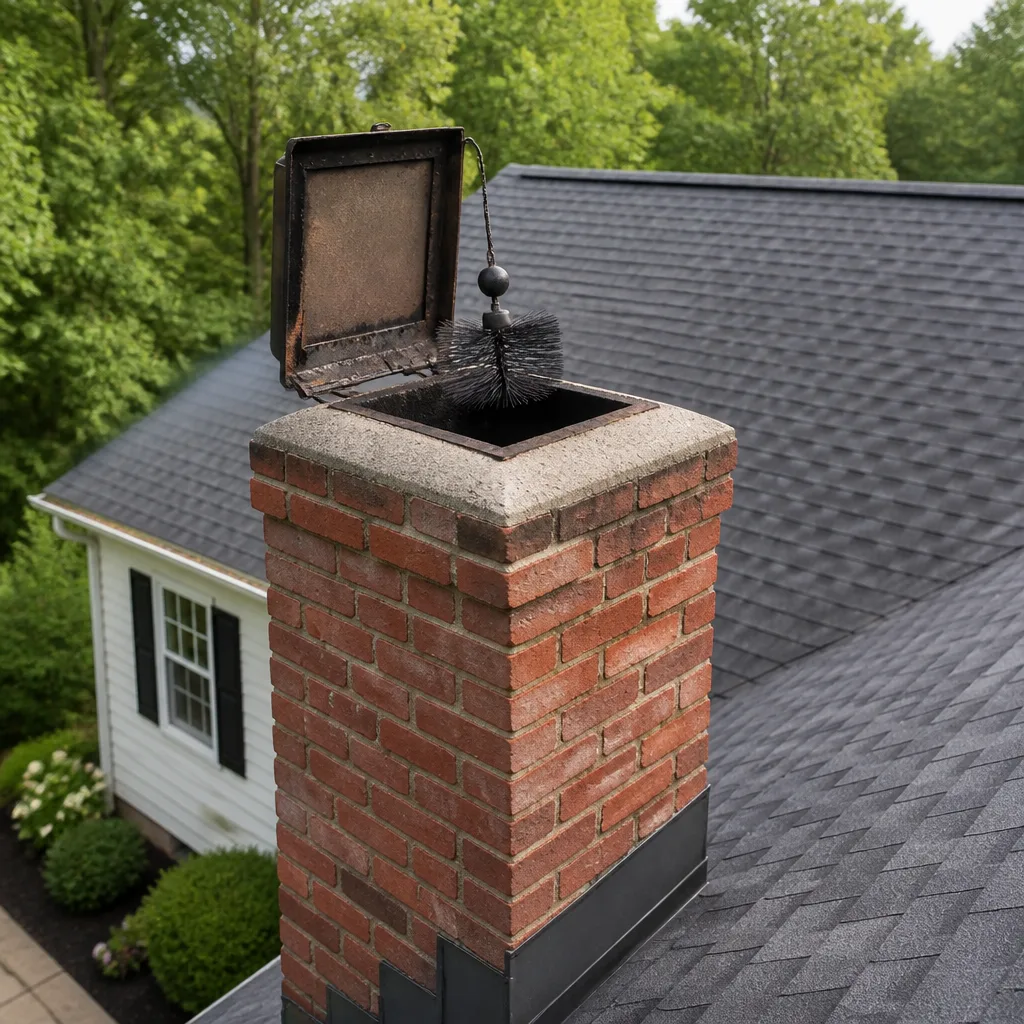 Sweep & inspection
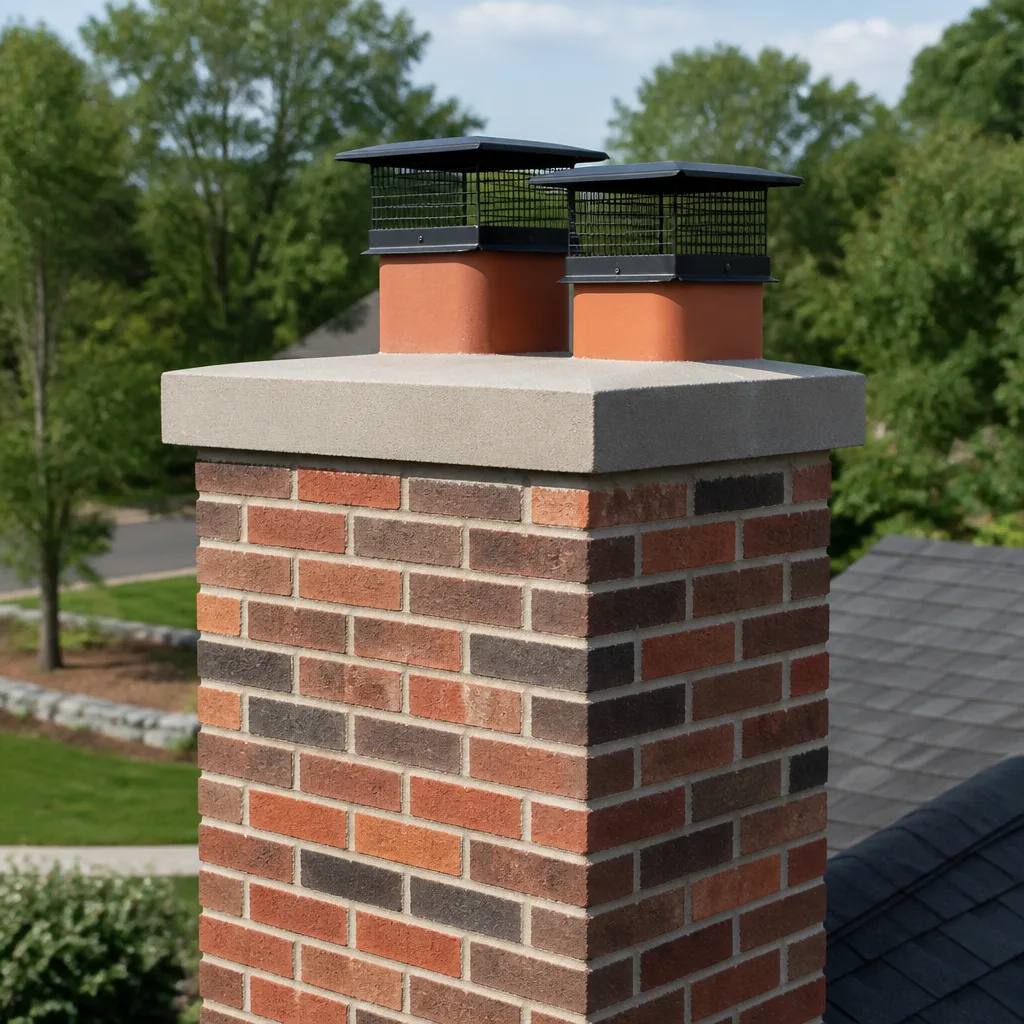 Caps & crowns
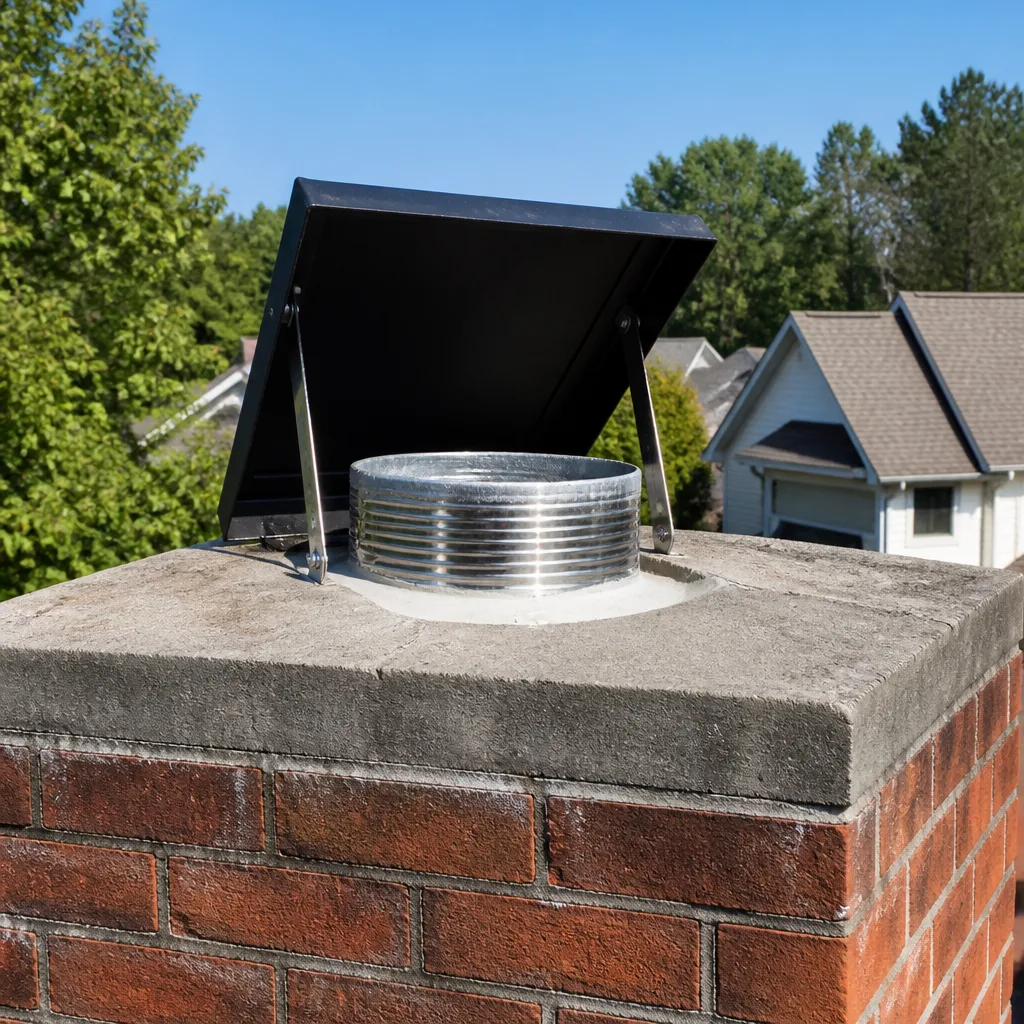 Flue relining
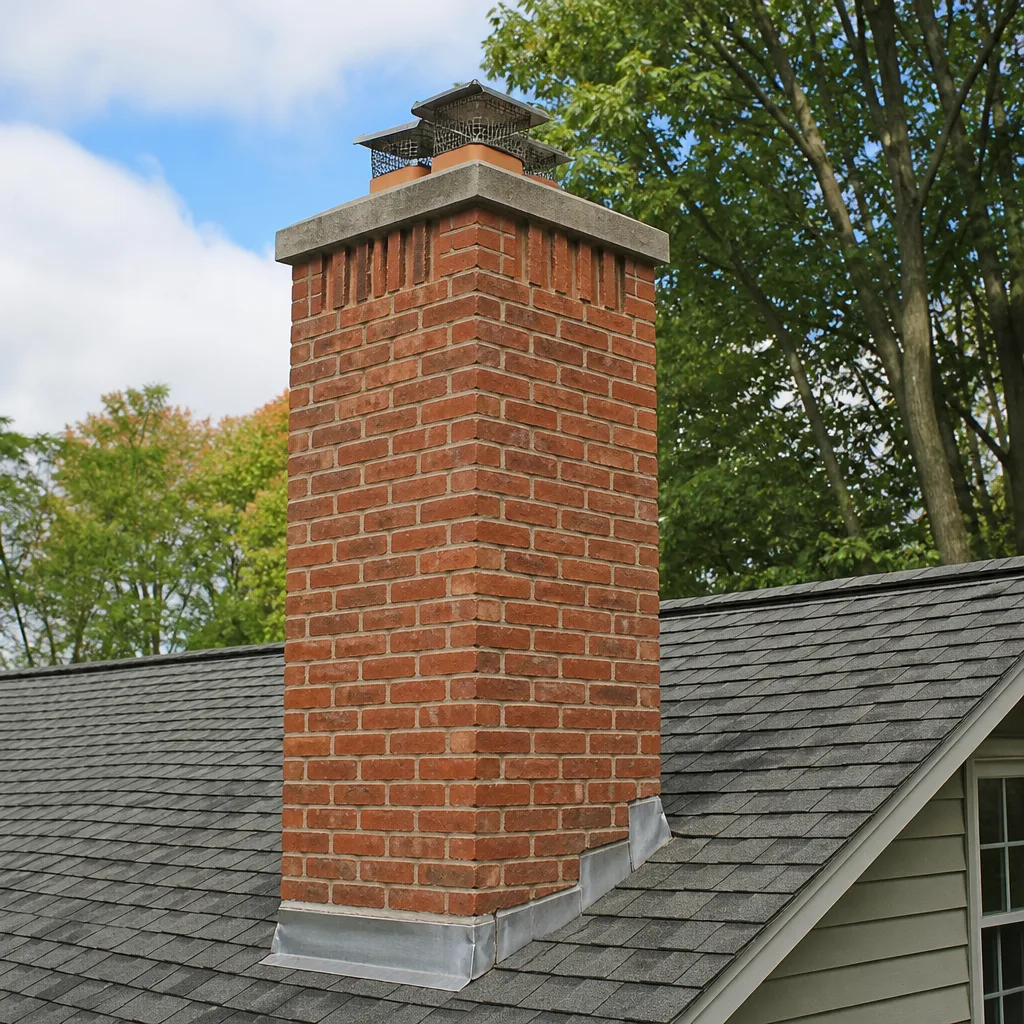 Masonry repair
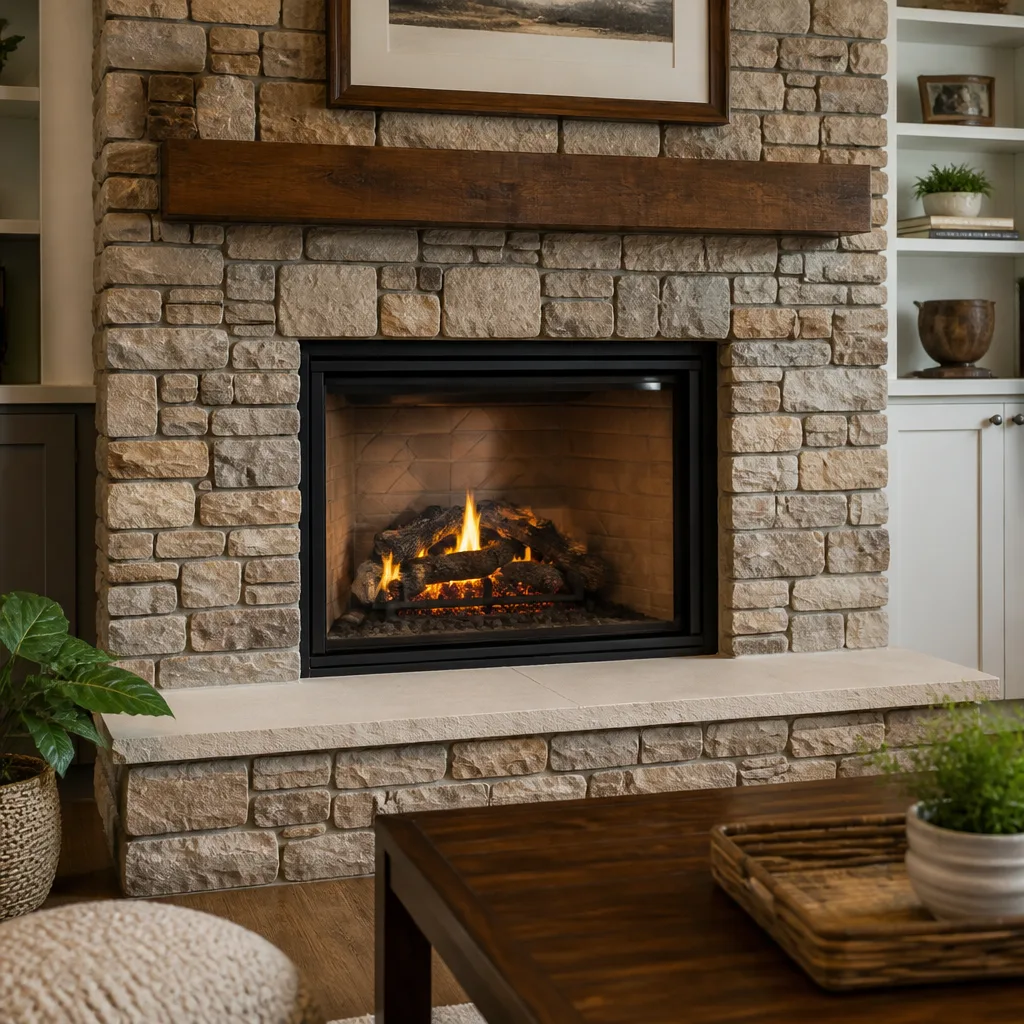 Gas fireplace service
Level 1 sweep and inspection to the NFPA 211 annual standard - flue, crown, cap, and flashing checked and photographed
Chimney sweep logs do not sweep chimneys. They loosen some creosote - which then falls where a brush and vacuum still have to collect it.
Chimney Cleaning Emergency Preparedness Guide for Round Rock Homes
A chimney fire can burn at over 2,000°F and last less than three minutes. By the time you smell anything unusual or hear that low rumble from the fireplace, the event may already be over – and the damage it left inside your flue liner is invisible until a camera goes up. Most Round Rock homeowners prepare for the chimney fires they imagine: the dramatic, flame-shooting-from-the-cap kind. But the far more common scenario is a slow, contained burn inside the flue that you barely notice and that quietly compromises your home’s fire safety for months afterward. This guide covers what to do in the 90 minutes after you suspect a chimney fire, how to verify one actually happened, what not to do in the panic of the moment, and how your fireplace condition before the event determines your insurance and repair options after.
Quick Answer
If you suspect a chimney fire in your Round Rock home, close the fireplace damper and glass doors to cut off oxygen, evacuate everyone from the house, and call 911 immediately – do not open the firebox, do not climb onto the roof, and do not pour water into the fireplace. After the fire department clears the scene, document everything with photos, locate your most recent chimney sweep receipt, and schedule a Level 3 chimney inspection before using the fireplace again. A chimney fire is never a “monitor and see” situation; the liner damage it causes can remain hidden and dangerous even when the visible fire is long out.
Styles & brands we work with
Table of Contents
- Signs of an Active Chimney Fire vs. a Drafting Problem
- The First 15 Minutes: What to Close, What Not to Open
- What Round Rock Fire Department’s Response Covers (and What It Leaves Out)
- Documentation to Gather Immediately After a Chimney Fire
- Why a Post-Fire Level 3 Inspection Is Different from a Standard Sweep
- Chimney Fire Damage and Repair Options in Round Rock
- Preventing Another Chimney Fire
- Common Mistakes to Avoid
Signs of an Active Chimney Fire vs. a Drafting Problem
Here’s the problem: an active chimney fire and a routine drafting issue can feel similar in the first few seconds, but the consequences of confusing them are severe. A chimney fire usually announces itself with a sound like a freight train or a low, rumbling roar coming from inside the flue – not the smell of smoke, which you might already have from normal use, but a sound that feels too loud for the size of your fireplace. You may also see flames or dense, dark smoke pouring from the chimney cap outside, or notice the firebox itself glowing unusually hot. In Round Rock’s winter months, when cold air meets a warm flue, drafting problems can also create odd sounds and back-puffing smoke, but these fade within seconds and don’t escalate. A real chimney fire builds intensity. If the noise gets louder, if the smoke thickens, or if you feel the chimney structure vibrating, that’s an active fire. Treat it that way immediately.
What most homeowners miss is that a chimney fire can also burn quietly and hot without ever looking dramatic from the living room. The creosote inside the flue ignites, burns violently for two to three minutes, and then starves itself of oxygen. You might hear a sound like paper crumpling or a faint crackling, then nothing. The fire is out. The damage is done. That’s why the absence of a big spectacle doesn’t mean you’re in the clear. If you ever hear an unusual roar from your chimney and then it stops, document the date and time, and schedule an inspection before the next fire. In our experience serving Round Rock chimneys, homeowners who write off that one weird sound are usually the ones we meet again after a liner failure.
The First 15 Minutes: What to Close, What Not to Open
Your actions in the first quarter hour after you suspect a chimney fire determine how contained the event stays and how much evidence survives for your insurance claim. Here’s the sequence we recommend, based on current guidance for Round Rock homeowners and standard chimney fire response protocol:
- Close the damper if it’s open. This cuts off the fire’s oxygen supply from below. If you have glass fireplace doors, close those too. Do not open the firebox to “check on” the flames. Opening any access point introduces a surge of oxygen into a hot, fuel-rich flue and can turn a contained burn into a violent flare.
- Evacuate everyone from the house. Chimney fires can spread into the attic or roof framing within minutes. Don’t gather belongings. Don’t linger in the hallway. Get every person out the front door and to a safe distance from the house.
- Call 911. Tell the dispatcher you have a suspected chimney fire, give your Round Rock address clearly, and stay on the line until they confirm units are en route. Do not call a chimney sweep first. Do not call your insurance company first. The fire department is the only call that matters in this moment.
- Do not climb onto the roof. Chimney caps, masonry crowns, and flue tiles are hot enough to cause second-degree burns even after the visible fire is out. The roof itself may be compromised. Wait for the fire department.
- Do not pour water into the fireplace. Water hitting a 1,500°F internal flue can flash to steam, crack the liner, and blast hot debris out through the firebox opening. This is one of the most common and most dangerous mistakes homeowners make.
- Once the fire department clears the scene, keep the damper closed and do not use the fireplace. Even if the house smells like smoke and you’re eager to air it out, resist the urge to open the damper for ventilation. That flue needs a camera inspection first.
The guiding principle here is oxygen control. A chimney fire needs three things: fuel (creosote), a confined space (the flue), and oxygen (from the open damper or a cracked firebox). Of those three, the oxygen supply is the only variable you can influence from inside the house. Closing the damper and glass doors is not a firefighting technique – it’s a containment measure while professionals respond. And it may be the single most consequential thing you do in those first 15 minutes.
What Round Rock Fire Department’s Response Covers (and What It Leaves Out)
When Round Rock Fire Department responds to a chimney fire call, they arrive with thermal imaging cameras, chain-saw ventilation equipment for roof access if needed, and the authority to enter the structure and assess for extension into the attic or walls. Their job is to confirm the fire is out and that the fire hasn’t spread to the home’s framing. They will typically run a thermal scan of the chimney structure from inside the house and from the roof, looking for heat signatures that indicate fire extension into concealed spaces. They may also use a chimney chain to knock down creosote buildup from the flue interior, which is an aggressive approach that dislodges burning embers and burning creosote deposits. What they will not do is document the condition of your flue liner for insurance purposes. The fire department’s report will note that a chimney fire occurred, that the fire was extinguished, and that no extension was found – or that extension was found and addressed. It will not tell your insurance company whether your clay tile liner is cracked, whether your metal flue has warped, or whether a HeatShield resurfacing or relining is required. That’s the gap we fill with a post-fire inspection, and it’s a gap that matters – because insurance coverage for chimney repairs often depends on proving that damage was caused by a sudden event (the chimney fire) rather than gradual deterioration.
One more thing about Round Rock specifically: the fire department response typically involves engine and ladder units, and the visit will be documented with an incident number. Write that number down. Take a photo of the business card or write it on the back of your hand. You will need it when you file your insurance claim, and the incident number is how the department retrieves their report for you later. Homeowners who skip this step spend weeks chasing paperwork that could have been a one-line email.
Documentation to Gather Immediately After a Chimney Fire
The 48 hours after a chimney fire are when your insurance claim is won or lost – and the evidence you gather now is worth more than anything you produce later. Here’s what to collect, in order of urgency:
- Photos of the fireplace and firebox. Take wide shots and close-ups. Photograph the damper, the firebox floor, the area around the chimney base, and any smoke staining on the mantel or walls. Use your phone’s timestamp (do not disable it; insurers check metadata).
- Photos of the chimney exterior. Capture the cap, the crown, and the full height of the chimney from at least two angles. Look for soot on the flue tiles, cracks in the brick, missing mortar joints, or scorch marks at the top. If the cap is damaged, get close-up shots.
- Your most recent chimney sweep receipt. This is the document that separates “sudden and accidental” from “negligent maintenance” in the eyes of your adjuster. If you can show a professional sweep within the last 12 months (the NFPA-recommended interval), you have a strong position. If you can’t, your claim may still be covered, but the adjuster will ask harder questions. On that note – if you’re reading this and realized you haven’t had your Round Rock chimney swept in over a year, call us at Chimney Sweep in Round Rock – and get it done before burning season, not after.
- The fire department’s incident number. As mentioned above, this is non-negotiable. You’ll need it to request their report, and the report is required by most insurers before they’ll assign an adjuster to a chimney fire claim.
- Notes on what you saw, heard, and smelled before and during the event. Write it down while it’s fresh. What time did you first hear the roar? Was there a sound like a train? Did you see flames at the chimney cap? Was there smoke inside the house? These details go into your claim narrative and they help technicians understand what they’re looking for during inspection.
- Any receipts from previous chimney work – relining, crown repair, cap replacement. If you had a DuraFlex liner installed, dig up that invoice. Insurers respond well to documentation that you’ve invested in the chimney’s integrity.
A note on timing: don’t call your insurance company before you’ve gathered this material. Once a claim is on the record, the clock is ticking, and you’ll be in a stronger position if you can answer their first round of questions with documentation in hand. But don’t wait more than a few days either – most policies require prompt notification, and in Round Rock’s competitive insurance market, an adjuster can be at your door within 48 hours of the claim if they’re motivated. Be ready for that visit.
Why a Post-Fire Level 3 Inspection Is Different from a Standard Sweep
Most Round Rock homeowners know what a standard chimney sweep is: a brush goes up the flue, the creosote comes down, and the chimney is ready for another season. What most don’t know is that the chimney inspection industry operates at three levels, and a post-chimney-fire inspection is a Level 3 – the highest level, the most invasive, and the only one that can safely clear a flue for use after a fire event. A Level 1 inspection is a visual check of the accessible parts of the chimney. A Level 2 inspection adds a camera scan of the flue interior and is standard for real estate transactions or after any system change. A Level 3 inspection goes further: it may involve removing portions of the chimney structure, opening up the chase, or breaking through drywall or masonry to access concealed areas of the flue and smoke chamber. It’s the only way to verify that fire didn’t escape the flue into the home’s structure – and it’s what your insurance company will require before they close out a chimney fire claim.
Here’s what a Level 3 inspection actually tells you after a fire: whether the clay tile liner has spalled or cracked under thermal shock, whether a metal flue has warped or buckled, whether the mortar joints in the smoke chamber have failed, and whether creosote deposits have migrated into wall cavities through a breached flue. It also documents the exact condition of the flue at the time of inspection, which becomes part of your insurance claim file. At Boardwalk Chimney Sweep home, we perform camera inspections on every post-fire visit, and we’ll walk you through the footage on our screen – you see what we see, and you get a written report with photos of every point of concern. We repair what we inspect.
Chimney Fire Damage and Repair Options in Round Rock
Once the inspection is complete and the damage is documented, the next question is what to do about it. Your options depend on what the camera found, and they range from minor to major. Sometimes a chimney fire burns hot enough to glaze the creosote into a hard, glassy surface that resists brushing, and the flue can be cleaned and returned to service. More often, the thermal stress cracks the clay tiles or warps the metal liner, and the flue needs repair before it can be safely used again. In Round Rock’s climate – with its winter temperature swings, occasional ice events, and the settling clay soil common across Williamson County – a compromised flue only gets worse with time. Here’s how the options typically break down:
- Mechanical cleaning and resurfacing. If the fire only glazed the creosote without cracking the liner, a professional cleaning with specialized rotary tools may restore the flue surface. In some cases, a HeatShield resurfacing can smooth and seal the interior, extending liner life without full replacement.
- HeatShield resurfacing. When the liner is cracked but still structurally intact, a HeatShield resurfacing bonds a ceramic coating to the flue interior, sealing fractures and restoring a continuous surface. This is the same product class chimney industry professionals specify nationwide, and it can extend the usable life of a liner that might otherwise be condemned.
- DuraFlex liner installation. When the damage is too extensive for resurfacing – or when the flue has an offset or non-standard configuration that rules out rigid relining – a DuraFlex flexible liner system can be installed to create a new continuous flue inside the existing chimney. It’s a proven approach for complex flue geometry and severe fire damage.
- Nothing – and that’s the dangerous answer. If the liner has failed and you continue using the fireplace, you’re venting combustion gases and heat directly into the chimney chase or the home’s framing. In Round Rock, where many homes were built in the 1980s and 1990s with original clay tile liners now past their service life, a post-fire “no action” decision is a live fire hazard waiting for the next event.
The same brands chimney professionals specify – DuraFlex, HeatShield, Copperfield – are what make the difference between a repair that holds for a season and one that lasts for the next decade. We install and apply these products because they match what the manufacturer’s testing data supports for post-fire flue repair. Not substitutes, not off-the-shelf equivalents. That’s the standard a post-fire repair deserves.
Preventing Another Chimney Fire
Prevention starts with a simple fact: chimney fires begin with creosote, and creosote is a product of burning wood – particularly wood that’s wet, unseasoned, or smoldering at low temperatures. The single most effective thing you can do to prevent another chimney fire in your Round Rock home is to have the flue swept by a professional before each burning season, or any time creosote accumulation reaches 1/8 inch on the flue walls. The National Fire Protection Association recommends annual inspection and cleaning as needed, and in a climate like Round Rock’s – where winter brings extended burning seasons and occasional raw, damp days that make fires smolder – an annual sweep is the baseline, not the ceiling. Here’s what that looks like in practice, and for a full maintenance checklist:
- Schedule your sweep in late summer or early fall, before the burning season begins. Round Rock waits until the first cold snap to light a fire, and chimney professionals book out weeks in advance by October. Be ahead of the wave.
- Burn only seasoned hardwood with a moisture content below 20%. Oak, hickory, and mesquite are all good choices for Central Texas if properly dried. Green or wet wood creates the cool, smoky conditions in which creosote condenses fastest.
- Have the dryer vent cleaned at the same time. Dryer vents clog with lint, and lint is the fuel for the other household combustion hazard. One call, two fire hazards addressed – it’s efficient and it closes the loop on the two most common residential fire sources in Round Rock.
- If you ever hear that chimney-fire sound again – the low roar, the freight-train rumble – do not ignore it. The first fire may have been a warning. The second one won’t wait for your schedule to clear.
If you’re not sure whether your chimney is due for a sweep, check the firebox with a flashlight and run your finger along the flue wall above the damper. If you can scrape off a 1/8-inch layer of black, flaky, or tarry buildup, it’s time. If you can see shiny, glazed creosote – the hard, brittle variety – it’s past time. That’s the kind that fueled your previous fire and that will fuel the next one. A professional camera inspection from Chimney Repair in Round Rock will tell you exactly what you’re working with.
Common Mistakes to Avoid
- Opening the damper to “check” on the fire. You introduce oxygen into a hot flue and create a flare. This is the single most dangerous mistake in a chimney fire, and it’s one we hear about from Round Rock homeowners often enough to warrant the warning.
- Pouring water into the firebox. The thermal shock can crack the liner and blow debris into the room. Water belongs on ground fires, not inside an enclosed flue system.
- Assuming the fire is out because the noise stopped. A chimney fire can burn for two to three minutes and then self-extinguish from oxygen starvation. The liner damage is done. You need a Level 3 inspection regardless of how “small” the fire seemed.
- Waiting to file the insurance claim until the adjuster “gets around to it.” Round Rock insurance adjusters handle dozens of chimney fire claims each burning season. File promptly, with documentation in hand, or risk a drawn-out process.
- Skipping the post-fire inspection because the fire department said the chimney looked fine. The fire department checked for extension into the structure. They did not inspect your liner integrity. Those are two different things, and the second one is on you.
- Using the fireplace again “just once” before the inspection. A compromised flue can fail on the next fire, sending heat and gases into concealed spaces. Once is all it takes.
- Hiring a contractor who doesn’t use camera documentation. Post-fire repair without a camera is guesswork. The camera is the single most important diagnostic tool in the post-fire toolkit.
See the difference
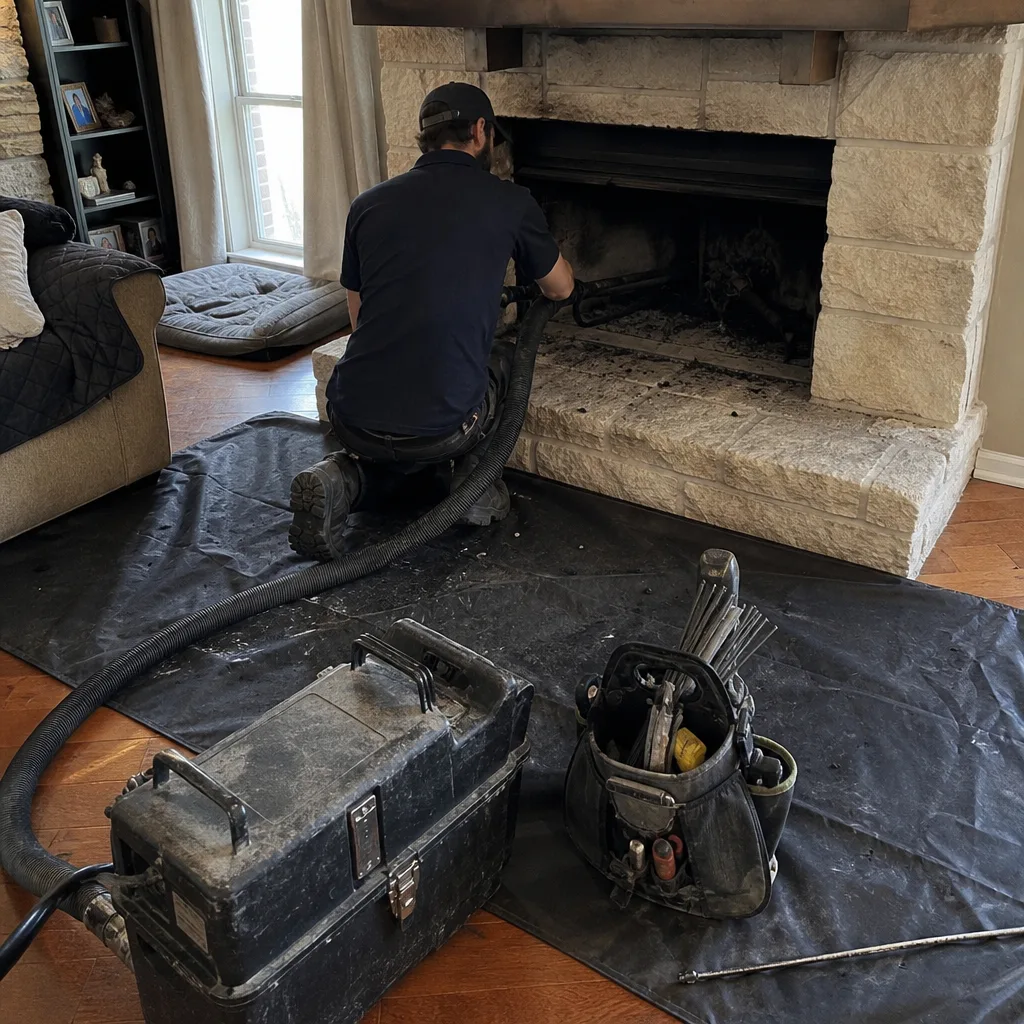 Before
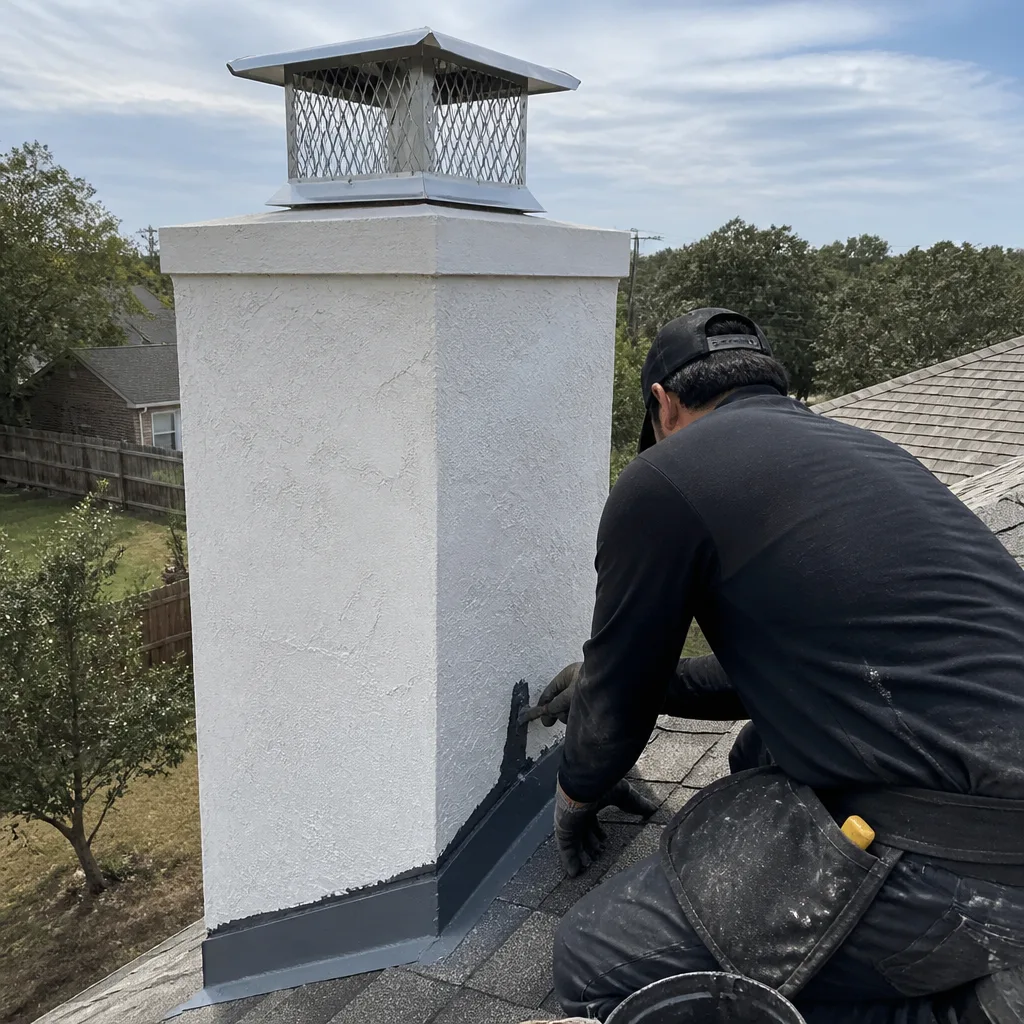 After
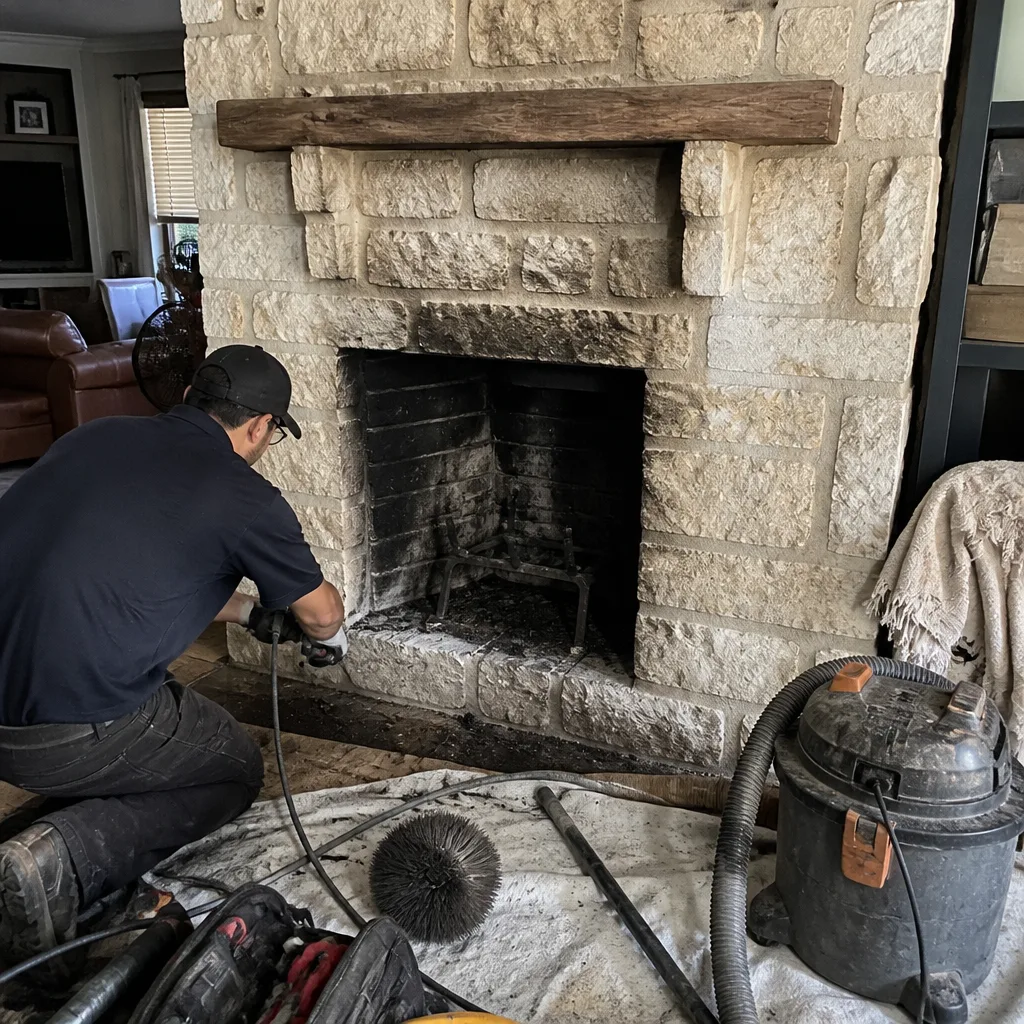 Before
 After
 Before
 After
When to Call a Professional
Call a professional after any suspected chimney fire, whether or not you saw flames and whether or not the fire department was involved. If you hear a roaring sound from the chimney, see dark smoke at the cap, notice soot or creosote raining down into the firebox, or if you simply can’t remember the last time the chimney was swept and it’s been a year or more – pick up the phone. A post-fire inspection with camera documentation is the only way to verify the flue is intact, and the same visit will establish whether any resurfacing or relining is required before you burn again. Boardwalk Chimney Sweep offers free estimates in Round Rock – call (877) 274-1247 to schedule an inspection or a Dryer Vent Cleaning in Round Rock at the same time.
Frequently Asked Questions
The first signs of a chimney fire are usually a loud, low rumbling or roaring sound from the chimney (often compared to a freight train), visible flames or dense dark smoke from the chimney cap outside, and intense heat radiating from the firebox. Some chimney fires are quieter, producing a crackling or paper-crumpling sound. Any of these signs require an immediate 911 call and evacuation of the home. To get your chimney inspected after a suspected fire, call us at (877) 274-1247 – we’ll bring the camera and show you exactly what we find.
You cannot safely use your fireplace after a chimney fire until a Level 3 inspection has been completed and the flue condition has been documented and cleared. This applies even if the fire appeared minor and the fire department said the structure was safe. The inspection involves a camera scan of the flue interior, and in some cases partial disassembly of the chimney to access concealed areas. No fire should be lit until the report confirms the liner is intact.
Structural chimney repairs in Round Rock – meaning masonry work, crown replacement, or flue relining that modifies the chimney system – may require a permit through the city’s building department, depending on the scope of the work. Cosmetic repairs like chimney sweeping and HeatShield resurfacing typically do not. Your contractor should be able to tell you whether a permit applies to your specific repair, and in most cases the contractor handles the permit process. If you’re unsure what your repair involves, call us at (877) 274-1247 and we’ll help you understand the scope before any work begins.
Chimney fire damage is typically covered by a standard Texas homeowner’s insurance policy, but coverage depends on two things: whether the damage is “sudden and accidental” (a fire event, rather than long-term neglect) and whether you can demonstrate reasonable maintenance history. A recent chimney sweep receipt is the strongest evidence you can produce. Without it, your claim may be reduced or denied. Gather your sweep documentation and the fire department incident report before filing the claim.
A chimney in Round Rock should be cleaned at least once per year, and more often if you burn more than three cords of wood per season or if you burn unseasoned wood. The NFPA recommends cleaning when creosote reaches 1/8 inch thickness. In our climate, with its damp winter days and extended burning seasons, an annual sweep is the baseline for any regularly used fireplace. Schedule yours in late summer to avoid the fall rush.
A chimney sweep removes creosote, soot, and debris from the flue using brushes and specialized tools. A chimney inspection evaluates the condition of the chimney system – liner, damper, cap, crown, and masonry – using a three-level protocol from visual (Level 1) to camera scan (Level 2) to invasive structural examination (Level 3). You can have a sweep without a full inspection, and an inspection without a sweep, but the best practice before burning season is both at once. At Boardwalk Chimney Sweep, every sweep includes a visual inspection, and we recommend a camera scan any time the chimney has gone more than two years between cleanings.
The Bottom Line
A chimney fire in your Round Rock home is a serious event, and your response in the hours after it happens determines how well your home recovers. Close the damper, evacuate, call 911, document everything, and do not use the fireplace again until a Level 3 inspection clears it. If you’ve never had a chimney fire, the best preparation is a professional sweep before burning season begins and a camera inspection if it’s been more than a year since the last one. Creosote is the fuel; the fire is waiting for it. The same brands chimney professionals specify – DuraFlex, HeatShield, Copperfield, Famco – are what we use to keep Round Rock chimneys safe. One call, two fire hazards addressed: chimney and dryer vent. Call (877) 274-1247 for a free estimate, and get your inspection on the calendar before the cold weather does it for you.
Written by the team at Boardwalk Chimney Sweep, serving Round Rock since 2011. Explore more guides & resources.