
Last updated October 31, 2026
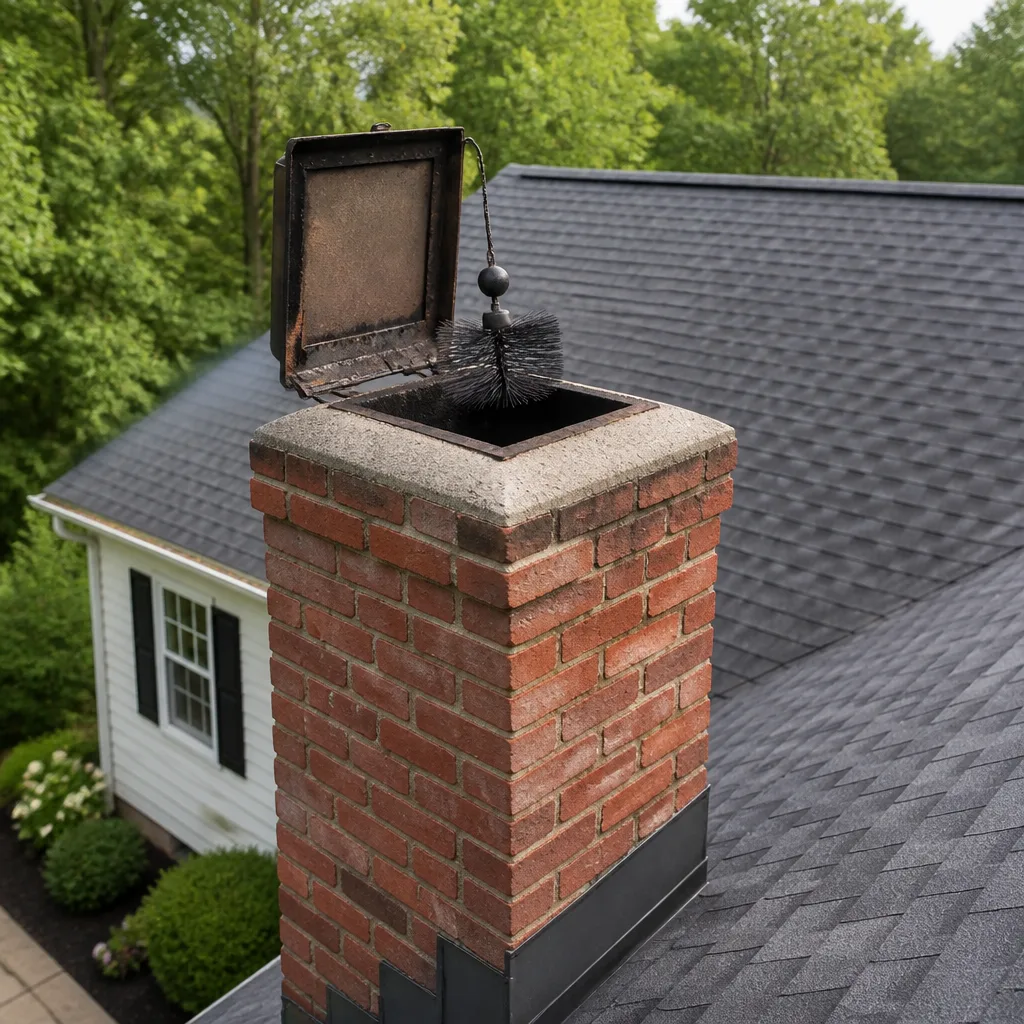 Sweep & inspection
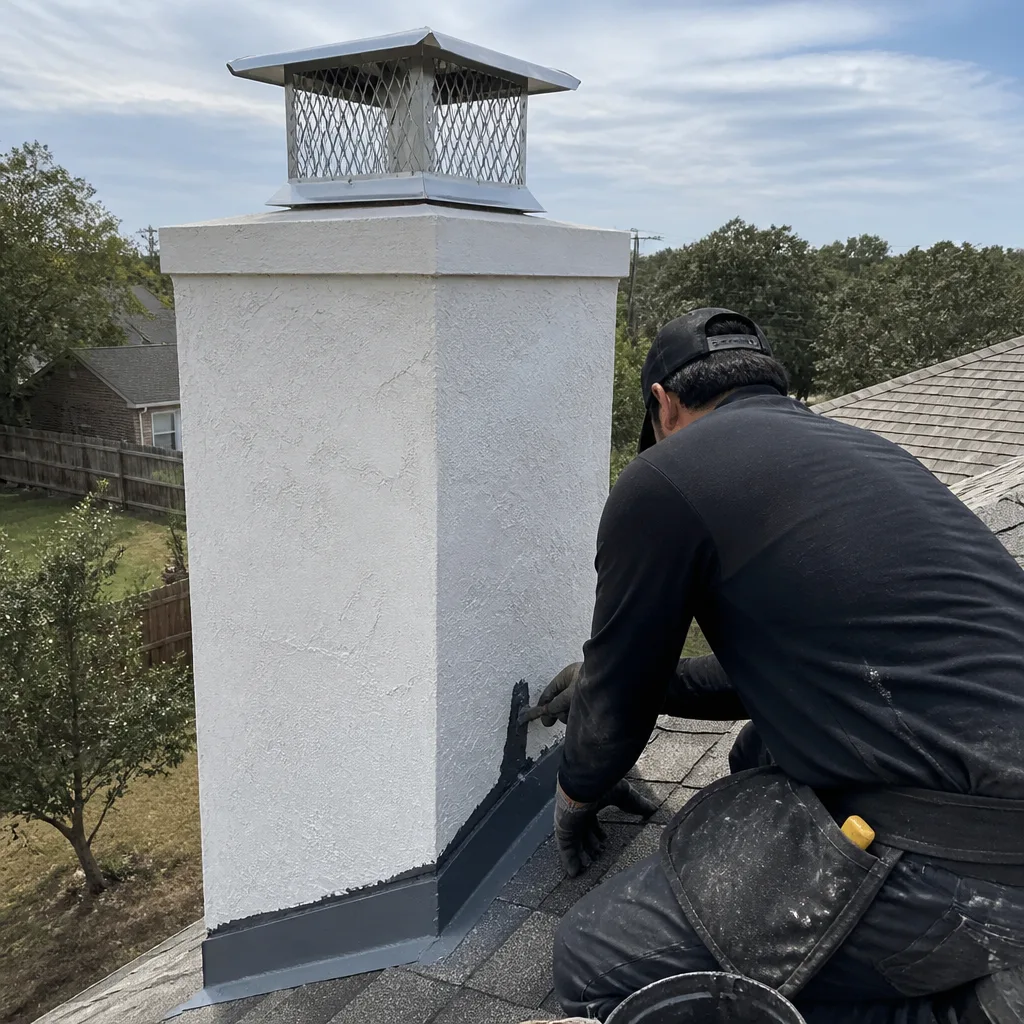
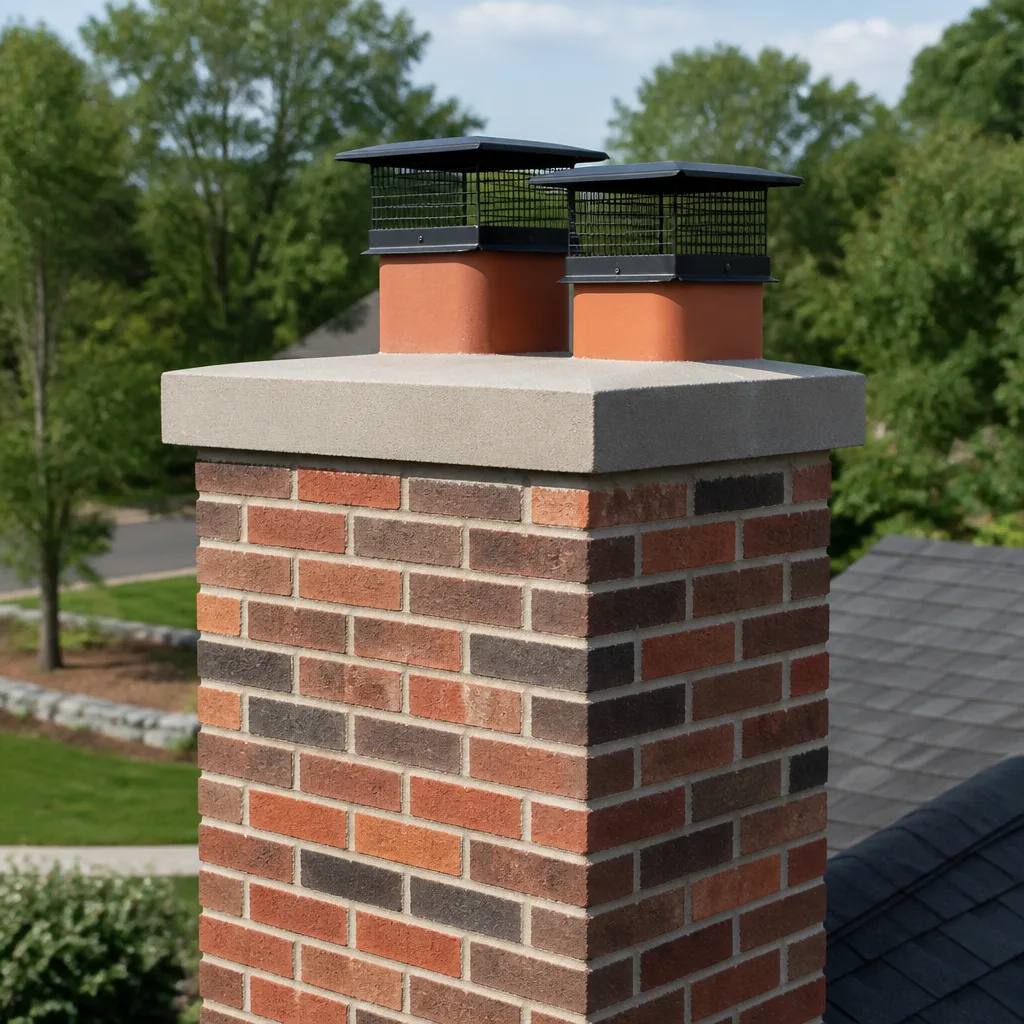 Caps & crowns
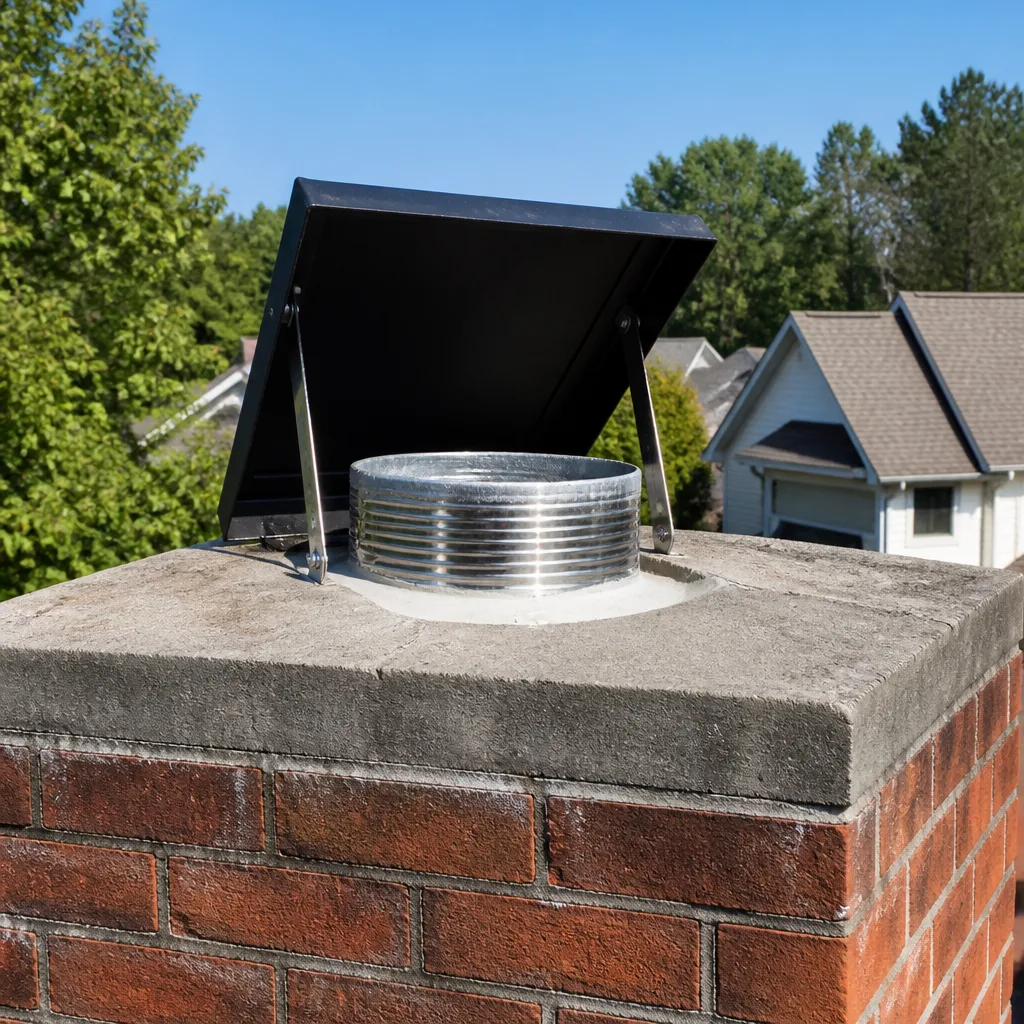 Flue relining
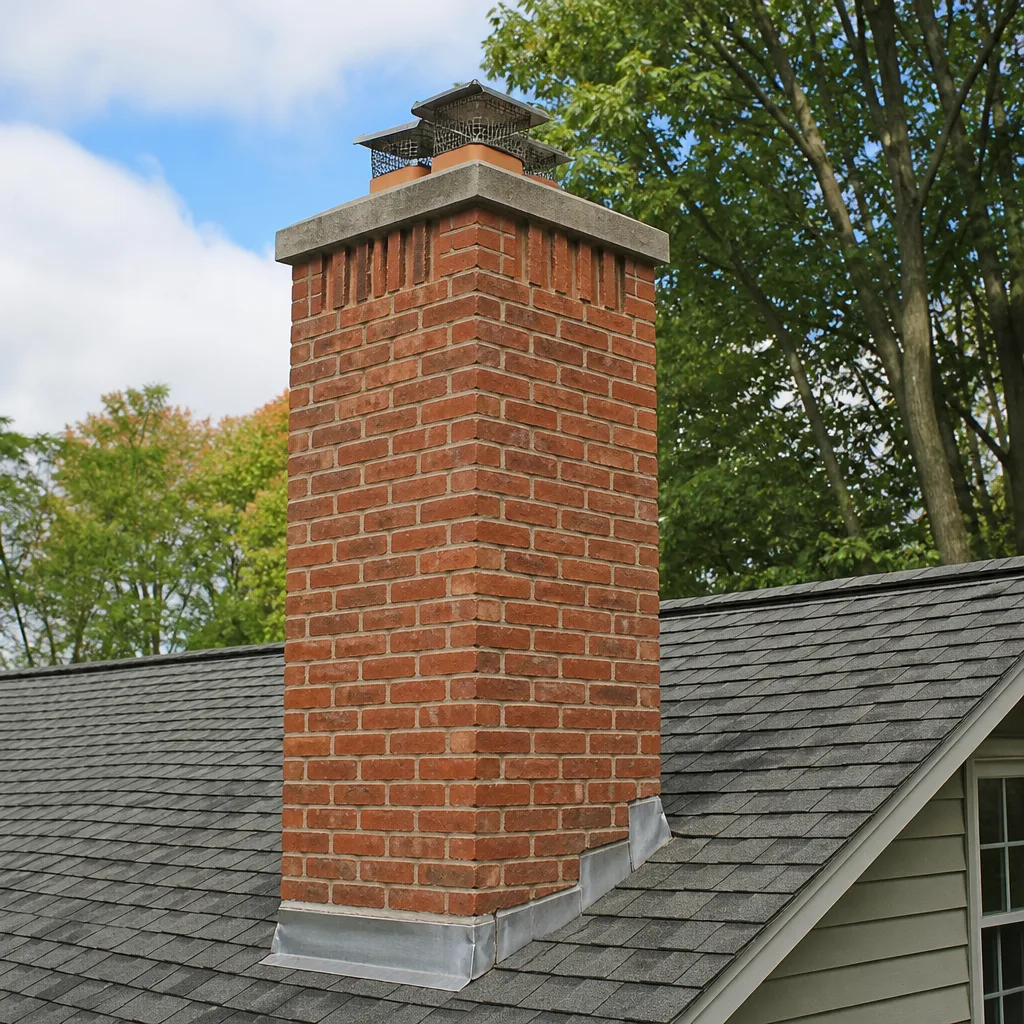 Masonry repair
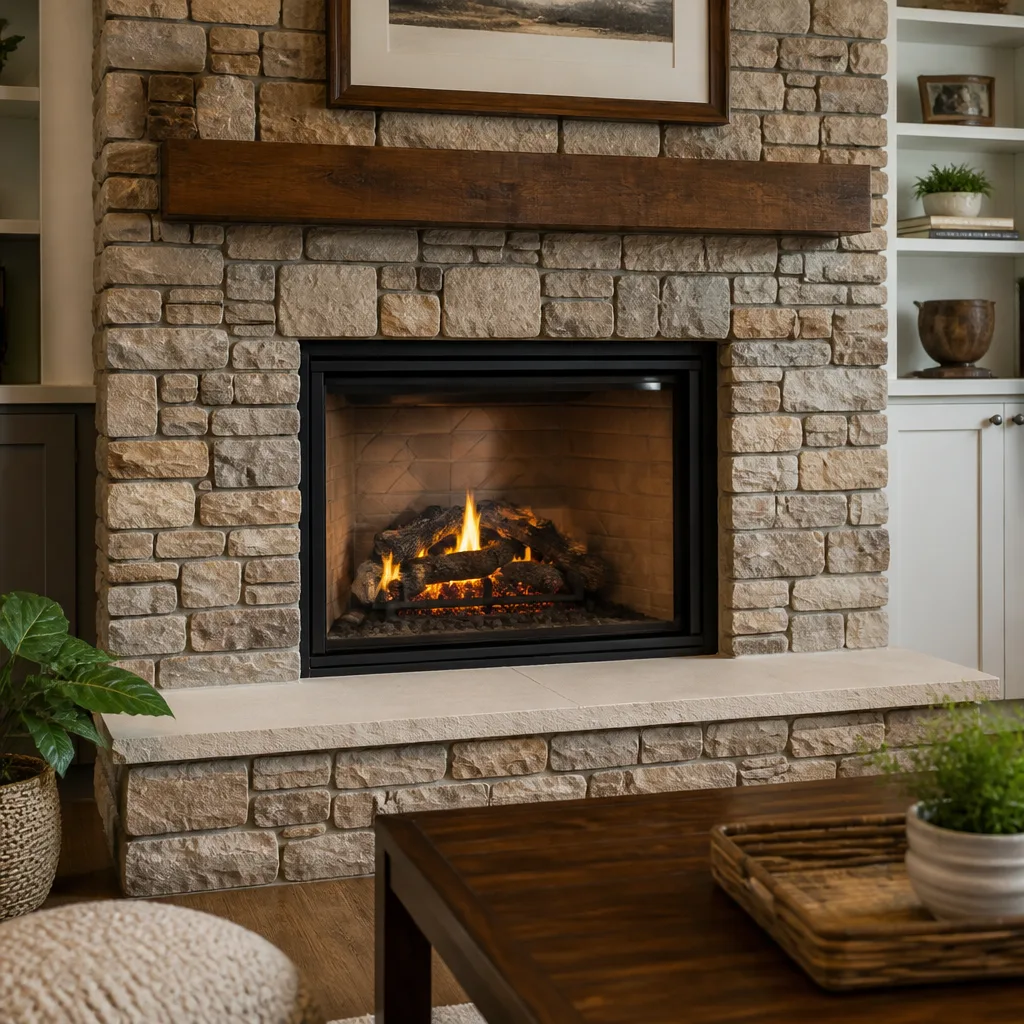 Gas fireplace service
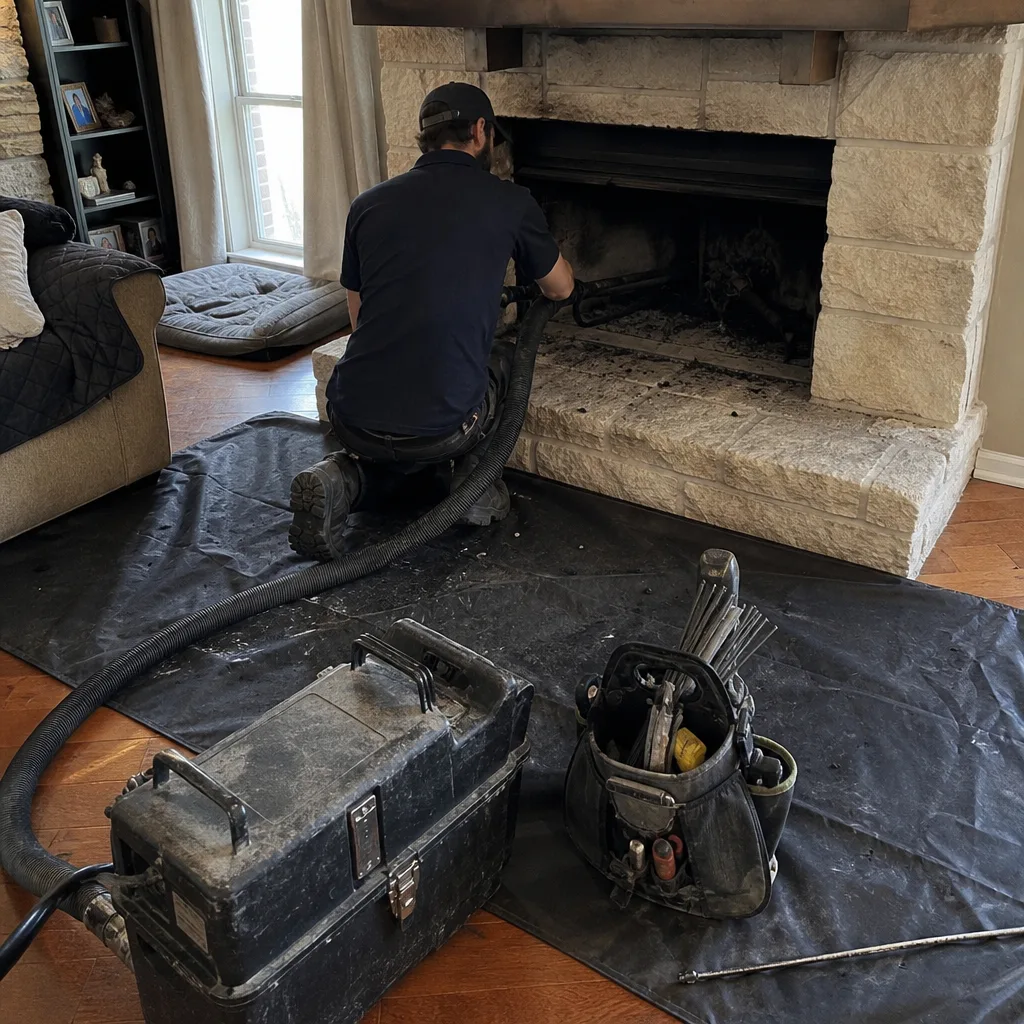
Level 1 sweep and inspection to the NFPA 211 annual standard - flue, crown, cap, and flashing checked and photographed
Chimney sweep logs do not sweep chimneys. They loosen some creosote - which then falls where a brush and vacuum still have to collect it.
The Complete Chimney Sweep Guide for Round Rock Homeowners
Most chimney guides assume you live somewhere cold enough to burn wood all winter. Round Rock homeowners light maybe 20 to 30 fires a year, which sounds safe but actually creates a specific creosote formation pattern that’s easy to miss on a fast inspection. Short, intermittent burns never get the flue hot enough to burn off early-stage deposits, so glaze builds up in thin, hard layers that look minor but insulate heat directly into the flue liner. This guide covers what that means for your fireplace, how Round Rock’s clay-heavy soil complicates chimney safety, what a proper inspection actually involves, and when Chimney Sweep services are genuinely overdue.
Styles & brands we work with
Quick Answer
A chimney sweep in Round Rock should be scheduled annually if you burn wood more than a dozen times a season, and it typically costs between $150 and $300 depending on flue condition, accessibility, and whether you add a Level 2 camera inspection. In this area, the bigger issue isn’t just soot, it’s the way expansive clay soil shifts foundations and misaligns flue tiles over time, creating gaps a visual-only check will miss. The right time to book is September, before burn season, not December when crews are booked out for weeks.
Table of Contents
- Why Round Rock Chimneys Fail Differently
- What a Chimney Sweep Actually Does
- Creosote and the Central Texas Burn Season
- Level 1 vs. Level 2 Inspections: What Round Rock Homeowners Need
- Equipment Matters: Truck-Mounted vs. Shop-Vac Systems
- Seasonal Timing and Round Rock Market Reality
- Repair Work That Starts With a Sweep
- Common Mistakes to Avoid
- When to Call a Professional
- Frequently Asked Questions
- The Bottom Line
Why Round Rock Chimneys Fail Differently
Round Rock sits on some of the most expansive clay soil in Williamson County. If you’ve lived here through a full drought-to-rain cycle, you’ve probably seen the evidence in your own yard: cracks that open in August, door frames that stick after a wet spring. That same soil movement acts on your chimney. A chimney is a heavy, rigid structure attached to a foundation that’s quietly shifting beneath it. Over five or ten years, that differential movement puts stress on the mortar joints between flue tiles and on the crown at the top of the chimney.
What this means for a chimney sweep visit: a standard sweep-only service, where a technician runs a brush through the flue and calls it done, misses the structural drift that’s happening slowly. We’ve seen chimneys in the Forest Creek and Teravista neighborhoods where hairline crown cracks let water into the flue system for years before anyone noticed. Water plus Central Texas freeze-thaw cycles equals spalling, which is brick face popping off, and that’s a repair, not a sweep. A proper chimney sweep in Round Rock includes checking for these local failure patterns, not just removing soot.
The bottom line: in this part of Texas, a chimney sweep is as much a structural checkup as it is a cleaning. If your sweep doesn’t look at the crown, the flashing, and the mortar joints, you’re paying for half a service.
What a Chimney Sweep Actually Does
A professional chimney sweep removes combustible deposits from the flue liner, smoke chamber, damper, and firebox. That part takes 45 to 90 minutes for a standard fireplace. But the full service includes several checks that matter more than the brushing itself:
- Flue liner inspection: looking for cracks, gaps, or separated tiles using a camera when needed.
- Smoke chamber assessment: checking for creosote accumulation in the angled area above the damper where deposits collect fastest.
- Damper operation: confirming the damper opens and closes properly and seals when shut.
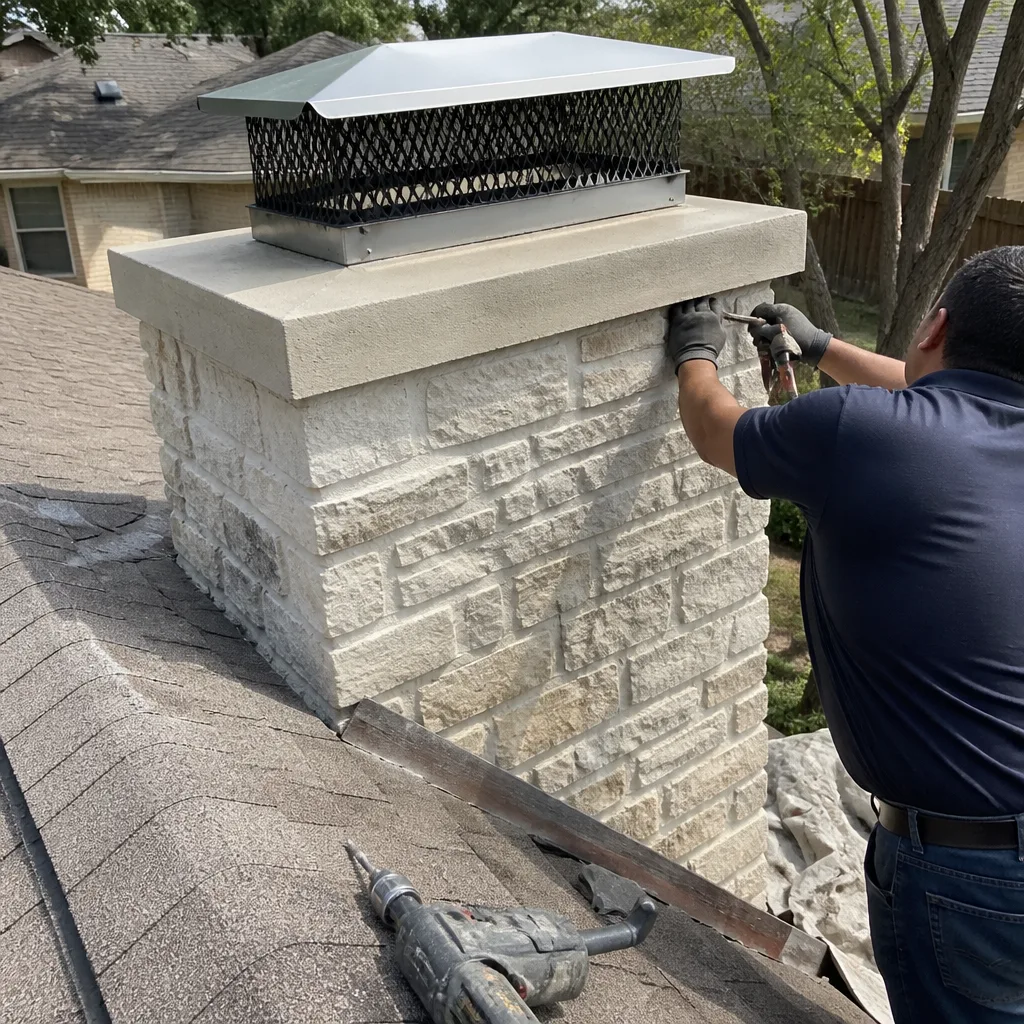
- Crown and cap check: examining the concrete or mortar crown at the chimney top for cracks that let water in.
- Flashing inspection: verifying the metal seal where the chimney meets the roofline hasn’t pulled away.
- Clearance verification: confirming combustible materials around the fireplace meet the required setbacks.
Boardwalk Chimney Sweep uses professional-grade equipment and follows NFPA 211, the national standard for chimney inspection and maintenance, as detailed in The Complete Guide to Chimney Cleaning in Round Rock. The same brands chimney professionals specify, like Copperfield and Olympia Chimney, are what we use when repairs or component replacement come up during a sweep. That matters because off-the-shelf parts from a big-box store don’t always meet the clearance and material ratings required for a safe fireplace system.
Creosote and the Central Texas Burn Season
Round Rock homeowners typically burn wood from late October through February, and even then, not every week. Maybe a fire on a cold Saturday, a few nights during the holiday stretch, then nothing for three weeks when it’s back in the 60s. That intermittent pattern is exactly what produces the most dangerous form of creosote: stage-one glazed creosote.
Here’s the mechanism. When wood burns, it releases volatile compounds that travel up the flue as smoke. If the flue is hot enough, most of those compounds exit the chimney. But when a fire dies down after an hour or two, or when you burn a fire on a mild day, the flue never reaches the sustained temperature needed to keep those compounds moving. They condense on the flue walls, layer by layer. With each short burn cycle, the previous layer bakes slightly, then a new layer deposits on top. Over a season of 20 fires, that builds into a hard, shiny glaze that adheres tightly to the flue.
Two problems follow. First, glazed creosote is highly combustible, and it burns at temperatures that can crack flue tiles. Second, it’s a pain to remove. A standard wire brush skates over glazed creosote without breaking it up. Removing it requires chemical treatments or specialized rotary tools. This is why a “quick sweep” that takes 20 minutes is a red flag in Round Rock specifically: the creosote profile here demands more time, not less. See DIY vs Professional Chimney Cleaning: The Round Rock Homeowner’s Decision Guide for why shortcuts don’t work here.
If you have a gas fireplace in Round Rock, the concerns shift. Gas burns cleaner, but it produces acidic condensation that can corrode masonry over years, and gas logs still deposit a light film inside the flue that needs periodic cleaning. Gas fireplaces should still be inspected annually, just not for the same creosote risk.
Level 1 vs. Level 2 Inspections: What Round Rock Homeowners Need
NFPA 211 defines three levels of chimney inspection. Most Round Rock homeowners only ever need Level 1 or Level 2, but knowing which one applies to your situation can save you from either an overly superficial check or an unnecessary expense.
Level 1 Inspection
A Level 1 inspection is the standard check performed during a routine sweep when the chimney system hasn’t changed since the last service. The technician examines all readily accessible portions of the interior and exterior, verifies the flue is clear of obstructions and combustible deposits, and confirms the basic soundness of the installation. No special tools are required. This is appropriate when you’ve been using the same fireplace regularly and there are no known problems.
Level 2 Inspection
A Level 2 inspection includes everything in Level 1 plus a video camera scan of the flue interior. It’s required by NFPA 211 when there’s been a change to the system: a new appliance installation, a new home purchase, a chimney fire, a lightning strike, or an earthquake. For Round Rock specifically, we recommend a Level 2 inspection if the home is new to you, regardless of what the previous owner reported. Foundation movement here can create flue tile offsets that only a camera will catch, and you don’t want to discover that after a season of burning.
Here’s the step-by-step of what a Level 2 with camera inspection looks like in our process:
- Set up floor protection around the fireplace opening and lay out tools.
- Run the brush system through the flue to remove loose deposits.
- Lower a high-resolution camera down the flue, recording the full interior surface from crown to smoke chamber.
- Review the footage with the homeowner, pointing out cracks, tile misalignment, glazed creosote, and any water damage.
- Document findings and provide a written recommendation with photos if repairs are needed.
The camera footage matters. If someone tells you your flue needs a $4,000 liner replacement, you should be able to see the problem with your own eyes. We don’t recommend any repair we can’t show you.
Equipment Matters: Truck-Mounted vs. Shop-Vac Systems
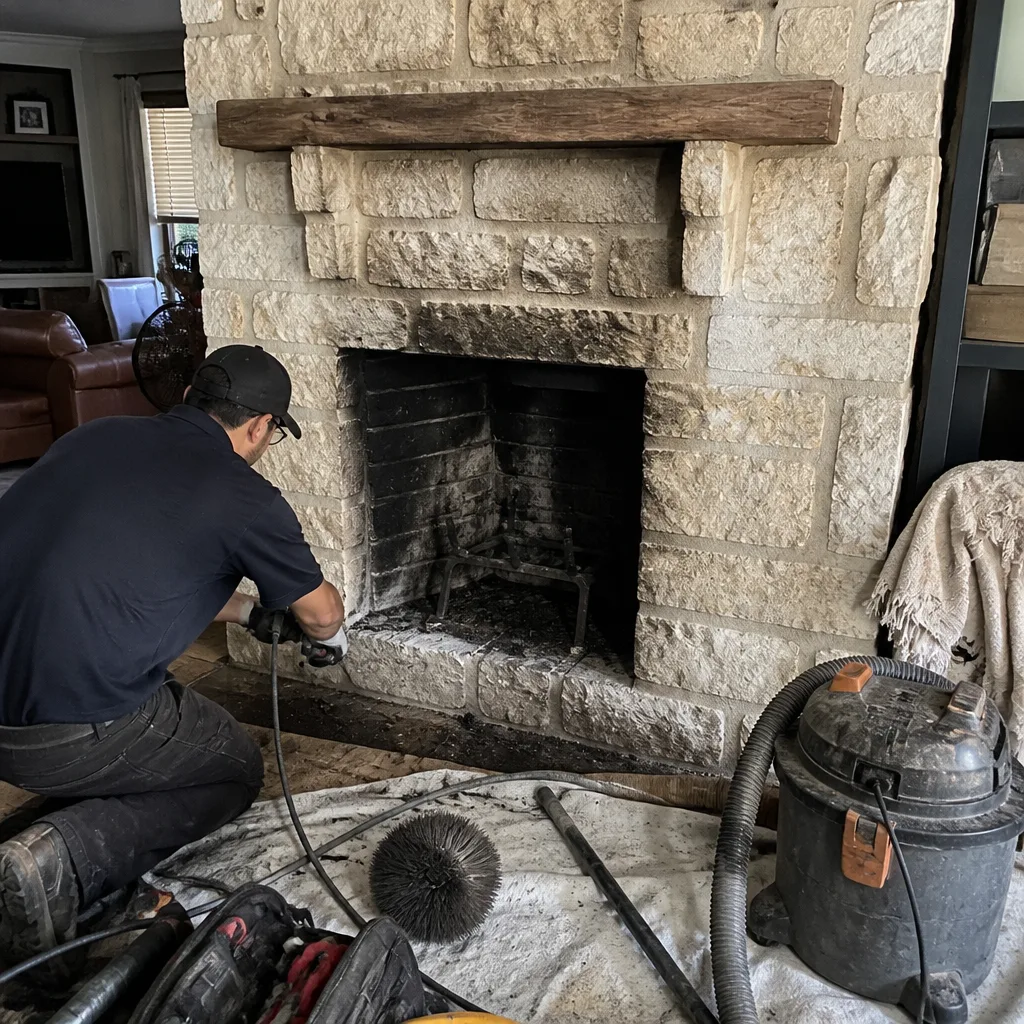
If you’ve ever watched a chimney sweep work with a shop-vac setup, you may have noticed the fine dust that settles on furniture despite the drop cloths. That’s because a typical shop-vac filters down to a few microns but exhausts air back into the room, and the rotating brush inside the flue kicks up creosote dust and ash that escapes the fireplace opening. In an open-plan Round Rock home, where the living room flows into the kitchen and dining area, that dust travels.
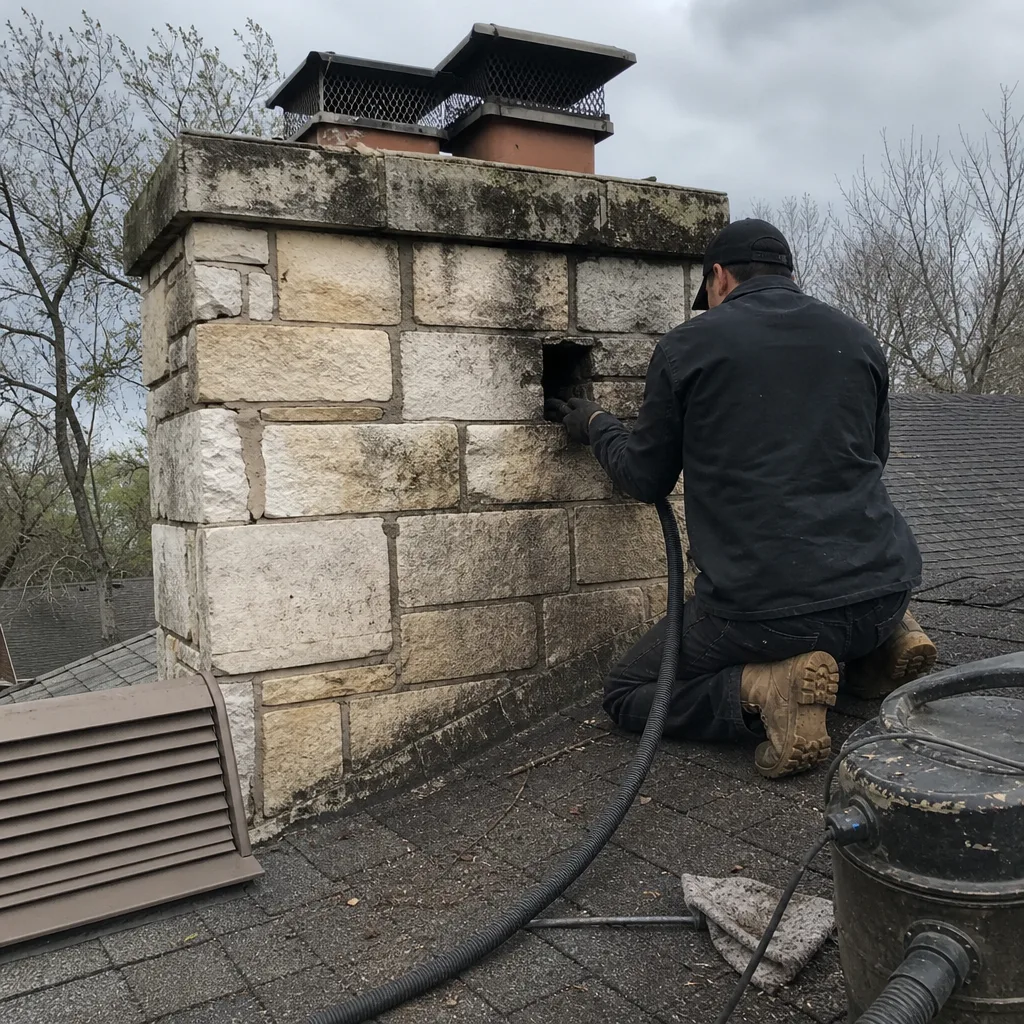
A truck-mounted vacuum system works differently. The vacuum unit sits outside the home, connected by a hose run through a window or door to the fireplace. It pulls negative air pressure at the firebox, which means the air in the room flows toward the fireplace, carrying dust and debris into the collection system outside. The room air doesn’t recirculate. For homeowners who’ve dealt with a sooty film on their white kitchen counters after a sweep, this is the difference that matters.
Boardwalk Chimney Sweep runs a truck-mounted system for all standard sweeps. It’s one of the reasons our Boardwalk Chimney Sweep home page gets questions about what to expect during a visit. The system also handles the fine, powdery ash from gas fireplaces that tends to aerosolize easily.
Seasonal Timing and Round Rock Market Reality
There’s a rhythm to chimney work in Round Rock that follows the school calendar more than the weather. Families return from summer travel in August, kids go back to school, and the first cool front usually arrives in late September or early October. That’s when the calls start coming in. By mid-November, every qualified chimney professional in Williamson and Travis counties is booked solid through the holidays.
Scheduling in September gets you three things:
- First-choice scheduling: you pick the day and time that works for your household, not whatever slot is left.
- Time to address findings: if the sweep reveals cracked tiles, a deteriorating crown, or a damper problem, you have weeks to schedule the repair before you actually need the fireplace.
- A clean system on day one of burn season: no negotiating the first cold snap with a dirty flue.
December service still happens, obviously, but it’s often urgent-response work for homeowners who discovered a problem the hard way. If your chimney hasn’t been swept in two years or more, September is the month. And if you also need dryer vent cleaning in Round Rock, booking both in the same visit addresses the two leading household fire hazards in one call.
Repair Work That Starts With a Sweep
One of the more frustrating positions for a Round Rock homeowner is being told by a sweep-only company that yes, you need a new flue liner, but no, they don’t do that work. So you start calling chimney repair contractors, explain the problem from scratch, and wait for someone to come out and re-diagnose what was already diagnosed. Time passes, the weather turns, and a repairable problem becomes a bigger one.
This is where the full-service model matters. When a sweep uncovers a liner issue, the next step should be repair, and the same crew should handle it. Boardwalk Chimney Sweep is set up for this. If a camera inspection shows gaps in clay flue tiles or a damaged liner, we can often restore the liner using HeatShield resurfacing, which is a ceramic coating applied to the inside of the existing flue, rather than tearing out the entire system. HeatShield is specifically designed to seal cracks and gaps and restore a smooth, insulated surface inside the flue. It’s a material specified by chimney industry professionals nationwide, and it can extend liner life significantly.
For chimneys where the flue has shifted out of alignment due to foundation movement, or where the original liner is beyond resurfacing, a DuraFlex liner installation is often the right call. DuraFlex is a flexible stainless steel liner system that can navigate offset flue configurations where rigid systems can’t reach. Williamson County’s clay soil creates exactly these offset situations more often than you’d expect, because the chimney settles at a slightly different rate than the house around it.
The repair-to-maintenance cycle should look like this: sweep and inspect, identify problems, repair what needs repairing, and then maintain on a regular schedule. When the same team does all of it, you don’t lose information between visits. We repair what we inspect, which sounds like a slogan but is really just the practical outcome of having both capabilities under one roof. Our chimney repair in Round Rock work uses manufacturer-recognized components from the brands chimney professionals specify, including Gelco and Copperfield, so repairs aren’t built on generic substitutes.
Common Mistakes to Avoid
- Skipping the sweep because “we only burn a few times a year.” The light-usage pattern in Round Rock creates glazed creosote that’s actually harder to remove than the fluffy stage-three creosote heavy burners deal with. Annual sweeping isn’t about usage volume, it’s about deposit type.
- Accepting a sweep without a camera inspection when one is warranted. If you’ve never owned the home before, or you’ve lived there for years and skipped inspections, a Level 2 with video is the only way to see what’s happening inside the flue. A brush-and-go visit can’t rule out cracked tiles.
- Ignoring a deteriorating crown because “it’s just concrete.” The crown is your chimney’s umbrella. A cracked crown in Round Rock’s wet-dry seasonal cycle lets water into the masonry, and every freeze-thaw event makes the crack wider. Crown repairs are cheap compared to flue restoration.
- Burning pine and unseasoned oak from the local big-box store. Round Rock gets a lot of pine firewood sold cheap in the fall. Pine produces heavy creosote, and if the wood hasn’t been seasoned 12+ months, you’re burning water-created sap deposits into your flue. Use seasoned hardwood only.
- Waiting until December to book. By the time the first real cold front hits, the best crews in Round Rock are already scheduled three to four weeks out. Book in September.
- Paying for a new liner without seeing the camera footage. Some Round Rock homeowners have been sold full liner replacement for what was actually a repairable crack. HeatShield resurfacing can address moderate liner damage at a fraction of replacement cost, but only if it’s evaluated honestly. Ask to see the video.
- Treating the chimney and the dryer vent as separate problems. Both are combustion-appliance exhaust systems. A clogged dryer vent is the top cause of household dryer fires, and it shares the same root cause as chimney fires: combustible material building up in an enclosed passage. One call, two fire hazards addressed.
When to Call a Professional
Call a professional if you notice any of these: a strong smoke smell in the house during or after a fire, visible black glaze inside the fireplace opening, water stains on the ceiling near the chimney, pieces of tile or mortar falling into the firebox, or a damper that won’t open or close fully. Also call if you’ve purchased a Round Rock home with a fireplace and you have no record of the previous owner’s chimney maintenance. These are not DIY fixes, and the components involved are unforgiving when something goes wrong. Boardwalk Chimney Sweep offers free estimates in Round Rock. Call (877) 274-1247 to schedule.
Frequently Asked Questions
A standard chimney sweep in Round Rock typically costs between $150 and $300, with the final price depending on flue size, creosote condition, accessibility, and whether you opt for a Level 2 camera inspection. Glazed creosote removal takes longer and costs more than a simple soot-and-ash sweep. Call (877) 274-1247 for a specific quote on your fireplace.
If you burn more than a dozen fires per season, schedule a sweep annually. The NFPA recommends annual inspection and “cleaning as needed,” but Round Rock’s short-burn creosote pattern means “as needed” is usually every year for wood-burning fireplaces. Gas fireplaces can go longer between cleanings but should still be inspected annually.
Many liners with moderate cracking or gaps can be restored using HeatShield resurfacing, which seals the flue from the inside without removing the existing structure. The only way to know is a camera inspection that you can see with your own eyes. We don’t recommend replacement unless the footage shows damage beyond resurfacing capability.
Combustible creosote accumulates on the flue walls. When it reaches a certain density and a hot fire is lit, the creosote itself can ignite, reaching temperatures hot enough to crack flue tiles and ignite nearby combustibles through radiant heat. In Round Rock, the risk is compounded by structural cracks that let that heat or smoke escape into places it should not be. Call (877) 274-1247 if you know your chimney is overdue.
Yes. Boardwalk Chimney Sweep bundles chimney sweeping with dryer vent cleaning in Round Rock in a single appointment window. You address the two leading household combustion hazards in one call, and you don’t have to schedule two different companies on two different days.
A musty smell from the fireplace in warm months is usually water intrusion or accumulated debris inside the flue. The smell gets pushed into the house by the same negative air pressure that pulls cool air down the chimney. In Round Rock, crown cracks from expansive soil movement are a common source. A camera inspection can pinpoint the entry point and determine if a repair is needed.
The Bottom Line
A chimney sweep in Round Rock isn’t a formality. It’s the checkup that catches the structural shift our clay soil causes, the glazed creosote our mild burn season creates, and the water damage our wet-dry cycles enable. Schedule annually if you burn wood, request a Level 2 camera inspection if the home is new to you, and book in September before the November rush. For more guides & resources, visit our blog. When the sweep turns up something that needs fixing, the same team should be able to do the repair, whether it’s a crown patch, HeatShield resurfacing, or a DuraFlex liner installation. That’s the full-service difference.
Written by the team at Boardwalk Chimney Sweep, serving Round Rock since 2011.
See the difference
 Before
 After
 Before
 After
 Before
 After