Last updated October 31, 2026
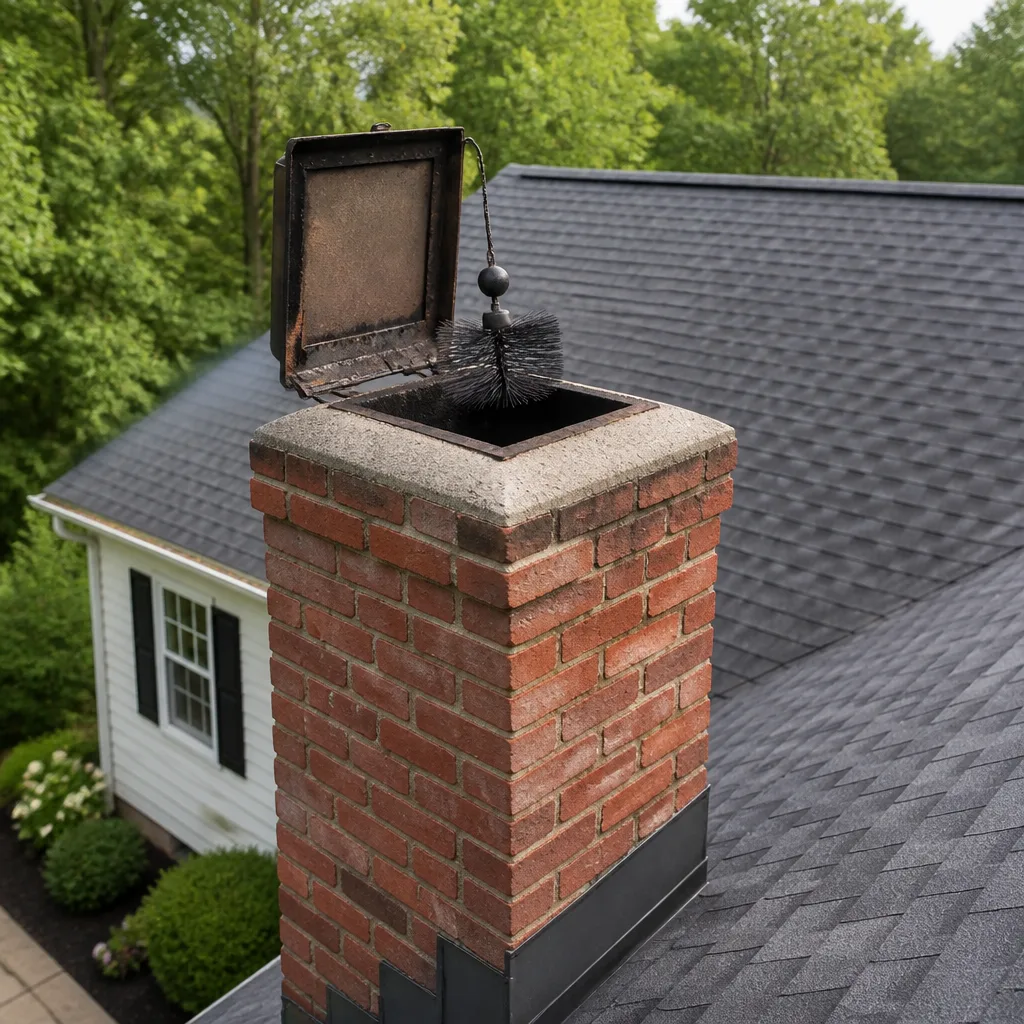 Sweep & inspection
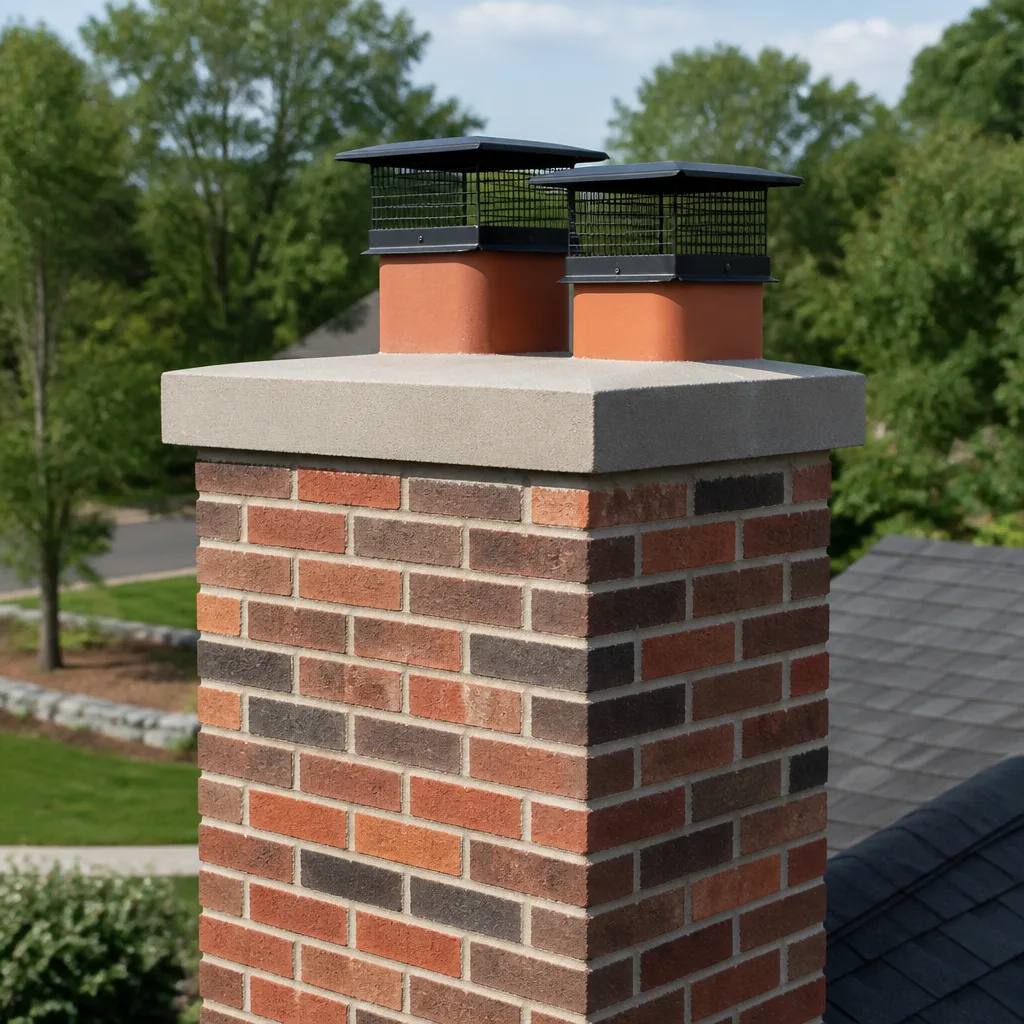 Caps & crowns
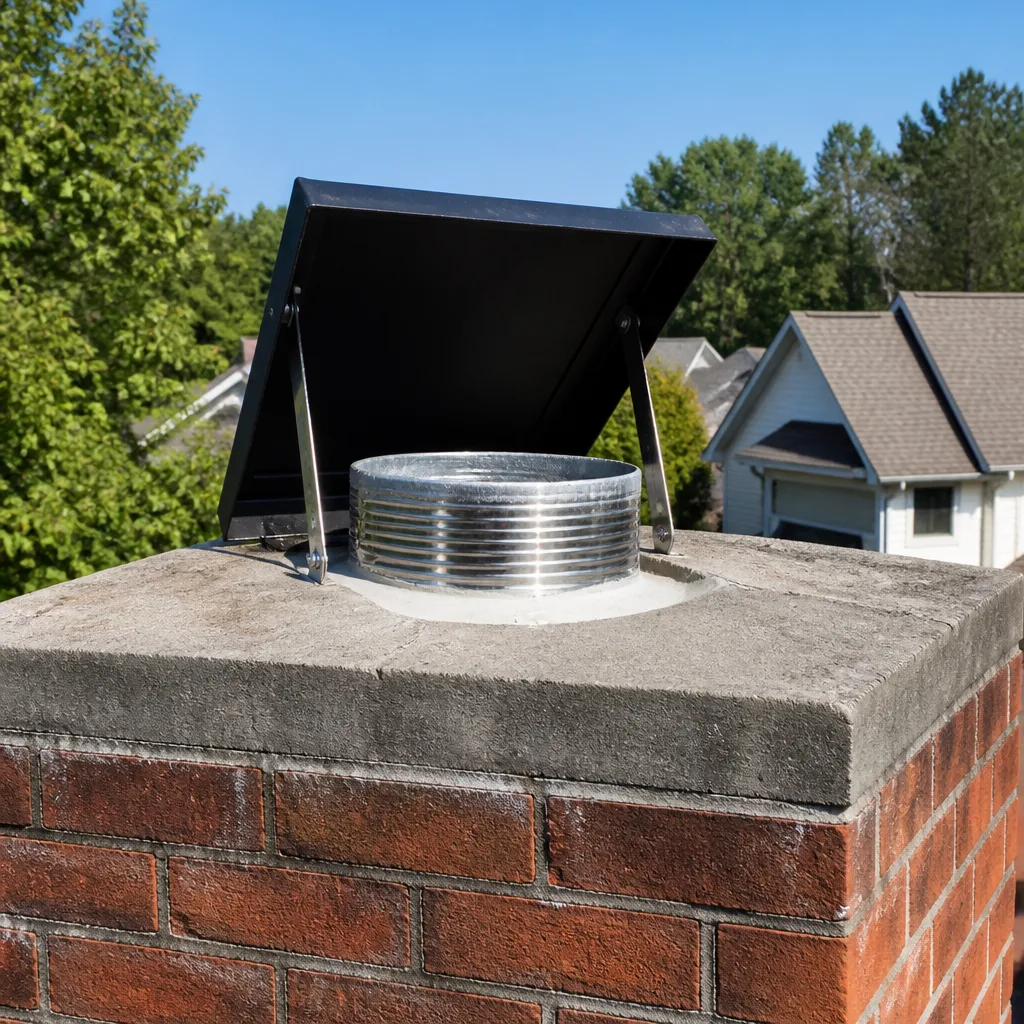 Flue relining
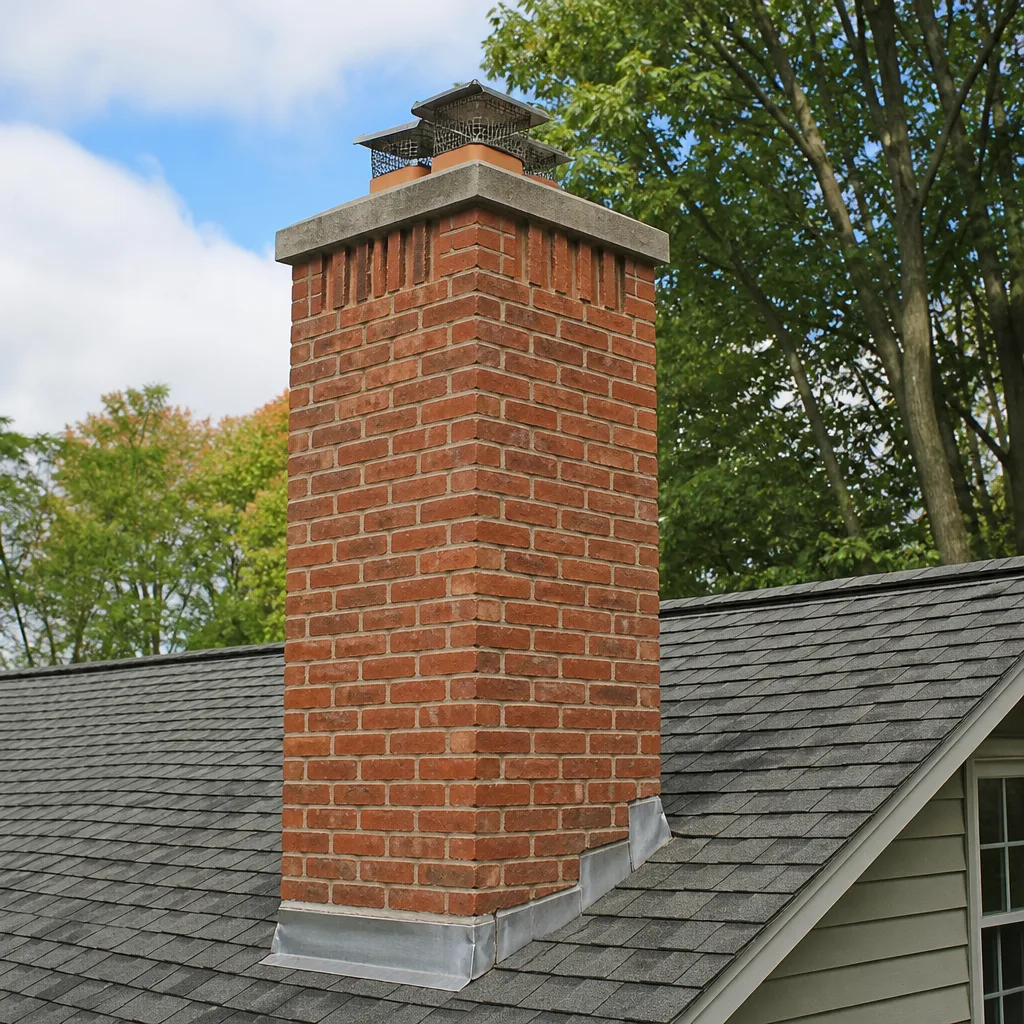 Masonry repair
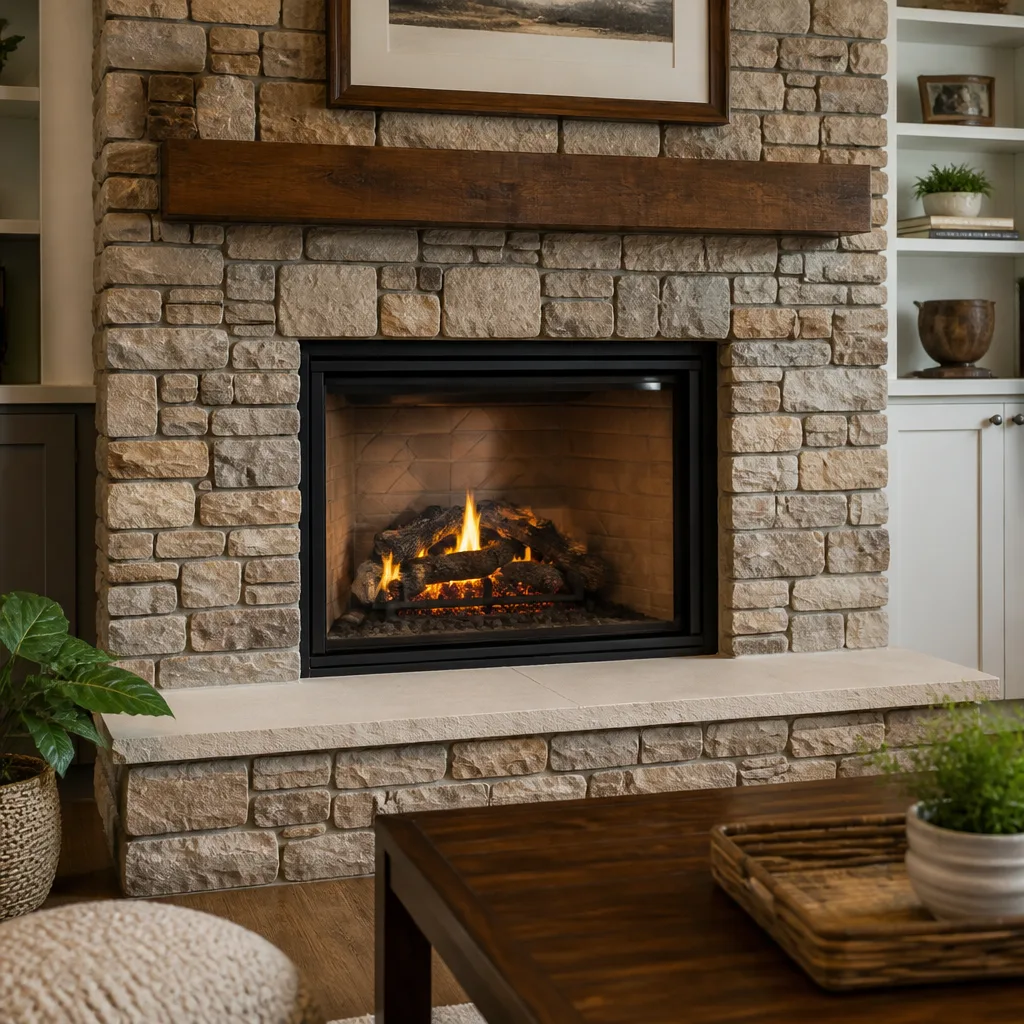 Gas fireplace service
Level 1 sweep and inspection to the NFPA 211 annual standard - flue, crown, cap, and flashing checked and photographed
Chimney sweep logs do not sweep chimneys. They loosen some creosote - which then falls where a brush and vacuum still have to collect it.
DIY vs Professional Chimney Cleaning: The Round Rock Homeowner’s Decision Guide
Here is a counterintuitive fact: you can buy the same rotary cleaning rods on Amazon that many chimney professionals use, for about the price of a single professional visit. The brush spinning against the flue wall is not the hard part. The hard part is knowing what the flue wall looks like underneath the creosote. In Round Rock, where winter wood burning meets spring humidity and summer attic heat, that distinction matters more than most homeowners realize. This guide draws a specific line between what a careful homeowner can realistically accomplish with consumer-grade tools and where DIY work creates hidden liability and safety gaps that a professional inspection is specifically designed to catch, and for more guidance on finding the right professional, see our related resources. You will learn the difference between cleaning a chimney and inspecting one.
Styles & brands we work with
Quick Answer
DIY chimney cleaning can handle light, accessible surface soot and Stage 1 creosote using a consumer rotary brush kit, but it cannot assess liner condition, detect hidden cracks, or safely remove Stage 2 or Stage 3 creosote. In Round Rock, the smart move for most homes is light DIY maintenance between annual professional sweeps, because a professional visit includes a camera inspection that documents liner integrity for insurance purposes. The honest answer is that cleaning and inspecting are two different jobs, and only one of them protects you after a fire.
Table of Contents
- What DIY Chimney Cleaning Can Actually Accomplish
- What DIY Chimney Cleaning Cannot Do, No Matter How Careful You Are
- Understanding Creosote Stages: When DIY Stops Being Safe
- Equipment Cost Reality: What DIY Actually Costs in Round Rock
- The Liability Gap: Insurance and the Self-Cleaned Chimney
- The One DIY Task That Genuinely Makes Sense Between Professional Visits
- Common Mistakes to Avoid
- When to Call a Professional
- Frequently Asked Questions
- The Bottom Line
What DIY Chimney Cleaning Can Actually Accomplish
Let’s be straight about what a careful Round Rock homeowner with a decent toolkit and a Saturday afternoon can realistically do. You can remove loose soot from the firebox floor. You can brush accessible surfaces of the smoke chamber shelf if you can reach them safely from below. You can clean the damper plate and the visible lower flue section. You can visually check the chimney cap from the ground with binoculars for obvious damage, nesting material, or a missing spark arrestor.
What gets done with a consumer rotary cleaning kit, the kind you see for $60 to $120 on Amazon, is mechanical brushing. The rods connect to a drill, spin nylon or wire bristles against the flue wall, and knock off loose deposits. For a chimney that is burned occasionally, with seasoned hardwood, and swept every year, that might be enough to remove the powdery black dust that accumulates between professional visits. Stage 1 creosote, which is a dry, flaky, soot-like deposit, responds reasonably well to brushing. If you run a brush through and what falls is dusty and gray-black rather than shiny and tar-like, you are working within DIY territory.
The problem in Round Rock specifically is twofold. First, our winter burn season is relatively short, which means a lot of homeowners burn whatever they have, including oak that has not fully seasoned, producing stickier deposits than they expect. Second, our spring humidity saturates the air, and when humid air meets a creosote-coated flue, the creosote absorbs moisture and becomes more adhesive. What brushed easily in January may be a glazed mess by May. We have seen flues in the Brushy Creek and Forest Creek areas that looked like a maintenance-level cleanup in December and required chemical treatment by March.
- Remove loose soot and ash from the firebox with a shop vac rated for ash removal.
- Brush the damper plate and the first few feet of accessible flue from inside the firebox, using a drop cloth and a dust mask.
- Inspect the chimney cap visually from the ground. Look for animal activity, displaced screening, or a cap sitting askew after a windstorm.
- Check the chimney exterior for spalling brick, missing mortar, or water staining below the roofline.
- Apply a creosote treatment product, like Rutland Creosote Remover, following the label instructions exactly.
None of these tasks requires a ladder to the roofline, and none of them puts you at risk of a fall. That is the honest boundary: stay off the roof, stay out of the flue above arm’s length, and treat DIY work as maintenance between inspections, not as a replacement for them.
What DIY Chimney Cleaning Cannot Do, No Matter How Careful You Are
Here is where the honest answer separates from the enthusiastic YouTube tutorial. There are specific things a consumer-grade approach cannot accomplish, and pretending otherwise puts Round Rock homes at risk.
First, you cannot see the liner condition. A brush removes surface deposits. It does not reveal hairline cracks in a clay tile liner, a deteriorated mortar joint, or a section of flue that has separated after years of thermal cycling. A professional sweep in Round Rock runs a camera up the flue and looks at the liner wall in real time. That camera is the difference between knowing the flue is clean and knowing the flue is sound. Cleaning and inspecting are not the same activity, and a brush cannot tell you what your liner looks like.
Second, you cannot safely treat Stage 2 creosote and you cannot do anything meaningful with Stage 3. Stage 2 is a flaky, tar-like deposit with a hardened surface. It resists mechanical brushing. It requires chemical treatment, typically a product like PCR or a Rutland liquid creosote remover, applied and allowed to work, sometimes with a follow-up visit. Stage 3 is a glazed, rock-hard accumulation of concentrated fuel. It resembles black glass coating the flue. It does not brush off. It does not scrape off safely. It requires professional removal, often with chemical treatment and rotary chains, and it demands a liner inspection afterward because Stage 3 creosote can hide liner damage underneath it.
Third, you cannot document the condition for insurance. A professional sweep produces a written report. That report becomes part of the homeowner’s record. If a chimney fire occurs, the insurance adjuster asks one question early: when was the last professional inspection? A DIY cleaning with no documentation is, from the insurance company’s perspective, no cleaning at all. More on that below.
Fourth, you cannot access offset flue sections, smoke shelf areas behind the damper frame, or the upper flue near the cap with consumer rods. Consumer rotary rod kits are designed for straight-up, straight-down runs. Round Rock homes built in the last twenty years, particularly two-story homes in Teravista, Sonoma, and the newer sections of Avery Ranch, often have offset or angled flue runs. A rigid consumer rod kit cannot navigate those bends. What you get is a clean lower section and an untouched upper section, with the untouched section being exactly where the highest-concentration creosote lives.
Fifth, you do not have the training to recognize the difference between a stain and a structural problem. A dark streak on the firebox wall might be cosmetic. It might also be evidence of water entry behind the brick, a failing crown, or a flashing leak. We use the same professional-grade repair materials on Round Rock chimneys: DuraFlex for relining, Olympia Chimney for caps and chase covers, Famco for flashing components. Homeowners do not have access to those materials, and without the ability to repair what gets found, the inspection only tells half the story. We repair what we inspect.
Understanding Creosote Stages: When DIY Stops Being Safe
Creosote is not one substance. It forms in three distinct stages, and recognizing which stage you are looking at determines what you can safely attempt. This is the most important piece of knowledge in this entire guide.
Stage 1 creosote is the early accumulation. It looks like gray or brown dust, similar to coarse soot. It brushes off easily with a nylon brush. It forms from hot, efficient fires burning seasoned wood. If you shine a flashlight up the flue and see powdery, dusty deposit that flakes off when touched, you are looking at Stage 1. A homeowner with a consumer rotary kit can reasonably remove Stage 1 creosote, provided the flue is a straight run and the homeowner stays off the roof. Light brushing plus a creosote removal product is a reasonable maintenance protocol.
Stage 2 creosote is where DIY stops being safe. Stage 2 looks like shiny black flakes, similar to crushed charcoal or coffee grounds. The deposits are harder, flakier, and they resist brushing. They form from cooler fires, unseasoned wood, or restricted air supply. Stage 2 creosote does not come off with a consumer brush. It requires chemical treatment. Professional-grade products, often the same Rutland and PCR products used by sweeps, are applied and allowed to catalyze. Stage 2 also indicates that burn habits need to change. If you are producing Stage 2 creosote in a single burn season in Round Rock, you are burning wood that is too wet, or running fires with the damper choked down too far.
Stage 3 creosote is a different animal entirely. It looks like black glass. It is hardened, glazed, tar-like fuel that has baked onto the flue wall. It forms when creosote deposits are subjected to repeated heating and cooling cycles, often over multiple seasons without cleaning. Stage 3 is highly concentrated fuel. A spark or a hot fire can ignite it, and a Stage 3 chimney fire burns hot enough to crack clay tiles, warp metal liners, and spread to surrounding framing. Stage 3 creosote cannot be brushed. It requires professional chemical treatment, often multiple applications, and in some cases rotary chain cleaning. After Stage 3 removal, a camera inspection is non-negotiable, because the liner underneath may be compromised. In Round Rock homes where a fireplace has been used for years without service, Stage 3 is more common than homeowners want to believe.
The takeaway: Stage 1, with the right tools and a straight flue, can be a DIY maintenance task. Stage 2 and Stage 3 are professional territory. If you are not sure which stage you are looking at, you are looking at Stage 2 or Stage 3, and you should not be brushing it yourself. What you cannot see matters more than what you can.
Equipment Cost Reality: What DIY Actually Costs in Round Rock
Let’s run the actual numbers. A complete consumer rotary cleaning kit from Amazon, the kind with six fiberglass rods, a drill attachment, a nylon brush head, and a soot cloth, runs between $60 and $120. Add a good ash vacuum, which is not the same as a shop vac and should be rated for fine ash, at $80 to $150. Add a drop cloth, a dust mask, safety glasses, and gloves, and you are at roughly $200 to $300 all in.
A professional chimney sweep in Round Rock typically runs between $150 and $250 for a standard inspection and cleaning, depending on the height of the chimney, the accessibility of the roof, and the condition of the flue; for a detailed chimney cleaning cost breakdown, see our 2026 pricing guide. That number does not include the camera report, the written documentation, the creosote treatment products, or the trained assessment of liner condition. When you factor in what a professional visit actually includes, the economics shift. The DIY kit pays for itself after two seasons of use, but it does not tell you what the liner looks like.
There is also the question of what happens when the DIY cleaning reveals a problem. If you brush the flue and Stage 2 creosote does not come off, you now own a $120 rotary kit and a chimney that still needs professional attention. If you brush the flue and the liner has a crack you cannot see, the brush did not solve the problem. The Round Rock homeowner who saved $200 on a professional sweep and then spends $3,000 on liner repair because a crack went undetected has not saved money.
The equipment cost reality is this: consumer-grade tools have their place, and that place is light maintenance between professional inspections. They are not a replacement for the inspection itself. A $100 kit is not a substitute for a $200 professional visit that includes a camera, a written report, and the trained judgment of someone who has looked at thousands of Round Rock chimneys. The cost of being wrong is not the cost of the kit. It is the cost of the fire, or the cost of the liner replacement that the camera would have caught early.
The Liability Gap: Insurance and the Self-Cleaned Chimney
Here is the section most DIY guides skip, and it is the one that matters most after something goes wrong. Most homeowners’ insurance policies in Texas cover chimney fires as part of the dwelling coverage. The claim gets paid, minus the deductible, and the home gets repaired. What the adjuster looks for is the maintenance record.
Insurance companies do not write chimney exclusions. What they do is investigate the cause of the loss. If a chimney fire occurs, the adjuster asks for proof of maintenance: when was the last professional chimney inspection? If the answer is never, or the last documented service was five years ago, the claim gets complicated. The insurer may take the position that the homeowner failed to maintain a known fire hazard, and depending on the policy language, that can lead to a reduced settlement or a denied claim. A homeowner who self-cleaned the chimney with a $100 Amazon kit and no professional inspection on record is in a much weaker position than a homeowner with a written report from a licensed sweep dated six months earlier.
We are not insurance adjusters, and the specific policy language in your Round Rock home will govern. But the practical reality is consistent: documentation matters. A professional sweep produces a receipt or a report. A DIY cleaning produces nothing. When the adjuster asks for evidence that the chimney was properly maintained, “I cleaned it myself” does not carry the same weight as a written inspection record. The professional visit is not just about cleaning. It is about establishing a maintenance history that protects you if the worst happens.
There is a second liability gap that is less obvious. If you go onto your roof to clean the chimney yourself and fall, your homeowners’ insurance covers medical expenses, but the claim is on your record. If you damage the chimney crown, the flashing, or the shingles while cleaning, that damage is on you. Professional sweeps in Round Rock carry their own insurance. Our work on your roof is covered. If we damage something, our policy addresses it. If you damage something, your policy addresses it, and your premium may reflect that. The DIY savings calculation should include the cost of being the person on the roof when something goes wrong.
The One DIY Task That Genuinely Makes Sense Between Professional Visits
By this point, the honest conclusion is that most chimney cleaning work belongs to a professional. But there is one DIY task that genuinely makes sense between professional visits, and it is worth doing properly.
Keep a supply of Rutland Creosote Remover on hand, or a similar creosote treatment product from a recognized brand. Use it every fourth or fifth fire during the burn season, following the label instructions. The product is designed to be added to a hot fire. It converts some creosote formations into a finer ash that brushes away more easily. It is not a substitute for sweeping, and it does not replace professional maintenance. What it does is keep Stage 1 creosote from advancing to Stage 2 between your annual professional visits.
The other DIY task that makes sense is visual inspection from the ground. Every month during burn season, walk outside and look at your chimney. Check the cap. Look for animal activity. Check for spalling brick or missing mortar. Look for water staining near the roofline. If the cap is damaged or missing, call a professional. A missing cap in Round Rock means moisture entry, and moisture entry in our climate means freeze-thaw cycles in winter that crack brick and mortar. The ground-level visual check catches problems early, and it costs nothing.
That is the line. Light creosote treatment, ground-level visual checks, and keeping the firebox clean between professional visits: that is the DIY territory. Everything above the damper belongs to a trained eye with a camera. The cleaning is the easy part. The inspection is the part that protects your home.
Common Mistakes to Avoid
- Using a standard shop vac for ash removal. Standard shop vacs do not have fine-ash filtration. Ash particles escape through the exhaust and settle throughout the room. Use an ash vacuum rated for fine particulates, or leave the ash removal to your sweep. This is a frequent issue in Round Rock homes where the fireplace shares living space with electronics and upholstery.
- Brushing a flue with Stage 2 or Stage 3 creosote. The brush will not remove it. What it will do is polish the surface, making the glazed deposit harder and more concentrated. If the brush is not bringing off dry, dusty material, stop and call a professional. Pushing harder does not help; it makes the problem worse.
- Going onto the roof without a safety harness and roof bracket. Roof work in Central Texas is not the same as roof work in flat, dry climates. Our roofs are steep, and our shingles get slick with morning humidity and spring rain. A fall from a two-story Round Rock roof is a life-changing injury. Stay off the roof. Let a professional handle anything above the roofline.
- Using chemical creosote removers as a substitute for sweeping. Rutland Creosote Remover and similar products are maintenance aids. They make sweeping easier and slow creosote accumulation. They do not remove Stage 2 or Stage 3 deposits, and they do not replace an annual professional cleaning. A Round Rock homeowner who burns treated logs all winter and skips the sweep is still accumulating creosote.
- Ignoring the chimney cap because the fireplace still draws fine. The cap is the first line of defense against rain, animals, and downdrafts. A cap that is missing, damaged, or improperly fitted allows moisture into the flue. In Round Rock, where we get heavy spring rains and winter freeze cycles, cap failure leads to liner damage and masonry deterioration. Check the cap from the ground monthly.
- Burning unseasoned wood because it was cheap or convenient. Green wood produces cool, smoky fires that deposit creosote rapidly. Round Rock gets plenty of oak available from local suppliers, but it must be seasoned at least six months, ideally twelve. Burning wet wood is the single fastest way to move from Stage 1 to Stage 2 creosote in a single season.
- Assuming a gas fireplace does not need service. Gas fireplaces produce less creosote than wood-burning units, but they still need inspection. Gas logs can produce soot buildup, the damper can malfunction, and vent-free units introduce moisture and combustion byproducts into the living space. Gas fireplaces in Round Rock homes should be inspected annually, just like wood-burning units.
When to Call a Professional
Call a professional chimney sweep in Round Rock if you see shiny, tar-like deposits in the flue, if your brush stops removing material, if you smell smoke in the house after a fire, if you see water stains on the ceiling near the chimney, if the fireplace has not been inspected in more than a year, or if you have any doubt about the condition of the liner. The inspector’s camera answers questions that a brush cannot. If you are selling a home in Round Rock, a professional chimney inspection with a written report is one of the best documents you can show a buyer. Boardwalk Chimney Sweep offers free estimates in Round Rock. Call (877) 274-1247 to schedule a professional chimney sweep and inspection. We repair what we inspect, using the same brands chimney professionals specify: DuraFlex for liner systems, Olympia Chimney for caps and components, and HeatShield for liner resurfacing when full replacement is not necessary.
If you have not had your chimney inspected this year, or if you have attempted DIY cleaning and are not sure what you are looking at, now is the time. Our Chimney Sweep in Round Rock service includes a full inspection with documentation. We also offer Chimney Repair in Round Rock for liner work, crown repair, and cap replacement. And because dryer vents are the other major household combustion hazard, our Dryer Vent Cleaning in Round Rock service can be bundled with your chimney visit. One call, two fire hazards addressed. Start with the Boardwalk Chimney Sweep home page to see the full scope of what we handle.
Frequently Asked Questions
A standard chimney sweep and inspection in Round Rock typically runs between $150 and $250, depending on chimney height, roof accessibility, and flue condition. That price includes the cleaning, a camera inspection, and a written report. Boardwalk Chimney Sweep offers free estimates, so you know the exact price before the work begins. Call (877) 274-1247 for a quote.
You can remove loose Stage 1 creosote from a straight flue using a consumer rotary brush kit, but you cannot assess liner condition or safely remove Stage 2 or Stage 3 creosote. The brush cleans the surface. The inspection, which requires a camera and trained judgment, is what protects your Round Rock home. Light DIY maintenance is fine between professional visits; it is not a substitute for them. For more guides & resources on keeping your chimney safe, explore our blog.
The National Fire Protection Association recommends a chimney inspection at least once per year. Homes in Round Rock that burn wood regularly should be swept at the same interval, typically before the burn season starts in late fall. Homes that burn unseasoned wood, or that use the fireplace heavily, may need more frequent service. If you are unsure, schedule an inspection and let the camera tell you what the flue needs.
Creosote accumulates. Stage 1 becomes Stage 2, and Stage 2 becomes Stage 3 over multiple burn seasons without service. Stage 3 creosote is concentrated fuel that can ignite, and a chimney fire can reach temperatures high enough to crack clay tile liners and spread to surrounding framing. Skipping cleaning also means skipping inspection, which means liner damage, moisture entry, and cap failure go undetected. The longer you wait, the more expensive the repair becomes.
Most homeowners’ policies in Texas cover chimney fires as part of the dwelling coverage, but the claim is subject to investigation. The adjuster will ask for proof of maintenance. A homeowner with a written professional inspection on record is in a much stronger position than a homeowner with no documentation. A self-cleaned chimney with no professional inspection record may face a reduced settlement or a denied claim. The professional visit is your insurance documentation.
Cleaning removes creosote and soot from the flue wall. Inspection evaluates the condition of the liner, the damper, the crown, the cap, the flashing, and the masonry. A brush cannot tell you if the clay liner is cracked, if the mortar joints are failing, or if the chimney cap is allowing moisture entry. In our experience serving Round Rock, the inspection catches problems that the cleaning alone never would. That is why a professional service includes both, and why the camera is the most important tool we carry.
Gas fireplaces produce less creosote than wood-burning units, but they still produce combustion byproducts and moisture. The damper can corrode, the logs can soot up, and vent-free units introduce water vapor and carbon monoxide risk into the living space. Gas fireplaces in Round Rock homes should be inspected annually. The inspection process is similar, and the same camera documentation applies.
The Bottom Line
The DIY vs professional chimney cleaning decision in Round Rock comes down to one distinction: cleaning and inspecting are two different jobs. A careful homeowner with a consumer rotary kit can handle light Stage 1 maintenance between professional visits, keep a creosote treatment product on hand, and perform monthly ground-level visual checks. What a homeowner cannot do is see the liner, assess creosote stage accurately, navigate offset flue sections, document condition for insurance, or safely treat Stage 2 and Stage 3 deposits. The professional visit is not just about the brush. It is about the camera, the trained judgment, the written report, and the repair capability that follows. In Round Rock, where humidity, short burn seasons, and steep roofs combine, the smart homeowner does light DIY maintenance and leaves the inspection to a professional. Boardwalk Chimney Sweep offers free estimates. Call (877) 274-1247 to schedule yours.
Written by the team at Boardwalk Chimney Sweep, serving Round Rock since 2011.
See the difference
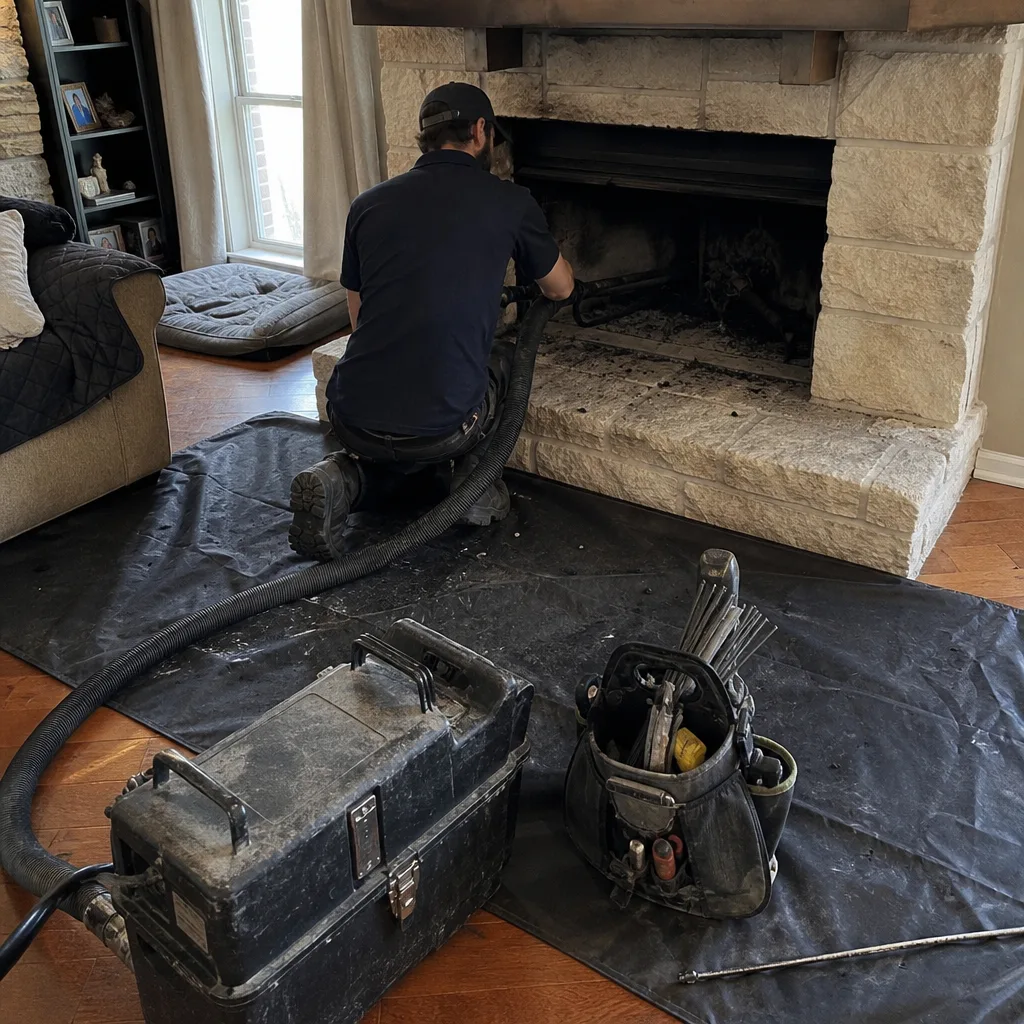 Before
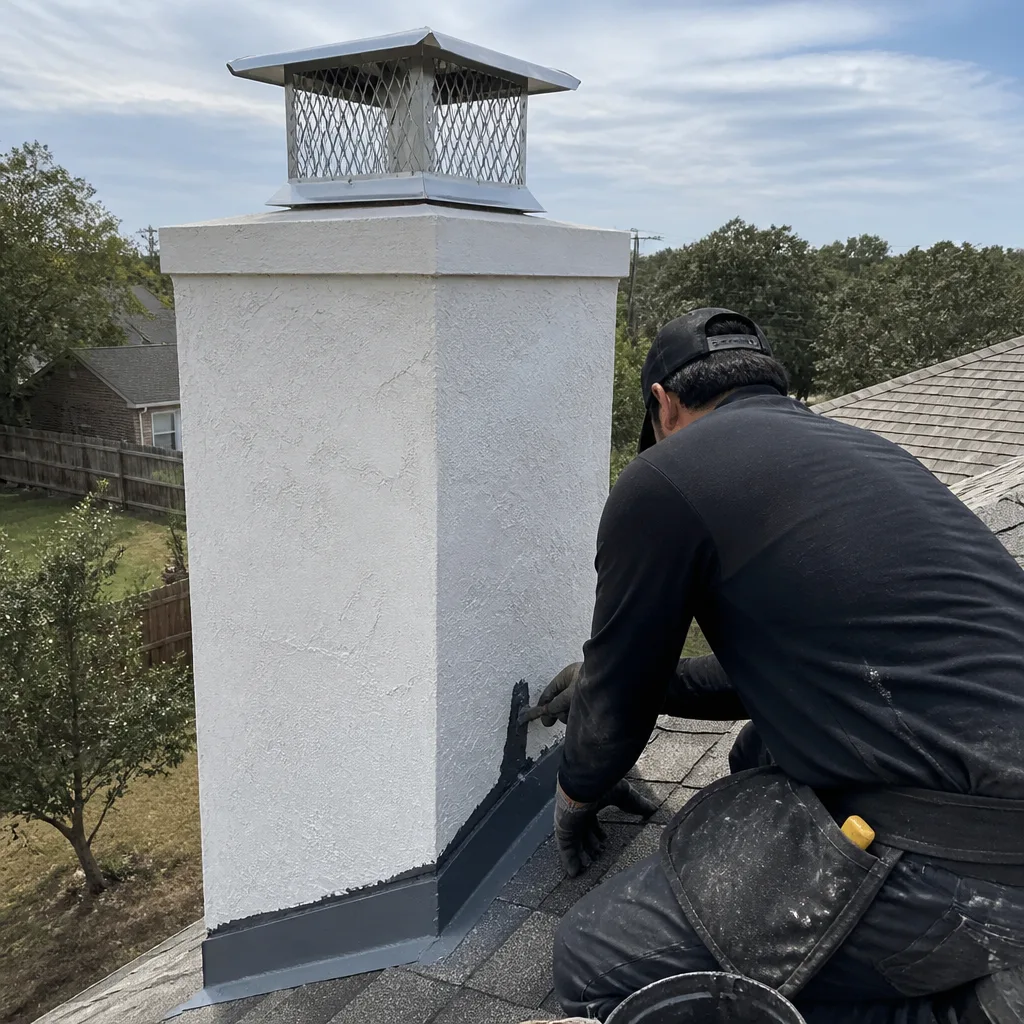 After
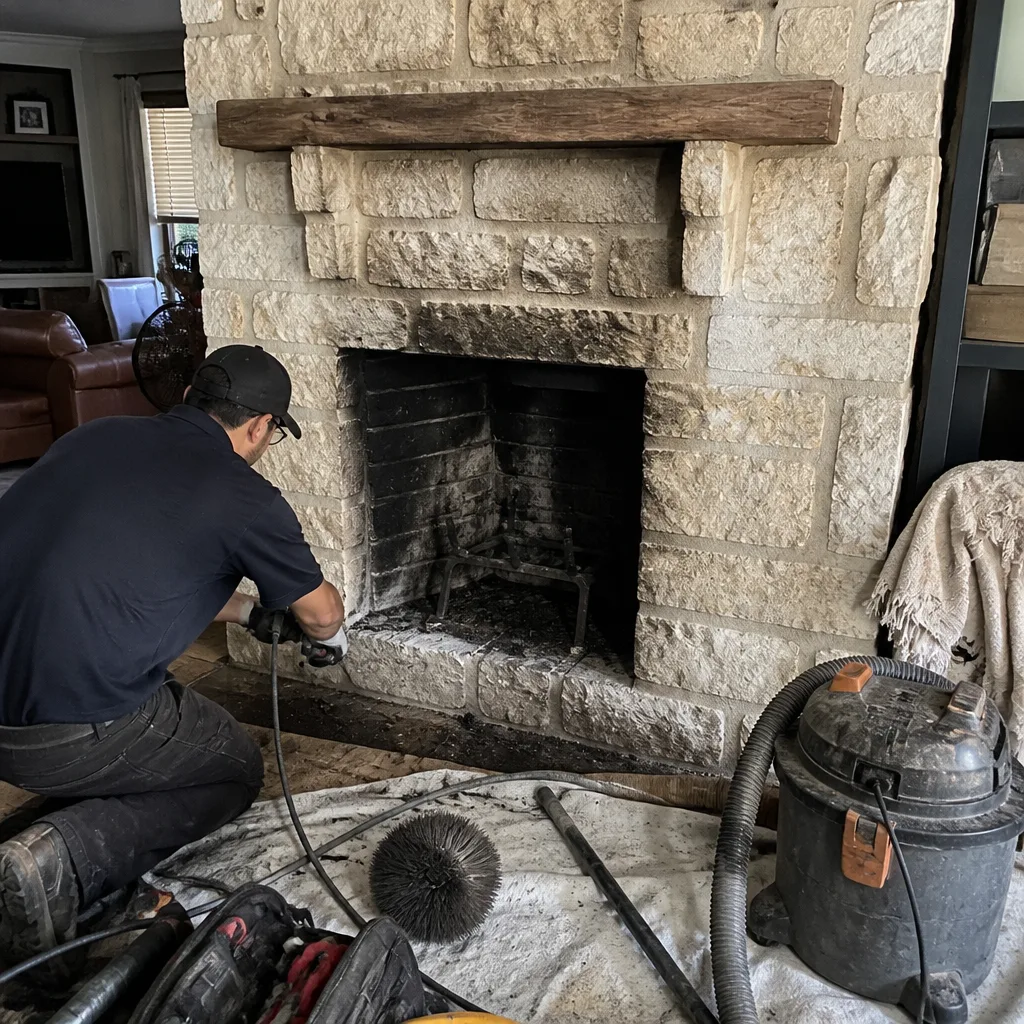 Before
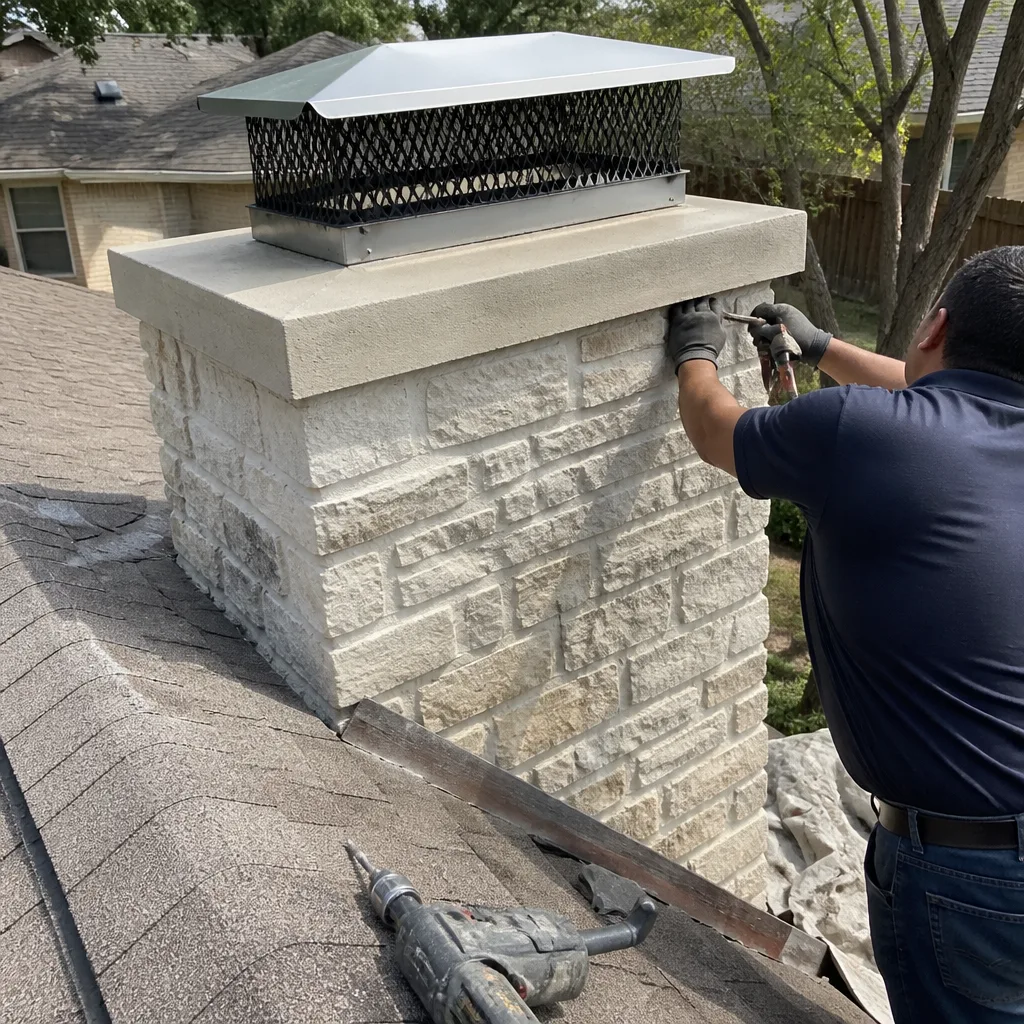 After
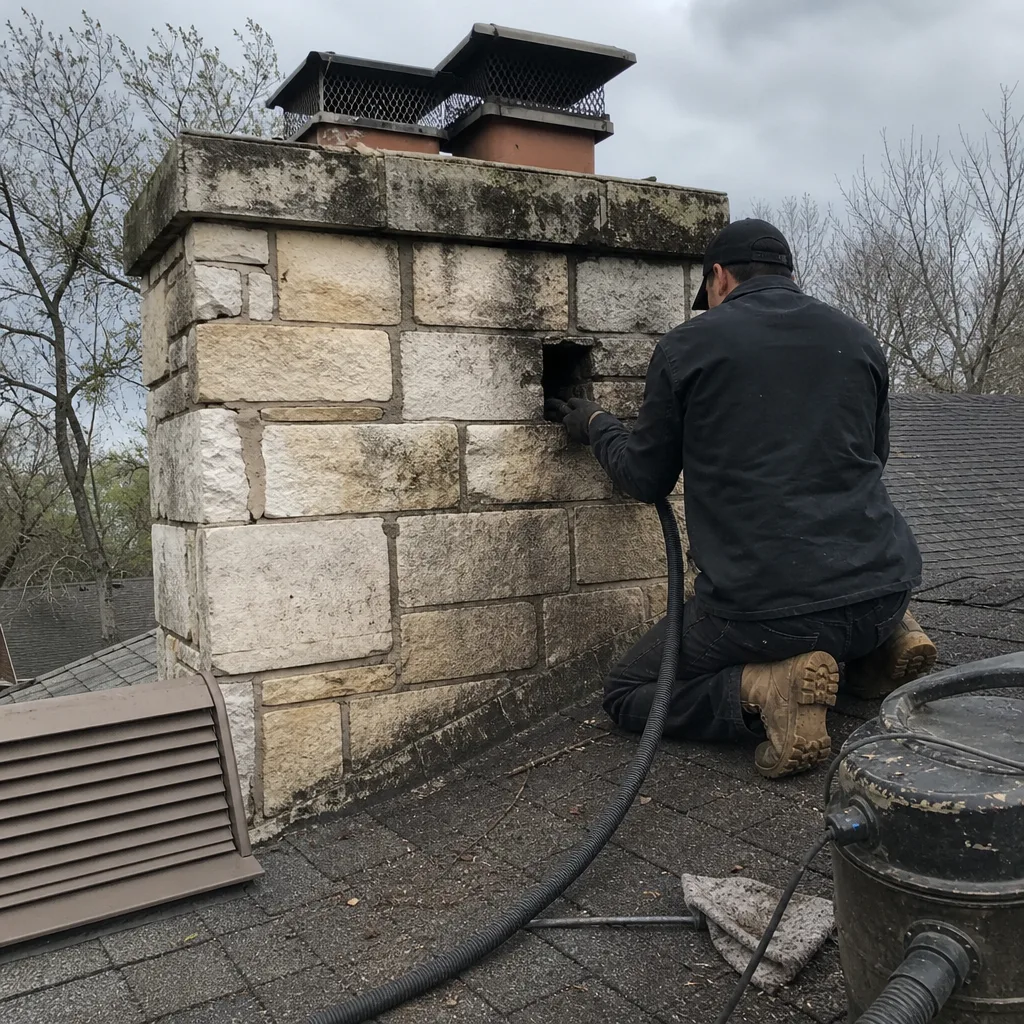 Before
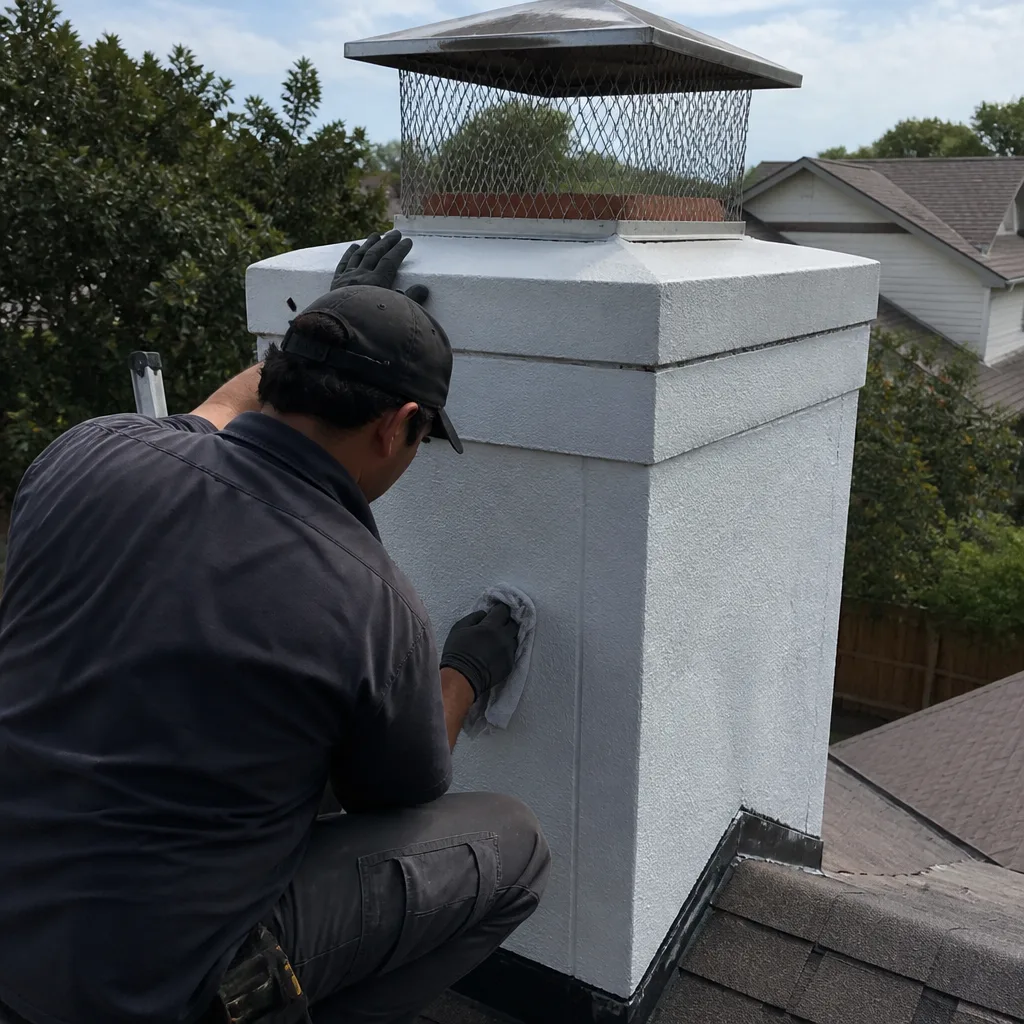 After